
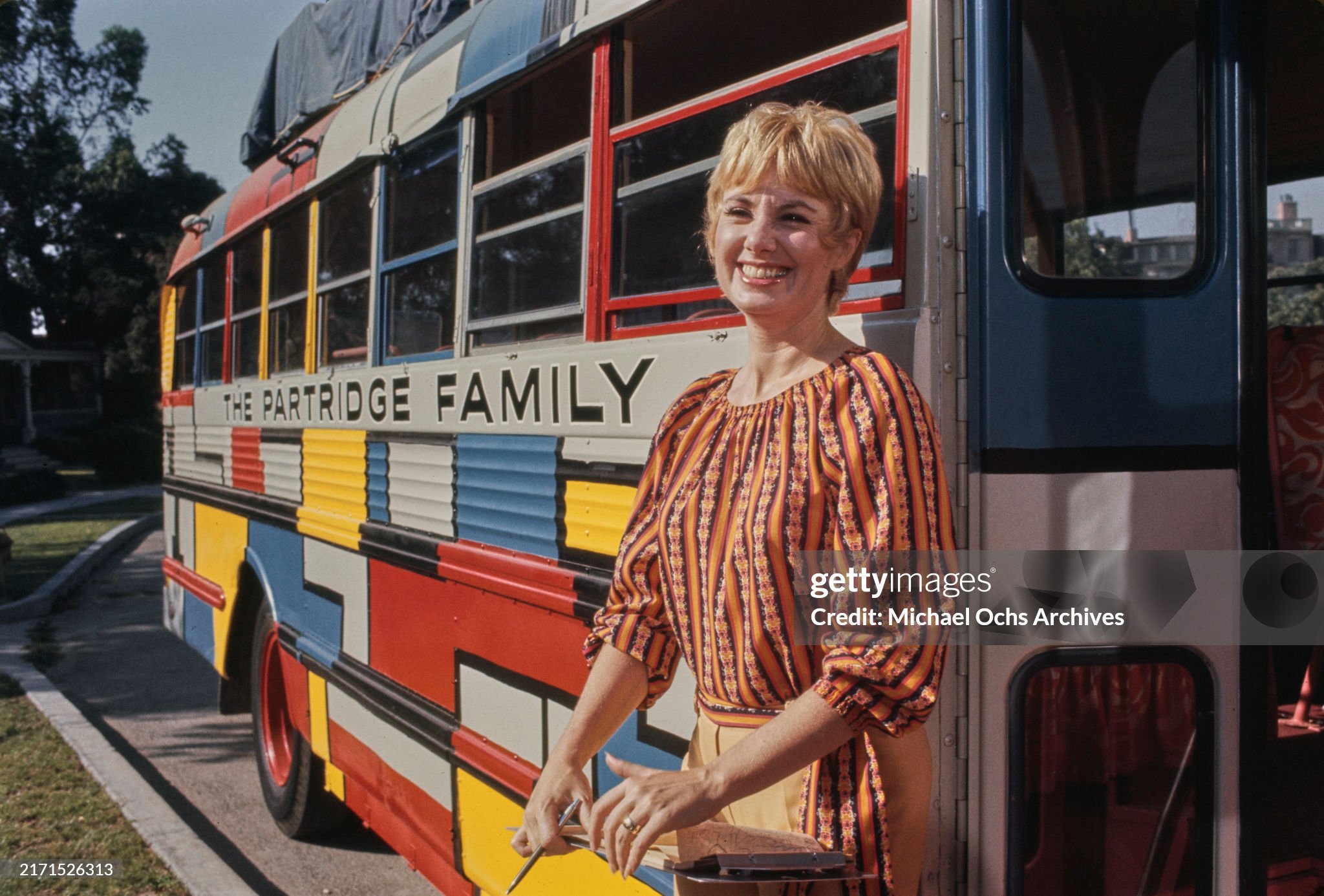
A gentle song about longing, imagination, and the sweet ache of wanting more than ordinary life can quite deliver.
Daydreamer is one of those The Partridge Family recordings that reveals how much feeling could be tucked inside polished early-1970s pop. It is important to say this right at the beginning: Daydreamer is not generally remembered as one of the group’s major headline-making Billboard Hot 100 singles in the way that I Think I Love You was, and that fact tells us something valuable. Its legacy was built less on a towering chart peak and more on the private bond it created with listeners who heard in it a softer, more reflective side of the group. Sometimes the songs that stay with us longest are not the loudest successes. They are the ones that seem to understand our inner weather.
That is part of what makes Daydreamer so appealing. By the time The Partridge Family became a pop phenomenon, the project had already found the formula that worked so beautifully: bright melodies, smooth arrangements, and above all the instantly recognizable lead voice of David Cassidy. Behind the television image was a carefully crafted recording machine, guided by producer Wes Farrell and supported by top studio musicians. Yet for all that professional polish, the best Partridge Family records never felt merely manufactured. When they were right, they carried real atmosphere. Daydreamer has that quality. It sounds airy and romantic, but also faintly wistful, as though it understands that dreaming can be both comfort and escape.
Musically, the song sits in that lovely place where pop music feels almost weightless. The arrangement has the soft glide and melodic ease that defined so much of the era, but it is the emotional shading that gives it life. David Cassidy had a gift for singing with clean teen-idol brightness while still suggesting vulnerability underneath. On Daydreamer, that balance matters. He does not oversing it. He lets the melody float. The result is a performance that feels close, intimate, and quietly sincere. It is easy to understand why many listeners, returning to this track years later, hear more in it than they may have noticed the first time around.
The meaning of Daydreamer lives in that tender space between fantasy and reality. Like many memorable pop songs from the period, it speaks to yearning without making a grand speech out of it. The dreamer in the title is not simply someone being fanciful. There is a deeper emotional truth there: the wish for love, beauty, possibility, and a life touched by something finer than routine. That theme has always given songs extraordinary staying power. Nearly everyone has known what it is to look past the visible world for a moment and imagine a different one. Daydreamer captures that impulse with unusual gentleness. It does not mock dreaming. It honors it.
In the wider story of The Partridge Family, the song also matters because it helps round out the public image of the act. The group’s biggest hits are often remembered for their immediate hooks and broad radio appeal, and rightly so. Songs such as I Think I Love You became part of the fabric of pop history, with that single famously reaching No. 1 on the Billboard Hot 100 in 1970. But deep affection for a catalog is not built on blockbusters alone. It is built on the tracks that show texture, mood, and personality. Daydreamer belongs to that category. It reminds us that the appeal of The Partridge Family was never only about television fame or teenage excitement. At their best, they could also sound wistful, elegant, and emotionally persuasive.
There is another reason the song continues to resonate. It belongs to a strain of pop that now feels almost impossibly graceful. Its emotions are clear, but never heavy-handed. Its romanticism is sincere, but never clumsy. And because it came through the voice of David Cassidy, whose presence defined so much of the group’s emotional identity, the song carries a kind of glow that time has not dimmed. Listening now, one can hear not just a period recording but a whole atmosphere: afternoon radio, the hush of memory, and the way certain melodies seem to light a room from very far away.
For listeners who only know the biggest Partridge Family hits, Daydreamer can feel like a quiet rediscovery. It shows how a song without the grandest chart story can still become deeply cherished. In that sense, its place in pop history is a humble but meaningful one. It stands as a reminder that nostalgia is not built only from milestones and statistics. It is built from feeling. And Daydreamer, with its softness, its longing, and its almost floating sense of emotional possibility, still has plenty of that to give.
That may be the real secret of the song. It does not force itself into memory. It drifts there. Then, years later, it is still waiting.