
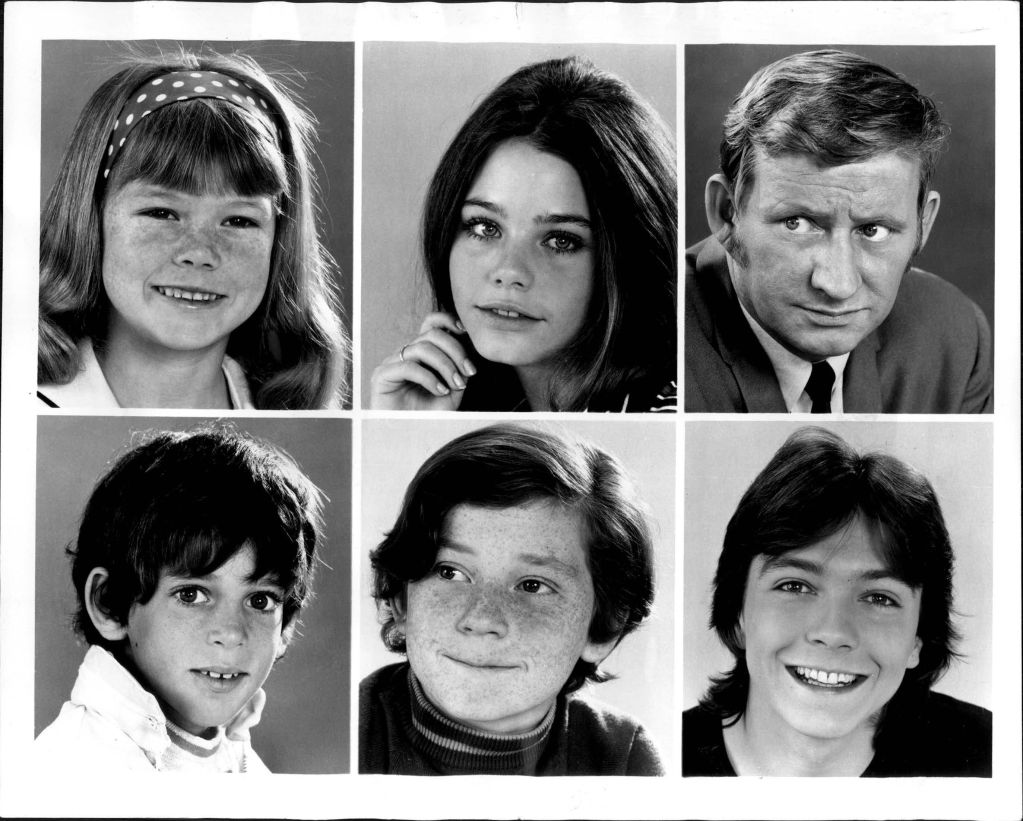
A gentle declaration wrapped in sunshine pop, “Love Is All That I Ever Needed” reminds us that some of the sweetest songs do not arrive as blockbusters—they stay because they feel true.
Not every memorable Partridge Family song came with the noise of a major hit single. Some lived more quietly, tucked into albums and television-era memories, waiting for listeners to rediscover them years later with fuller hearts and sharper ears. “Love Is All That I Ever Needed” belongs to that special class of songs. It may not stand in the shadow of a No. 1 sensation like “I Think I Love You”, but it carries something just as enduring: warmth, sincerity, and that unmistakable early-1970s pop glow that made The Partridge Family such a comforting presence in American music and television culture.
One important fact helps place the song in context right away: “Love Is All That I Ever Needed” was not one of the group’s major charting signature singles, so it does not occupy the same Billboard history as the band’s biggest releases. That, however, is part of its charm. Songs like this often reveal more about an act’s emotional identity than the blockbusters do. They are less tied to trend and more tied to feeling. In the case of The Partridge Family, that feeling was always rooted in brightness, romantic innocence, and a kind of musical reassurance that seemed to say the world might be complicated, but love could still sound simple.
By the time listeners encountered songs like this, The Partridge Family had already become a cultural phenomenon. Built around the ABC television series that debuted in 1970, the group blended scripted family charm with highly polished studio pop. Although the TV cast appeared as the band, the recordings were largely shaped by accomplished session musicians and producers, with David Cassidy serving as the group’s defining lead voice and Shirley Jones contributing to the family image that helped make the project so beloved. That dual identity—part television fantasy, part genuine pop machine—gave their catalog a strangely lasting appeal. Even now, many of these recordings carry a polished innocence that no longer feels manufactured so much as lovingly preserved.
“Love Is All That I Ever Needed” works because it does not try to be larger than life. Its emotional idea is direct, almost disarmingly so. The title itself tells the whole story: after all the noise, uncertainty, and longing that so many love songs circle around, this one settles on a single truth. Love is enough. Not glamorous love, not dramatic love, not impossible love—just the steady emotional certainty that gives life shape and meaning. That lyrical simplicity was one of the quiet strengths of The Partridge Family catalog. These songs often spoke in plain language, but plain language, when matched with the right melody, can feel deeply personal.
Musically, the song sits comfortably in the group’s familiar world of melodic, radio-friendly pop. There is a lightness to the arrangement, but not emptiness. Like much of the best Partridge Family material, the production leans into clarity: clean hooks, easy rhythmic motion, and vocal lines that invite immediate emotional connection. The song does not demand attention through force. It earns affection through ease. That was one of the signature gifts of this era of pop craftsmanship. A tune could feel effortless while being carefully designed to linger in the mind long after it ended.
And then there is the voice. Any discussion of The Partridge Family eventually comes back to David Cassidy, because his vocal presence was central to the project’s emotional pull. Cassidy had the rare ability to sound youthful without sounding slight. There was brightness in his tone, yes, but also a tenderness that made songs like “Love Is All That I Ever Needed” feel believable. He did not overstate the emotion. He let the melody carry much of it, which in turn allowed the listener to bring his or her own memories into the song. That is often the difference between a catchy track and a lasting one: a lasting song leaves room for the listener’s life inside it.
The deeper story behind songs like this is also the story of an era. In the early 1970s, pop music still made room for innocence without apology. There was heartbreak in the culture, political unrest in the background, and rapid change everywhere one looked, yet a song could still arrive with a clear heart and an unguarded message. The Partridge Family offered that kind of emotional shelter. Their music was not built on irony. It was built on melody, charm, and the belief that feelings spoken plainly could still matter. For many listeners, that sound became stitched into family rooms, transistor radios, weekend afternoons, and the small emotional rituals of growing up.
That is why “Love Is All That I Ever Needed” still resonates. It captures a moment when pop did not have to be complicated to be meaningful. In fact, its simplicity is the meaning. The song seems to understand that after enough time passes, people do not always remember every chart statistic or release-week headline. They remember how a melody made them feel. They remember the season of life it followed them through. They remember the voice that sounded as if it understood longing without turning it into despair.
In the end, this song stands as a lovely example of what The Partridge Family did so well: they turned emotional directness into something melodic, comforting, and quietly unforgettable. It may not be the title that history books mention first, but it carries the same gentle pulse that made the group matter in the first place. And sometimes those are the songs that stay with us longest—the ones that never shouted, never insisted, but simply opened the door and let the feeling in.