
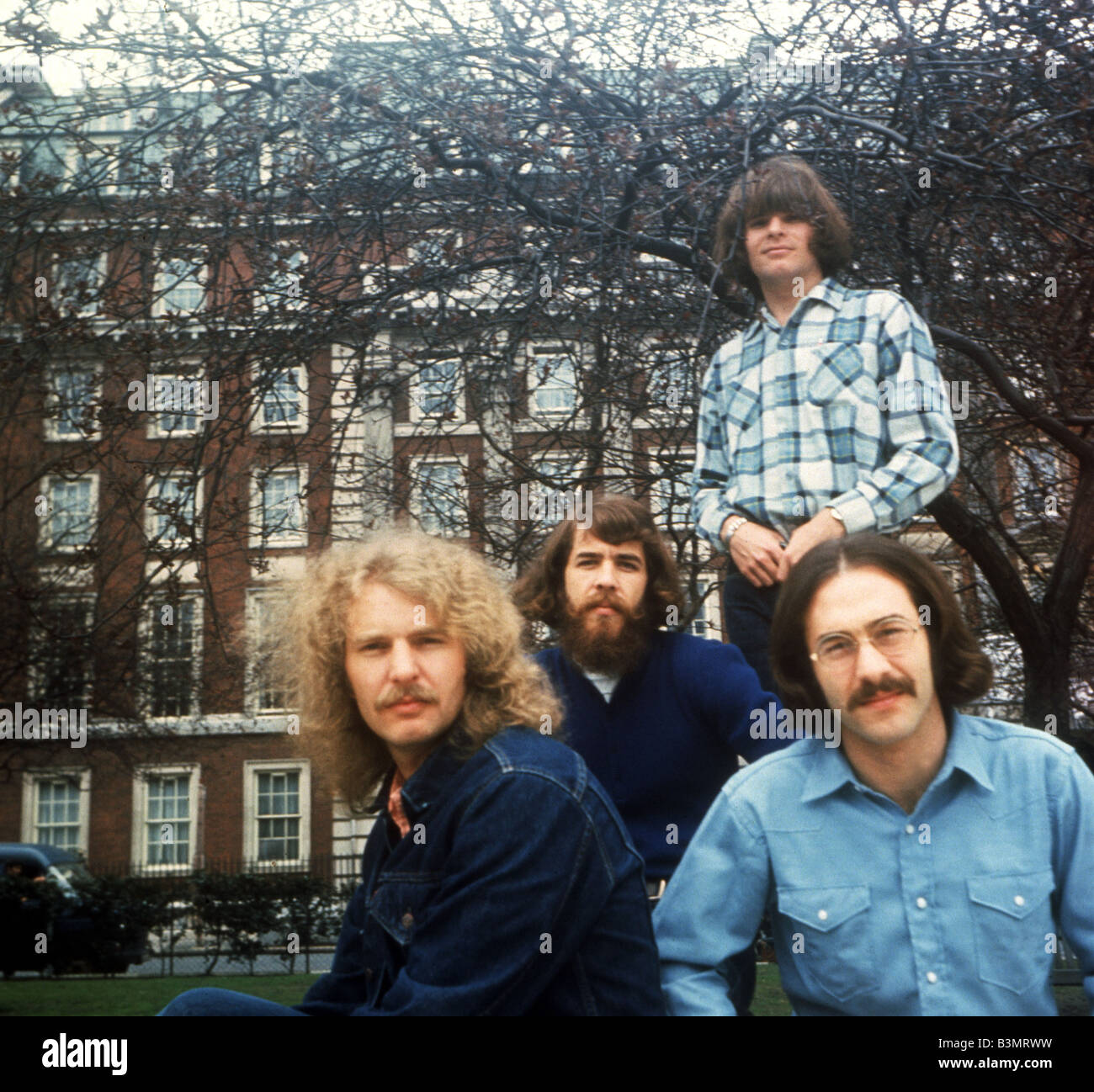
Sometimes a deep album track says more about a band’s turning point than any signature hit ever could. “What Are You Gonna Do” stands as one of those revealing moments in the late story of Creedence Clearwater Revival.
“What Are You Gonna Do” is not one of the songs most listeners name first when they think of Creedence Clearwater Revival. It was never a major hit single, and it does not carry the instant radio familiarity of “Bad Moon Rising”, “Proud Mary”, or “Have You Ever Seen the Rain”. Yet that is exactly why it matters. Released on Mardi Gras in 1972, the final studio album by Creedence Clearwater Revival, the song captures a band in transition, a band testing a new balance, and a band revealing more than it may have intended. Mardi Gras reached No. 12 on the Billboard 200, but even now it remains one of the most discussed and debated records in the group’s catalog. “What Are You Gonna Do” did not chart as a standalone single, but its place inside that album gives it a story far larger than chart numbers alone.
One of the most important facts about the song is also the one that reshapes how it is heard: “What Are You Gonna Do” was written and sung by Doug Clifford, the band’s drummer, not by John Fogerty, whose voice and songwriting had defined the classic CCR sound. By the time Mardi Gras was recorded, the group had already changed. Tom Fogerty had left, and the remaining trio moved toward a more democratic arrangement in which Doug Clifford and Stu Cook also contributed songs and lead vocals. For some listeners, that shift gave the album a rough honesty. For others, it made the record feel uneven beside the astonishing run that had come before. Either way, “What Are You Gonna Do” is one of the clearest examples of that new reality.
Musically, the song has a casual, bar-band looseness that feels very different from the razor-sharp drive often associated with classic Creedence Clearwater Revival. There is a plainspoken, almost unvarnished quality to it. It does not try to be grand. It does not strain for myth. Instead, it leans into a simple question, repeated in spirit as much as in lyric: what happens when somebody reaches a crossroads and has to answer for the direction of their own life? That is part of the song’s enduring interest. Its title sounds conversational, but under that everyday phrasing is something older and heavier: uncertainty, challenge, frustration, and the quiet pressure of choice.
That directness makes the song strangely human. If John Fogerty’s greatest songs often felt cinematic, full of riverbanks, weather, movement, and American unease, Doug Clifford’s “What Are You Gonna Do” feels closer to the room itself, closer to a conversation that has gone on too long and still has no easy answer. It is less about poetry than attitude, less about image than instinct. And because of that, the song reveals a side of Mardi Gras that is easy to overlook. This was not an album chasing perfection. It was an album exposing process, strain, individuality, and the sound of three musicians no longer moving in exactly the same emotional rhythm.
That context gives the song a meaning beyond its lyrics. On the surface, “What Are You Gonna Do” works as a tough, questioning rocker. But within the history of Creedence Clearwater Revival, it also feels like a document of a band asking itself that very question. What are you going to do when the formula changes? What are you going to do when the voice the audience expects is no longer the only voice in the room? What are you going to do when identity itself becomes part of the music? Those questions hang over Mardi Gras, and they make songs like this one much more compelling than a casual glance might suggest.
There is also something deeply nostalgic about hearing a track like this now. Time has a way of softening old arguments and sharpening old textures. Listeners returning to “What Are You Gonna Do” today may hear not a flaw in the catalog, but a footprint in it. The song preserves a moment when a legendary American band sounded less like a monument and more like a working group of individuals trying to hold onto momentum. That kind of honesty often ages better than people expect. It may not be the polished essence of CCR, but it is certainly part of their truth.
In the end, “What Are You Gonna Do” matters because it reminds us that music history is not built only from the biggest hits. Sometimes the songs off to the side, the ones tucked into a complicated album, are the songs that tell the fuller story. As part of Creedence Clearwater Revival’s Mardi Gras chapter, this track stands as a revealing, rough-edged snapshot of change. It may never eclipse the band’s towering classics, but it does something else that is just as valuable: it lets us hear a famous group in a human scale, still talented, still searching, and still asking questions that have no simple answer.