
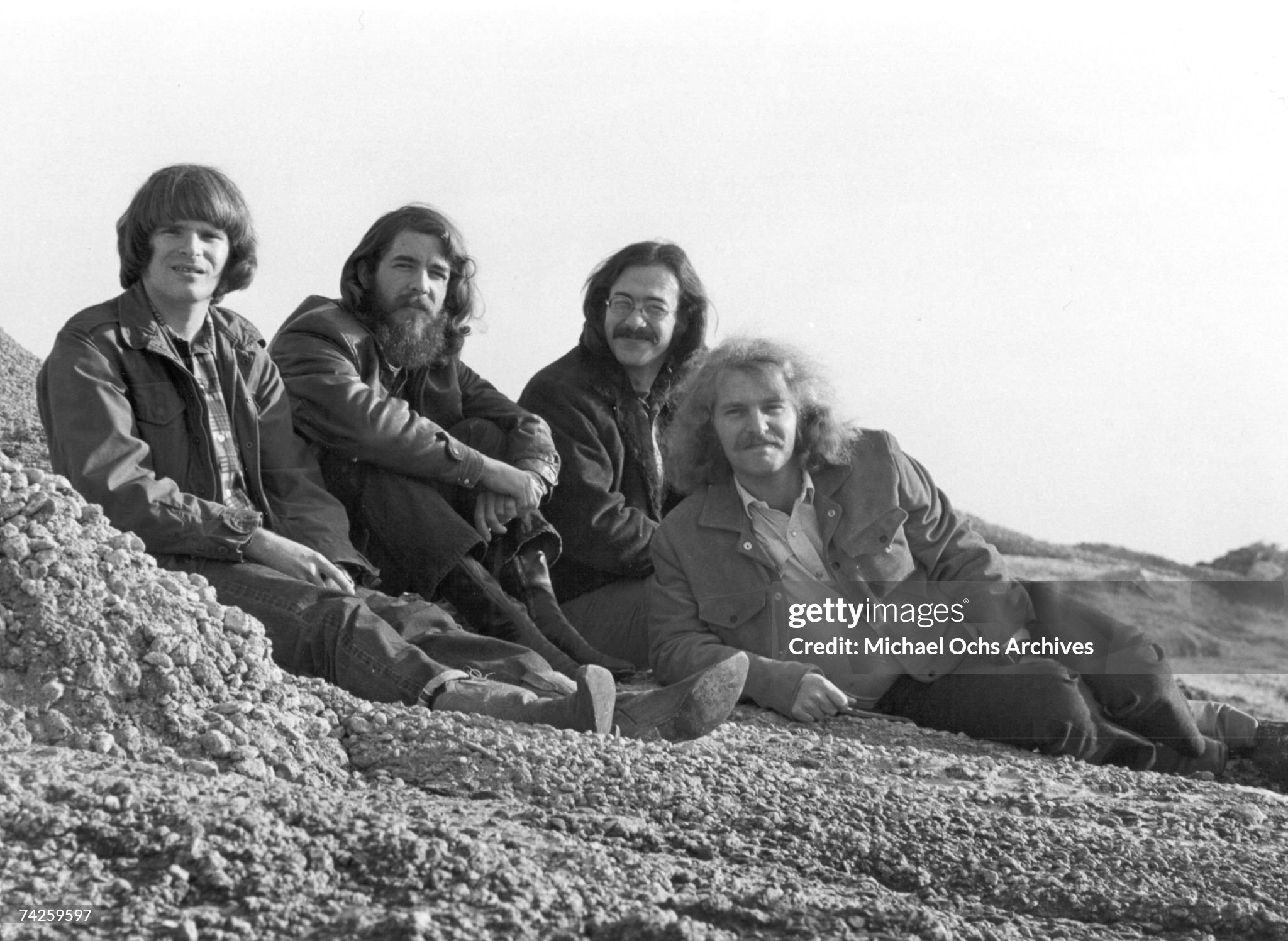
“It’s Just a Thought” is CCR’s softest kind of truth—where certainty dissolves into dusk, and love is remembered not as victory, but as something you almost had.
Creedence Clearwater Revival didn’t build their legend on delicate hesitation. They were the band of hard riffs and hard weather—songs that sounded like engines, rivers, fences, and warnings. That’s why “It’s Just a Thought” feels so striking: it’s CCR stepping away from the swagger of the road and sitting still long enough to admit the ache of maybe. The track appears on their album Pendulum, released December 9, 1970 on Fantasy Records, produced by John Fogerty.
And the timing matters. Pendulum arrived in late 1970, the band’s second album that year—after a period when CCR seemed unstoppable, like they could put out a record and immediately reshape radio. Yet “It’s Just a Thought” isn’t a hit-machine move. It wasn’t rolled out as a chart single. Instead, it lives where the most personal songs often live: mid-album, quietly waiting for the listener who’s willing to slow down. Discographies and track lists place it as track 8, running roughly 3:45 (timings vary slightly by release).
The essential “behind it” fact is simple and powerful: John Fogerty wrote it. And you can feel that authorial closeness in the way the song speaks—less like a story told to impress, more like a thought you didn’t mean to say out loud. Even the title is a kind of defense mechanism: it’s just a thought—as if naming the feeling too clearly might make it hurt more.
Musically, it’s one of the clearest windows into what Pendulum was doing differently. The album is often discussed as the moment CCR broadened their palette beyond the tight “swamp rock” template—more keys, more arrangement, more breathing room. On “It’s Just a Thought,” that space becomes emotional space: room for regret to echo, room for memory to walk around without being chased by a riff.
And that’s the meaning that lingers. “It’s Just a Thought” isn’t about the dramatic end of love; it’s about the quieter, more haunting version—the love that fades while you’re still holding it in your mind. The narrator isn’t shouting. He’s circling an idea: that time passes, that chances pass, that what mattered becomes something you can only revisit in reflection. The ache doesn’t come from a single moment of betrayal; it comes from the long, ordinary drift of years “passing by,” until you realize you’re living after the story you thought you were still in.
What makes CCR’s performance so affecting is its restraint. Fogerty—so often the commanding voice of warning and motion—sounds thoughtful here, almost tender, as if he’s trying not to disturb the memory while he examines it. It’s the sound of a man realizing that the past is not only behind you; sometimes it’s inside you—quiet, persistent, returning at odd hours.
So if you come to “It’s Just a Thought” expecting CCR’s usual bite, you might miss its power at first. But if you come to it the way life teaches you to—after you’ve watched time do what time does—then it lands differently. It becomes one of those songs that doesn’t beg for attention, because it knows attention will find it eventually. In the end, “It’s Just a Thought” is the rare CCR moment where the band’s greatest strength isn’t force—it’s honesty.