
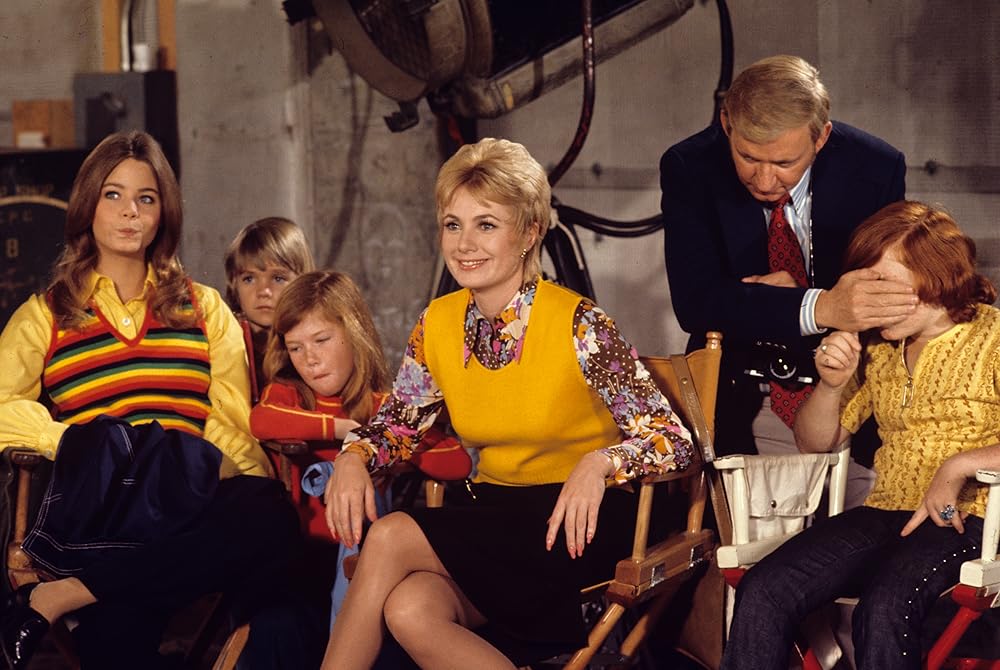
“Summer Days” feels like a soft photograph you can hear—sunlight on skin, young love at a distance, and the quiet ache of knowing a season never truly comes back.
The most important thing to know up front is this: “Summer Days” by The Partridge Family was not released as a single, so it did not debut with a Billboard Hot 100 chart position the way their best-known hits did. Instead, it lived where many beloved songs live—inside an album, waiting for listeners to stumble upon it and keep it for themselves. The track was written by Tony Romeo (the same writer behind their breakthrough “I Think I Love You”) and first recorded by The Partridge Family for their third studio album Sound Magazine, released in August 1971 on Bell Records, produced by Wes Farrell.
That album context matters. Sound Magazine reached No. 9 on Billboard’s Top LPs chart in late September 1971, and it stands as one of the project’s most accomplished pop collections—studio craftsmanship designed to feel effortless, like a radio-friendly breeze that somehow carries real feeling. If you’re looking for “ranking at release,” this is where the evidence points: not a single-chart peak for “Summer Days”, but the strong commercial footprint of the album that carried it.
And what a deceptively tender song it is. “Summer Days” is built on a particular kind of nostalgia—less about the party of summer, more about its afterglow. The lyric imagery (sunlight, closed eyes, a remembered path to a “summer place”) has the dreamy specificity of recollection: the mind replaying details it didn’t even realize it was saving. Even the title feels plural on purpose—days, not day—suggesting not one moment but a whole season of moments, gathered up like postcards in a drawer.
Behind the scenes, there’s a small but revealing footnote that deepens the song’s place in the Partridge story: David Cassidy later re-recorded a solo version for his 1973 album Dreams Are Nuthin’ More Than Wishes. That tells you “Summer Days” wasn’t treated as disposable filler—it was a melody and mood worth revisiting, reshaping, and claiming more personally. Even the album documentation and liner-note material around Sound Magazine tends to single the track out as a “nostalgic” Romeo composition, which aligns perfectly with what the record communicates: sweetness edged with time’s refusal to pause.
Musically, the Partridge Family recordings often balanced polish with a kind of theatrical warmth—songs made to sparkle in the context of a TV performance, yet sturdy enough to stand without the screen. Sound Magazine explicitly notes that the album’s tracks were featured on the TV show, mainly from Season 2, and you can hear that showmanship in the way “Summer Days” paints its scene quickly, like a short musical episode of memory. Still, the feeling isn’t “sitcom.” It’s closer to that late-afternoon hush when the world turns golden and you suddenly understand, with a pinch of sadness, that you’re watching something become the past.
That’s the meaning of “Summer Days” at its core: not just romance, but the fragile miracle of time with someone—how ordinary footsteps can become sacred once they’re gone. And perhaps that is why it endures quietly, without the bragging rights of a chart peak. Some songs don’t need a ranking to prove their worth. They settle into the listener’s life more discreetly, like a familiar scent on an old shirt—impossible to monetize, impossible to forget. In that way, The Partridge Family captured something timeless: the sound of a season you can revisit only by pressing play.