
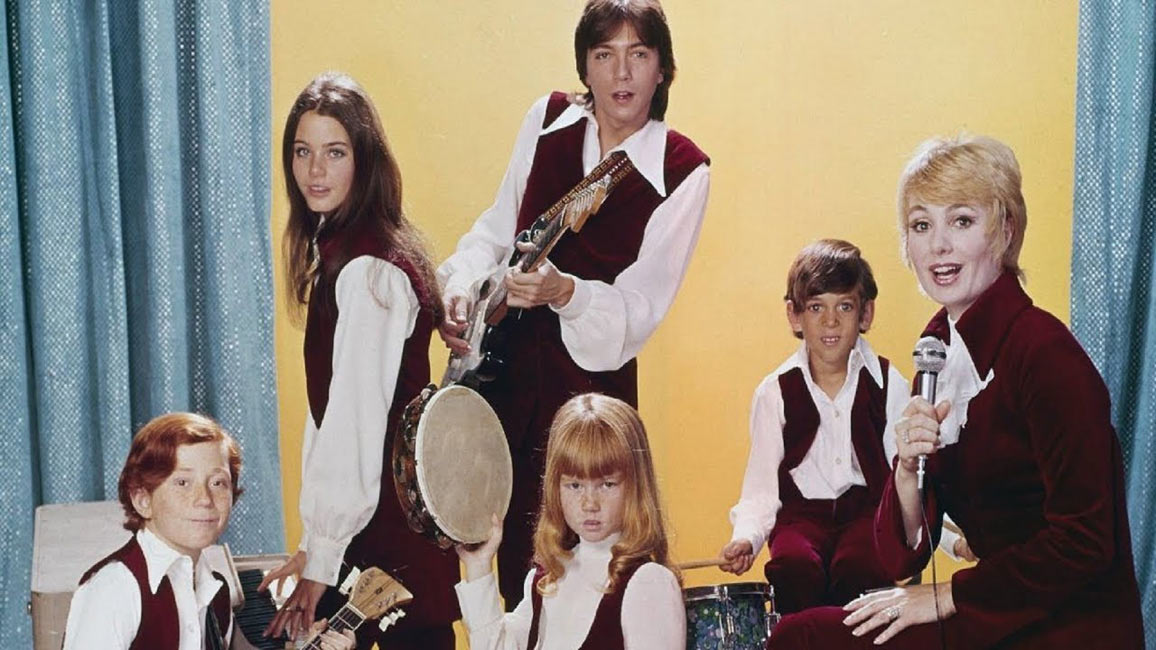
“I Can Feel Your Heartbeat” captures that first flush of young love—when the room seems to lean closer, and a single glance feels louder than words.
There are songs that arrive with chart-topping fanfare, and then there are songs that live a different kind of life—quietly, faithfully, inside the hearts of people who kept the album. “I Can Feel Your Heartbeat” by The Partridge Family is firmly in the second category. It was not released as a main single, so it doesn’t have a clean “debut week” on the Hot 100 to hang its story on. Instead, it sits on the group’s first LP, The Partridge Family Album, released in October 1970 on Bell Records, produced by Wes Farrell—a record that rode the early wave of the TV series’ popularity and eventually climbed to No. 4 on Billboard’s Top LPs in early 1971.
That context matters, because this song wasn’t built to be a standalone “radio event.” It was built to be part of a world—an idealized, bright, musical world that America stepped into each week via television. Every track on the album was tied to first-season episodes, and the sound was shaped by top-tier L.A. session players and vocal arrangers—one reason the record still feels punchy and professional when you hear it today.
The most precise “origin detail” we have is wonderfully specific: “I Can Feel Your Heartbeat” was recorded on August 4, 1970 (one of the listed session dates for the album). It’s a small fact, but it’s the kind that makes the era feel tangible—late summer in a Hollywood studio, pop music being assembled with craft and speed, while a brand-new TV phenomenon was still fresh enough to feel like it might be a lucky accident.
Songwriting credits for Partridge material can be a maze, but a reliable pointer comes from Wes Farrell’s own discographical record: “I Can Feel Your Heartbeat” is credited as a Farrell co-write with Jim Cretecos and Mike Appel (the same Appel who would soon become notable in rock history as an early manager/producer for Bruce Springsteen). That’s part of the hidden charm of early-’70s pop: behind the bubblegum surface, you often find writers and industry figures who would later shape very different chapters of American music.
So what’s the song about, really? The title tells you everything—and then the lyric keeps proving it. “I Can Feel Your Heartbeat” is that breathless moment when attraction becomes physical certainty: you “know” before you’re told, you sense feeling through the air, you catch meaning in the smallest gestures. It’s romantic without being complicated, intimate without being explicit—built for an audience that wanted innocence with a pulse. In the Partridge universe, love is thrilling but safe, a warm rush rather than a risky plunge. That emotional design is why the song has stayed lovable: it doesn’t demand cynicism from the listener. It offers the memory of a time when emotion could be direct.
Musically, it also carries a little more drive than the sweetest Partridge ballads—enough rhythmic urgency to justify the title’s “heartbeat” metaphor. It’s easy to imagine why fans and later commentators have called it one of the group’s more energetic album cuts—an overlooked candidate for single status, especially given how the album’s official single campaign focused on the blockbuster “I Think I Love You.”
And maybe that’s the enduring story behind “I Can Feel Your Heartbeat.” It’s the song you discover when you’re no longer just chasing the hit—when you let the needle keep playing. It belongs to that older ritual of listening: flipping the record, learning the deep tracks, recognizing how an album can feel like a small hometown of sounds. If the big singles are the bright storefronts, this song is the side street you come to love for its quiet familiarity.
In the end, The Partridge Family didn’t need this track to be a chart statistic for it to matter. “I Can Feel Your Heartbeat” is pop nostalgia at its best: not kitsch, not irony—just a sincere little rush of feeling, preserved from 1970 like a pressed flower in a book, still carrying its color when you open the pages again.