
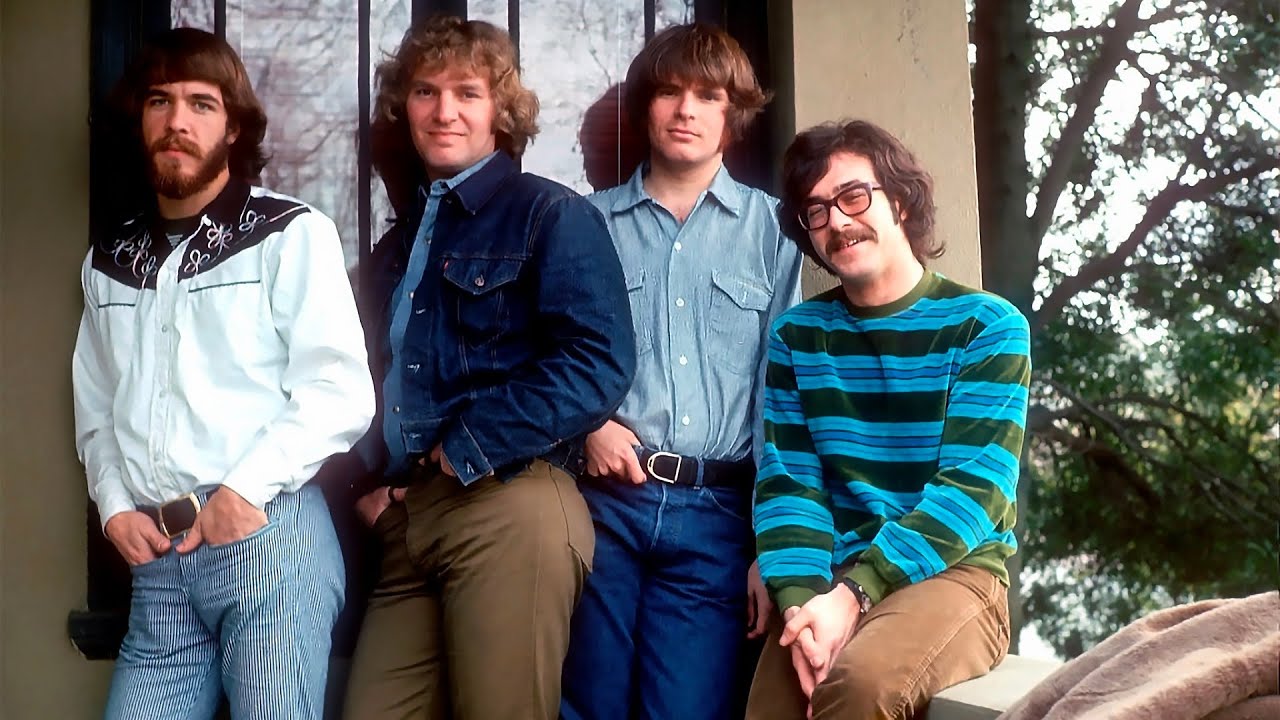
“Get Down Woman” is CCR’s early-night blues confession—raw, stubborn, and restless—where desire and doubt ride the same backbeat.
Before Creedence Clearwater Revival became the band that seemed to own America’s back roads—before the hit streak, the bayou mythology, the warning bells of “Bad Moon Rising”—there was their self-titled debut album, a record that still sounds like a door opening onto something inevitable. “Get Down Woman” lives right there, in the first chapter: it’s an album track on Creedence Clearwater Revival, released May 28, 1968 on Fantasy Records, recorded at Coast Recorders in San Francisco (sessions spanning October 1967 and February 1968), produced by Saul Zaentz and John Fogerty.
This is important context, because “Get Down Woman” wasn’t introduced to the world with the fanfare of a single. It didn’t chase a chart peak under its own name; the debut album’s big public breakthrough was “Susie Q,” which reached No. 11 in the U.S., and later the follow-up single “I Put a Spell on You” hit No. 58. So “Get Down Woman” belongs to that more intimate category: the song you meet by staying with the album, by letting the record keep turning after the famous tracks have spoken.
On that track list, it stands out for another reason: it’s one of the early John Fogerty originals that signals who he’s about to become. The debut includes several covers—smart choices, played with hunger—but the album notes point out that along with “Porterville” and others, it also contains Fogerty’s own writing, including “Get Down Woman.” And the credits are clean: composition and lyrics are credited to John Fogerty.
So what does it feel like, this song tucked into CCR’s beginnings?
It feels like a smoky room before midnight—when the laughter is a little forced, when the music is the only honest thing in the air. “Get Down Woman” is built on a blues-rock spine: a tight groove, a lean guitar attitude, and a vocal that doesn’t ask permission. You can hear the band still close to their bar-band roots, still proving they can hold a room with nothing but rhythm and nerve. And yet, it’s already unmistakably CCR: the forward-leaning propulsion, the sense that the song is less “performed” than driven, like an engine that refuses to idle.
The lyric’s emotional center—what gives the song its lasting sting—isn’t merely desire. It’s the uneasy mix of desire and mistrust, attraction and defensiveness. “Get down” in this context isn’t a poetic metaphor; it’s a blunt, bodily command. But beneath that toughness is a more human anxiety: the fear of being played, the fear of being left standing in your own longing after the other person has walked away. That tension—wanting closeness while bracing for disappointment—has always been one of rock and roll’s oldest truths. CCR just deliver it without decoration, like working people speaking plainly because there’s no time for pretty lies.
And that plainness is where nostalgia begins to seep in, even if you didn’t live through 1968. There’s a world inside this track: cheap neon, late buses, the kind of romance that isn’t filmed in soft focus because it’s happening in real time, in real clothes, with real consequences. John Fogerty sings like someone who already understands that love isn’t always gentle—and that sometimes the bravest thing you can do is admit what you want without pretending it’s noble.
It’s also worth remembering where this sits in CCR’s arc. This debut album is the sound of a band stepping out from their old identity and claiming a new one; even the album’s background notes describe it as being recorded shortly after they changed their name from the Golliwogs and began shaping their signature sound. Within that moment of transformation, “Get Down Woman” feels like a sketch of the tougher emotional language they’d soon perfect—less pop sweetness, more American grit.
In the end, “Get Down Woman” matters because it isn’t polished into a “message.” It’s a feeling caught quickly and honestly—an early CCR pulse. Not the band at the height of the mountain, but the band climbing in the dark, hands rough, music loud enough to keep the fear from speaking. And if you listen closely, you can hear the future inside it: that relentless Creedence insistence that whatever life is—messy, unfair, hungry, beautiful—it should still have a beat strong enough to carry you forward.