
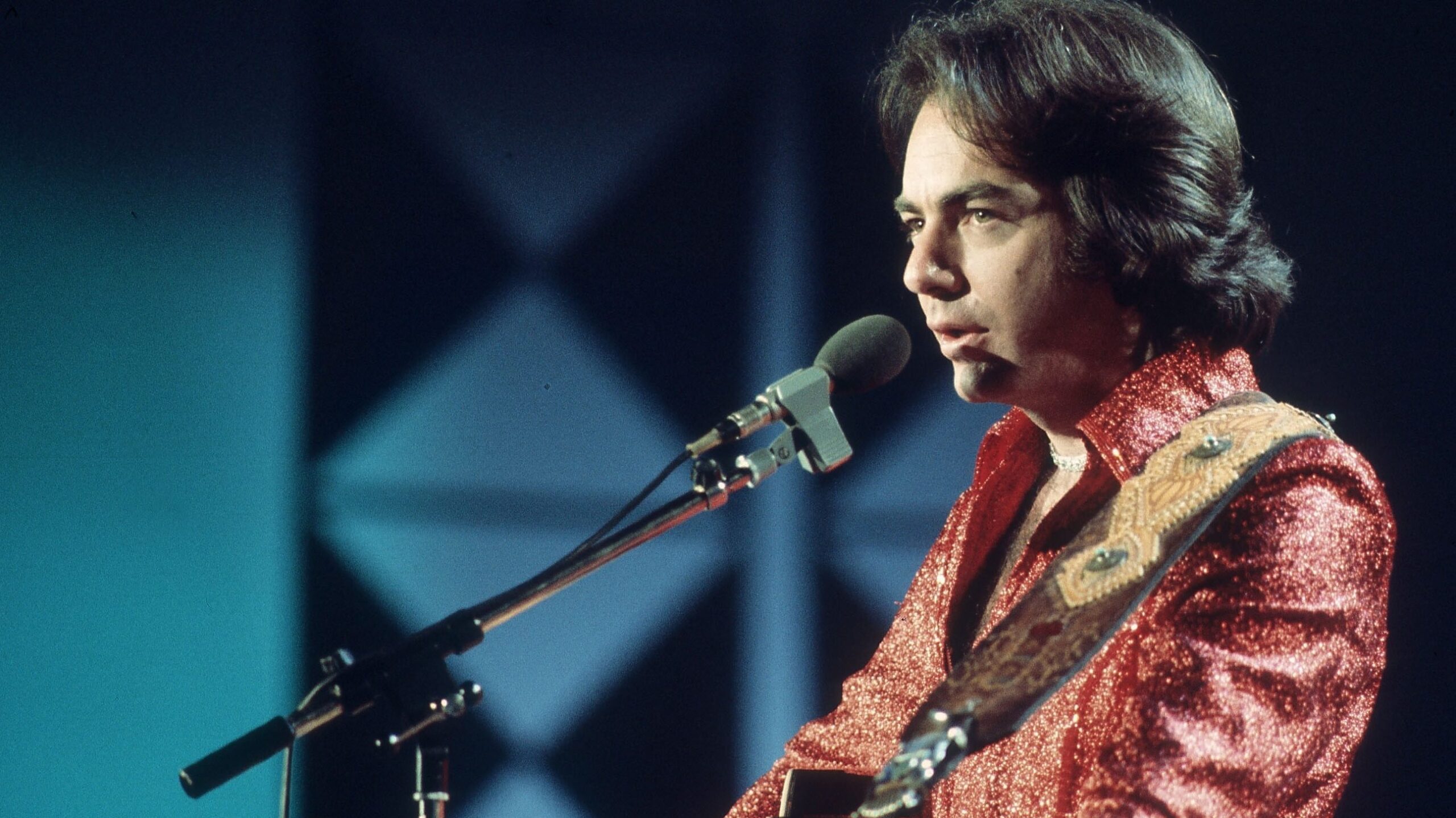
“Solitary Man” is Neil Diamond’s first clear self-portrait—loneliness turned into resolve, a goodbye to easy romance and a vow to stand upright, even when standing alone.
Before the arenas, before the rhinestones, before the voice became a warm, familiar weather system on the radio, Neil Diamond introduced himself with a song that didn’t try to charm its way into your life—it simply told the truth and waited. “Solitary Man” was released on Bang Records on April 4, 1966, recorded on January 24, 1966, and produced by the legendary hitmakers Jeff Barry and Ellie Greenwich. In its original 1966 run, it reached No. 55 on the Billboard Hot 100 (and No. 60 on Cash Box, No. 56 in Canada’s RPM chart). Four years later, after Diamond’s star had grown larger, Bang reissued the single in 1970, and this time it climbed higher—peaking at No. 21 on the Billboard Hot 100 and No. 6 on Billboard’s Easy Listening chart—as if the world had finally caught up to the quiet gravity inside the song.
Those numbers matter, but not as trivia. They tell a small human story: a young songwriter steps out from behind the curtain, sings his own loneliness, and the audience answers—slowly at first, then more surely once they understand that this “solitary man” isn’t a pose. It’s a voice. A personality. A lifelong thread.
The song’s origins sit in that mid-’60s New York world of publishers’ offices and quick-turnaround singles, where you either delivered or disappeared. Diamond had already been writing for others, learning how to build a hook that could survive on a cheap turntable. But “Solitary Man” doesn’t feel manufactured. It feels personal—almost uncomfortably so. Years later, Diamond would admit that after years of therapy he realized he had written the song about himself. And in a separate recollection, he said the song’s spark was partly inspired by the Beatles’ “Michelle”—not the French words, but the sense of a melody that can carry longing without raising its voice. That’s the remarkable thing about the track: it is restrained heartbreak. Not a tantrum, not a plea—more like a man deciding, with a bruised calm, that he will no longer be the punchline in his own love life.
Listen closely to the way the lyric works. The narrator lists the women and the disappointments, almost like flipping through old photographs he can’t quite throw away. Yet the chorus doesn’t collapse into defeat. It stiffens. “Solitary man” is not simply “lonely man.” It’s a man drawing a boundary: I’ve been burned, I’ve been foolish, I’ve played the part—but I’m done being easy to leave. There’s self-respect inside the sadness, a kind of emotional spine. That’s why the song has outlived fashions. It understands that loneliness isn’t always emptiness; sometimes it is a decision to stop pretending.
Musically, “Solitary Man” carries the fingerprint of its era—tight runtime, bright rhythm, and that Brill Building clarity where every second counts. But even within that polished frame, Diamond’s persona arrives fully formed: the thoughtful outsider, the romantic who can’t quite believe romance will be kind to him, the man whose sensitivity is never separated from pride. In hindsight, it reads like the first chapter of a long autobiography written in melodies. Many later Diamond classics would expand the canvas—bigger choruses, bigger stages, bigger emotions—but this early single already contains the core: a private confession delivered with public discipline.
The re-release success in 1970 adds a final layer of meaning. By then, Diamond was no longer merely a promising writer with a distinctive voice—he was becoming a major recording artist. When the old Bang single returned to the charts and rose higher than it had the first time, it felt like a delayed recognition: the world realizing that his earliest statement was also one of his truest. Not youthful melodrama, but a durable emotional blueprint.
In the end, “Solitary Man” remains moving because it refuses to romanticize loneliness while still refusing to be ashamed of it. It says: Yes, I’m alone—and yes, I’m still standing. And for anyone who has ever had to walk away from the easy version of themselves, it still lands like a hand on the shoulder—quiet, steady, and strangely comforting, even as the night outside the window keeps going on.