
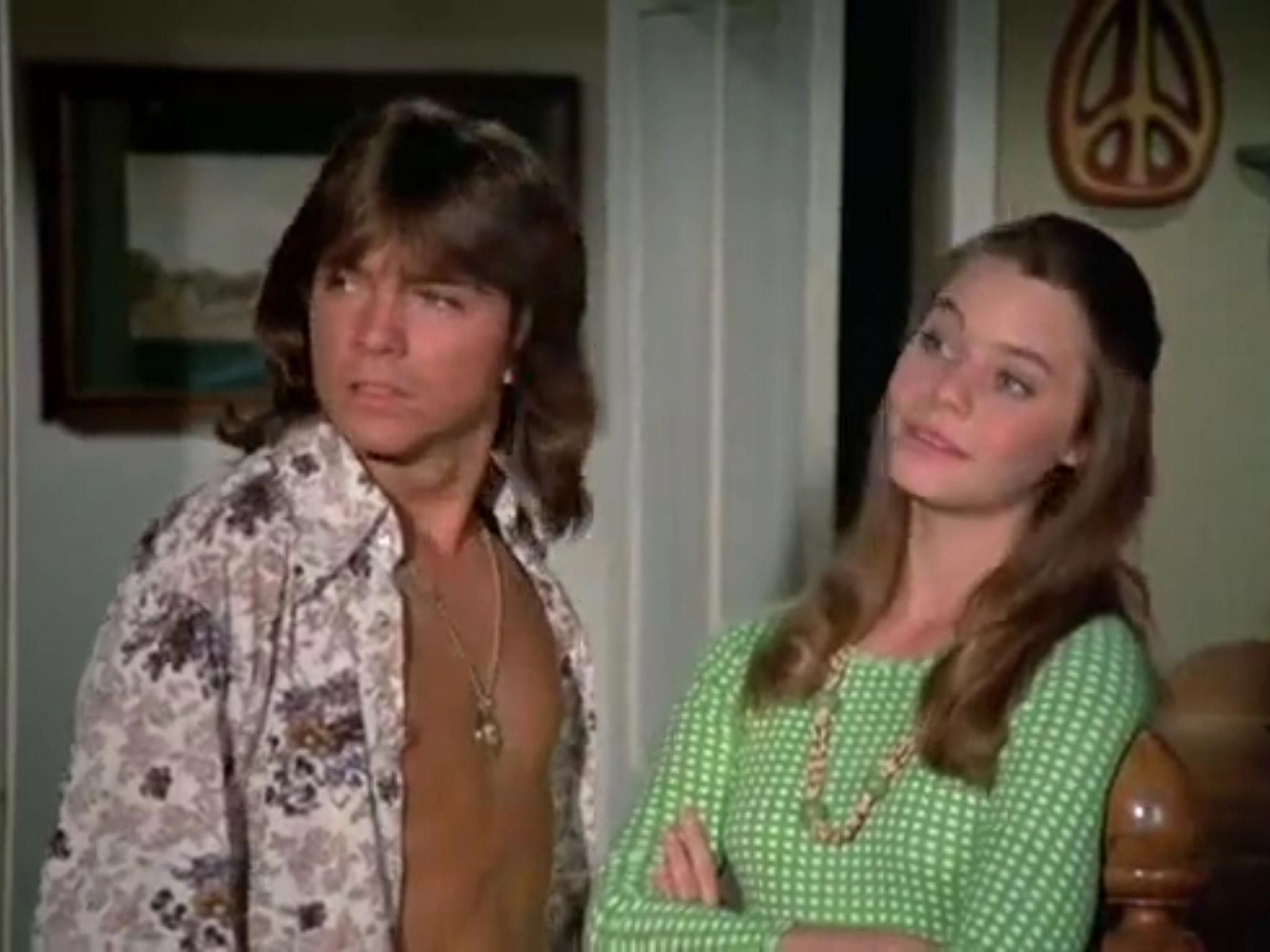
“Somebody Wants to Love You” is a soft-hand-on-the-shoulder kind of song—an early-’70s promise that even in the loneliest room, there’s still a door that can open.
For all the bright TV-color cheer that people associate with The Partridge Family, “Somebody Wants to Love You” carries a quieter emotional truth: it’s written for the moment after the laughter fades, when you’re “on your own, far away from home,” and the world feels a little too large and indifferent. That tenderness is not an accident. The song was recorded on May 11, 1970 at United Western (Hollywood) during the sessions for The Partridge Family Album—the debut LP released in October 1970 on Bell Records, produced by Wes Farrell.
In strict release-and-ranking terms, the song’s biggest public “moment” came not as an A-side, but as the B-side to “I Think I Love You.” That single was released August 22, 1970, and it famously topped the Billboard Hot 100 for three weeks in November and December 1970—meaning “Somebody Wants to Love You” rode into homes on the flip side of one of the era’s defining bubblegum-pop smashes. Meanwhile, the parent album itself climbed to No. 4 on Billboard’s Top LPs in early 1971, cementing the Partridge phenomenon as something larger than television.
The writing credits tell an equally revealing story. “Somebody Wants to Love You” is credited to Wes Farrell, Jim Cretecos, and Mike Appel, and it runs about 2:37 on the original album track list (Side Two, track 3). Those names sit right at the intersection of 1970s pop manufacture and genuine craft: music made quickly for a weekly TV machine, yet still shaped by professionals who knew how to write a chorus that could comfort you in a single breath.
And comfort is exactly what the song tries to give.
Where many Partridge tracks sell sunshine—instant uplift, instant crush—“Somebody Wants to Love You” speaks to the listener like a private reassurance. It begins in isolation, in that slightly cinematic loneliness of being watched by strangers and wondering if anyone truly cares. The lyric doesn’t sermonize; it simply offers a counterweight to the fear: someone wants to love you. Not “everybody.” Not “the whole world.” Just somebody—which is, honestly, the only number that ever changes a life.
That choice of word is the song’s secret brilliance. “Somebody” keeps the promise believable. It isn’t a fairy tale where crowds adore you. It’s the smallest possible rescue: one person, one true connection, one gentle certainty that you don’t have to carry your solitude forever. In the world of pop—where “love” often arrives as fireworks—this song treats love as shelter. A home you can step into, even if you’ve been wandering.
Musically, it fits the early Partridge Family aesthetic: glossy but not harsh, harmonies stacked to feel like a group gathered around you rather than a star towering over you. The larger album context matters here. The Partridge Family Album was built with top Los Angeles session players and the studio vocal teams that helped define the “Partridge sound,” and the record’s success was inseparable from the TV show’s weekly familiarity. That familiarity is part of why “Somebody Wants to Love You” lands so warmly: it sounds like a voice you already know, arriving at exactly the moment you need it.
And that’s the lasting meaning of the track—especially as a B-side. B-sides have a particular kind of intimacy. You often find them when you’re already invested—when you keep the needle down, when you refuse to stop at the “main event.” So “Somebody Wants to Love You” becomes a little reward for staying a minute longer. A secret message tucked behind the hit: yes, the world can be loud and fast and careless… but there’s still a human heartbeat out there that will match yours.
In the end, The Partridge Family weren’t only selling a TV fantasy. At their best, they were selling a feeling people recognized as real: the hope that loneliness is temporary. And “Somebody Wants to Love You”—quiet, earnest, and perfectly of its time—still feels like that hope pressed into vinyl, waiting on the other side of the record for anyone who’s willing to listen.