
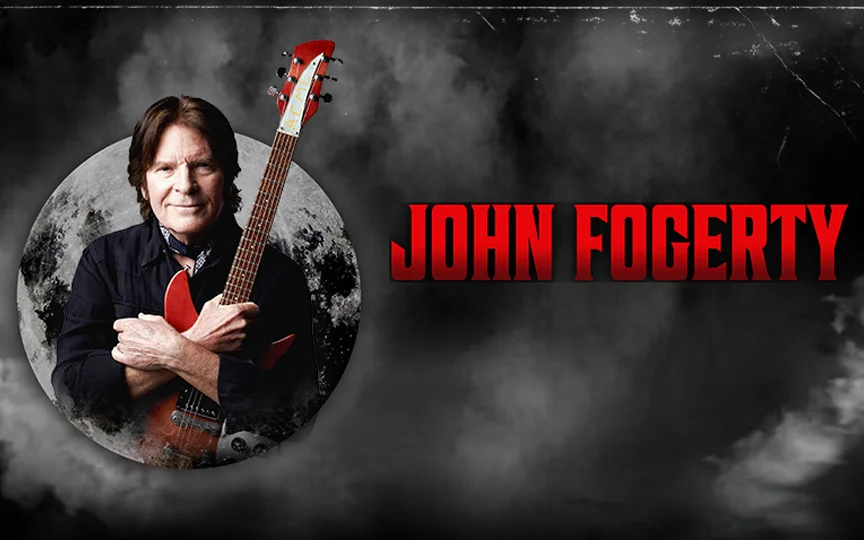
“Broken Down Cowboy” is John Fogerty staring into the rearview mirror of a hard-lived life—where charm and trouble ride in the same pickup, and love learns to keep its distance.
If you want the most important coordinates first: “Broken Down Cowboy” is the fourth track on John Fogerty’s album Revival, released October 2, 2007. Fogerty wrote the song (as he did the whole album), and on official track listings it runs about 3:51. The song itself was not launched as a major chart single, so it has no Hot 100 debut position to report; its “arrival” is best understood through the album’s impact. And Revival arrived strongly: it debuted at No. 14 on the Billboard 200, selling about 65,000 copies in its first week. The album was also nominated for a GRAMMY Award for Best Rock Album (2008)—a late-career nod that Fogerty wasn’t merely revisiting old muscle memory; he was still making new work that mattered.
Now, the heart of it.
Fogerty has always been a master of the American character sketch—the kind you can see in a single stanza: the drifter, the working man, the believer, the troublemaker, the survivor. “Broken Down Cowboy” feels like one of his most quietly merciful portraits. He sings from inside a man who knows he’s damaged goods, and who’s honest enough to warn you before you get too close. The lyric opens like a gambler’s confession—if I were a gambling man…—and from there the narrator lays out the truth: you don’t wager your heart on someone like him. It’s not self-pity so much as self-knowledge, the kind that arrives after you’ve watched your own patterns repeat for too many years.
What makes the phrase “broken down cowboy” so powerful is how Fogerty uses it. This isn’t the romantic cowboy of postcards and movie posters. This is the man after the myth has worn thin: the one with a “losing streak,” the one carrying “saddlebags” of pain, the one who can still sing you a lonesome song—and still lead you somewhere you shouldn’t go. Fogerty’s language is plain, almost conversational, but that’s part of the sting. When a lyric is too poetic, you can admire it at a distance. When it sounds like something a person might actually say, it hits closer.
It also matters where Revival sits in Fogerty’s timeline. The album was recorded at NRG Recording Studios in North Hollywood and marked a return to new material after a few quieter years. Even the album’s title carries a double meaning: revival as celebration, and revival as rescue—pulling something back from the edge before it disappears. In that light, “Broken Down Cowboy” feels like Fogerty acknowledging the wear-and-tear that life puts on people, including himself: the way time can leave you tough on the outside but strangely tender underneath, because you’ve learned what hurt really costs.
Musically, the song has that Fogerty gift for motion—roots-rock with dust on its boots. It moves like a late-night drive with the window cracked, the radio low, and your thoughts louder than the engine. It’s not the swaggering bravado of youth; it’s a steadier rhythm, the kind that says: I’ve been around long enough to know what this ends up looking like. That steadiness is what gives the lyric its emotional authority. The narrator isn’t trying to impress you. He’s trying to be fair to you.
And that’s the real meaning of “Broken Down Cowboy.” It’s a love song turned inside out: instead of asking someone to stay, the singer is warning them not to. Instead of promising forever, he’s admitting the truth about his own instability—how easily he can “string you along,” how naturally trouble follows him like a shadow. There’s something strangely honorable in that, even if it’s heartbreaking: the idea that the last kindness a flawed person can offer is honesty.
When you’ve lived long enough, you start to recognize these “cowboys” in real life—sometimes in others, sometimes uncomfortably in yourself. That’s why Fogerty’s song lingers. It doesn’t glamorize damage. It simply names it, and in naming it, it offers a small kind of grace: the grace of seeing clearly, before the heart places its bet.