
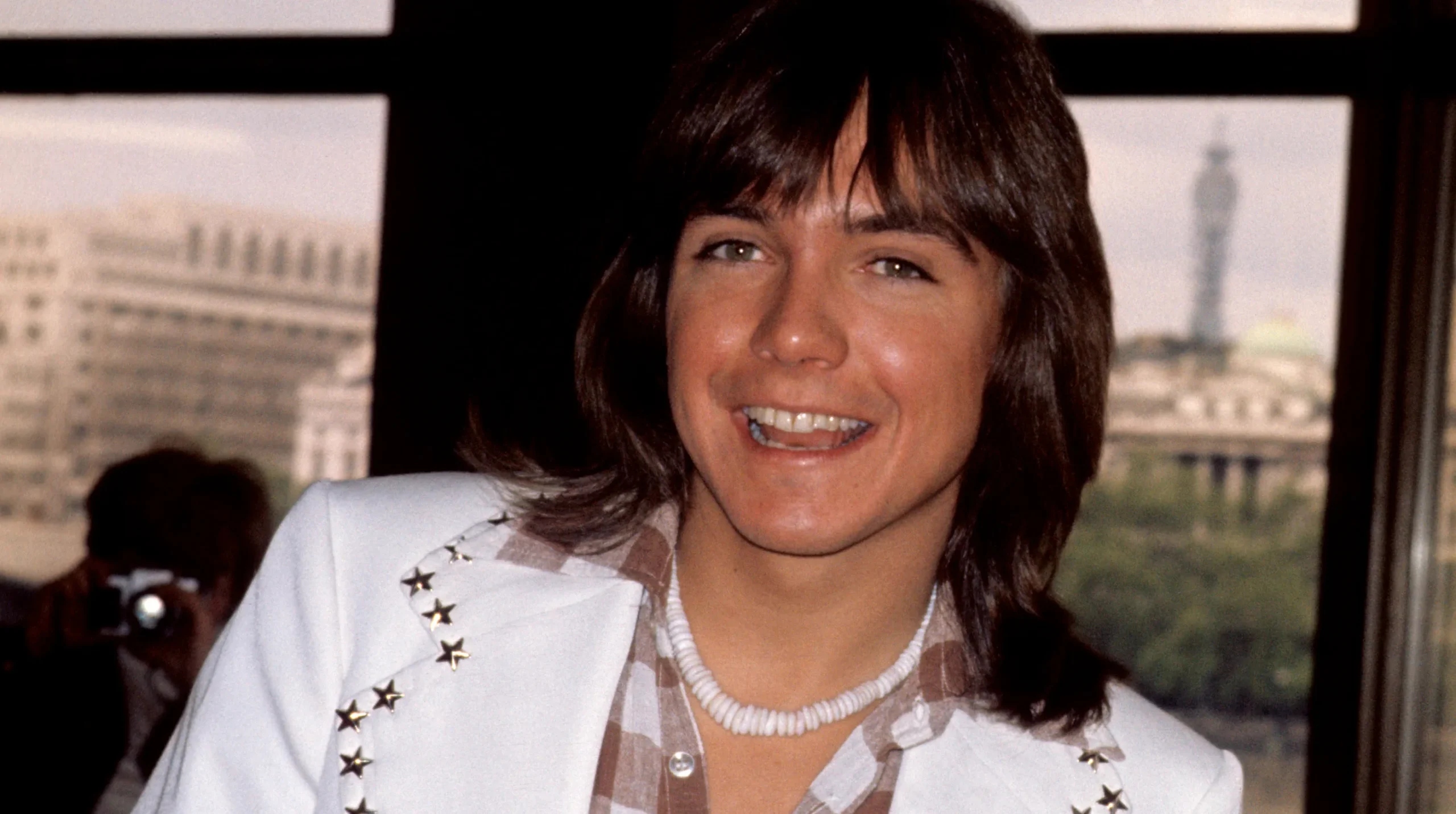
“This Could Be The Night” is the sound of a heart pausing at the edge of decision—hopeful, unsure, and brave enough to whisper maybe.
If you came to David Cassidy through the bright rush of early fame, “This Could Be The Night” can feel like stepping into a quieter room in the same house—one where the lights are lower, the laughter has faded, and the feelings are allowed to speak in their natural voice. The most important fact to hold close is this: Cassidy’s recording wasn’t launched as a headline A-side smash. In the UK, it surfaced for many listeners as the B-side to his 1975 single “Darlin’” (RCA catalogue 2622), a record that peaked at No. 16 on the Official Singles Chart and stayed on the chart for eight weeks. That context matters, because it explains why the song can feel like a secret kept in the sleeve—a private companion to a more public hit.
Cassidy’s version is also tied to his mid-’70s RCA period, specifically the 1975 album The Higher They Climb, The Harder They Fall, where “This Could Be The Night” appears in the track list alongside his rendition of “Darlin’.” It’s a fascinating placement: an artist known for mass adoration choosing material that leans into vulnerability rather than victory. There’s no strut here, no teen-idol sheen. Instead, the song sits like a candle in a window—small, steady, and strangely arresting if you give it time.
The story behind the song reaches further back than Cassidy, into the orbit of two larger-than-life figures: Harry Nilsson and Phil Spector. The song is widely associated with Nilsson’s writing, and it’s often co-credited to Spector as well—part of that era’s tangled mythology, where authorship, production power, and legend sometimes blur at the edges. Long before Cassidy recorded it, the piece existed as a romantic threshold—music built for that suspended second when anticipation is sweeter than certainty.
That is the meaning at the center of “This Could Be The Night.” It isn’t about love already won; it’s about love approaching, almost timidly, with a kind of reverence. The lyric idea—this could be—is emotionally honest in a way pop music rarely allows. Not this will be. Not this has to be. Just the fragile admission that tonight might change something, and that change is both desired and feared. The song understands that intimacy is not only excitement; it is risk. It asks the listener to remember what it felt like to stand in a doorway, hearing your own heart louder than the room beyond.
In Cassidy’s hands, that hesitation becomes the performance. He doesn’t sing like someone making a grand announcement to the world; he sings like someone speaking to one person—careful not to break the spell by speaking too loudly. And perhaps that is why the track endures for those who find it: it carries the emotional temperature of a private moment, not a public rally.
There’s also a subtle, almost poignant irony in its release history. As a B-side—paired with a charting single that the UK embraced—“This Could Be The Night” lived in the shadow while quietly doing deeper work. It became the kind of song you didn’t necessarily hear at first; you discovered it later, when you turned the record over, when you were no longer chasing the chorus everyone already knew. In that sense, its afterlife feels perfectly suited to its theme: not a shout, but an invitation; not a certainty, but a possibility.
And when you return to it now, it doesn’t feel dated so much as human. The years fall away, and you’re left with that old, familiar trembling hope: that a single evening—softly entered, tenderly held—could become the night you remember for the rest of your life.