
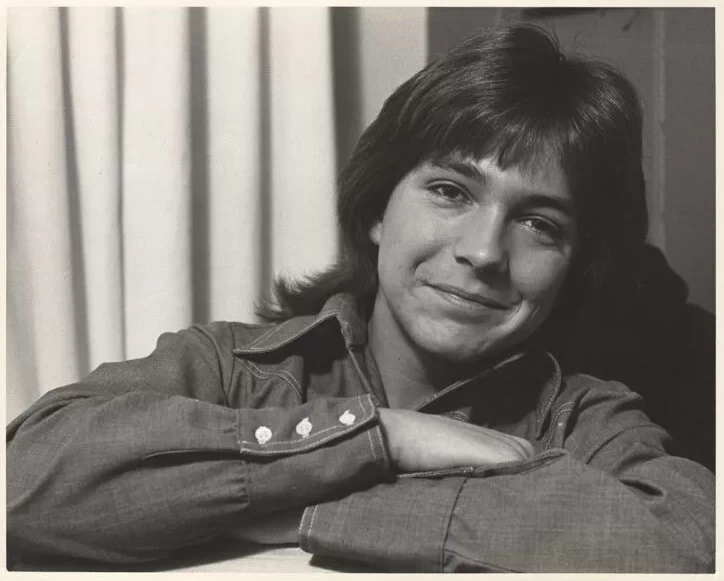
“No Bridge I Wouldn’t Cross” is David Cassidy’s late-career vow of devotion—love measured not in fireworks, but in the distance you’re willing to travel to keep someone close.
“No Bridge I Wouldn’t Cross” belongs to a chapter of David Cassidy that many casual listeners missed, but longtime ears often cherish: the era when he stopped trying to “compete” with his own past and instead sang like a man determined to be understood. The track was released in 1998 as the featured single from his album Old Trick New Dog, issued on his own label, Slamajama Records—a telling detail in itself, because it frames the song as an act of self-definition rather than nostalgia-for-sale.
In terms of chart performance at the time, it wasn’t a Hot 100-style pop event. It was something more quietly respectable—and, in its way, more meaningful: the song reached No. 23 on Billboard’s Adult Contemporary chart. That number may look modest beside his early-’70s peak fame, but it carries a different kind of weight. Adult Contemporary radio is a place where songs survive on tone, empathy, and emotional clarity. You don’t get in by noise alone. You get in by sounding like you mean what you say.
The songwriting credits also reveal why the song feels so polished and modern for its time. “No Bridge I Wouldn’t Cross” was composed by Simon Climie, Billy Laurie, and Lulu (credited as Lulu Frieda)—names associated with savvy, melodic pop craftsmanship rather than teen-idol pastiche. And while some collectors’ listings describe Cassidy’s recording as connected to an earlier Lulu track, the most securely documented point is that Cassidy’s 1998 release is the version that found real airplay traction in the U.S.
On Old Trick New Dog, the song’s placement feels like a mission statement. The album itself mixes new material with re-recordings of familiar favorites, as if Cassidy were bridging two lives: the boy the public thought it owned, and the adult artist he insisted on being. The record’s track list opens with “No Bridge I Wouldn’t Cross,” then flows into titles that consciously nod to his earlier era (including a new version of “I Think I Love You”). It’s hard to miss the symbolism: start with the present, then acknowledge the past—on your own terms.
What makes “No Bridge I Wouldn’t Cross” linger is the emotional posture it takes. This is not love as conquest, not love as a clever line meant to impress. It’s love as labor—love as persistence. The lyric doesn’t pretend relationships are easy. It hears the approaching footsteps of someone leaving, and it answers with a vow that is almost physical: there is no bridge he wouldn’t cross, no river too wide. If you’ve lived long enough to know how separation really happens—rarely with explosions, often with quiet decisions—then you understand why that imagery works. Bridges and rivers aren’t metaphors for drama. They’re metaphors for distance, time, and the stubbornness of fate.
Cassidy’s performance carries the song’s best secret: restraint. He doesn’t sing it like a man performing romance; he sings it like a man trying to hold onto something real before it slips away. There’s a plea in the phrasing—don’t even say it, don’t even think it—as if words themselves might make the goodbye permanent. That’s a very adult fear: not the fear of heartbreak in the abstract, but the fear of a door closing because someone finally spoke the sentence both were avoiding.
It’s also worth remembering the broader moment in Cassidy’s career. By the late 1990s, he had already proven—quietly, persistently—that he could step back into the conversation as a recording artist, not merely a name from television reruns. Old Trick New Dog was part of that reclamation, and the Adult Contemporary charting of “No Bridge I Wouldn’t Cross” functioned like a small public confirmation: yes, his voice still belonged on the radio—just in a different room than before.
The meaning of the song, in the end, is simple but not shallow. It’s a promise that refuses to be romanticized. A bridge is something you build because you accept the river is real. That’s what the narrator does here: he doesn’t deny the obstacles; he commits to crossing them. And if there’s a soft ache in that commitment, it’s because the song understands the truth most love songs try to hide—sometimes the person you’re willing to cross everything for is the same person who might still walk away.
That’s why “No Bridge I Wouldn’t Cross” feels so poignant in Cassidy’s catalog. It isn’t the sound of a poster on a bedroom wall. It’s the sound of a man standing on one side of the water, calling across—less with swagger than with sincerity—hoping the other person can still hear him.