
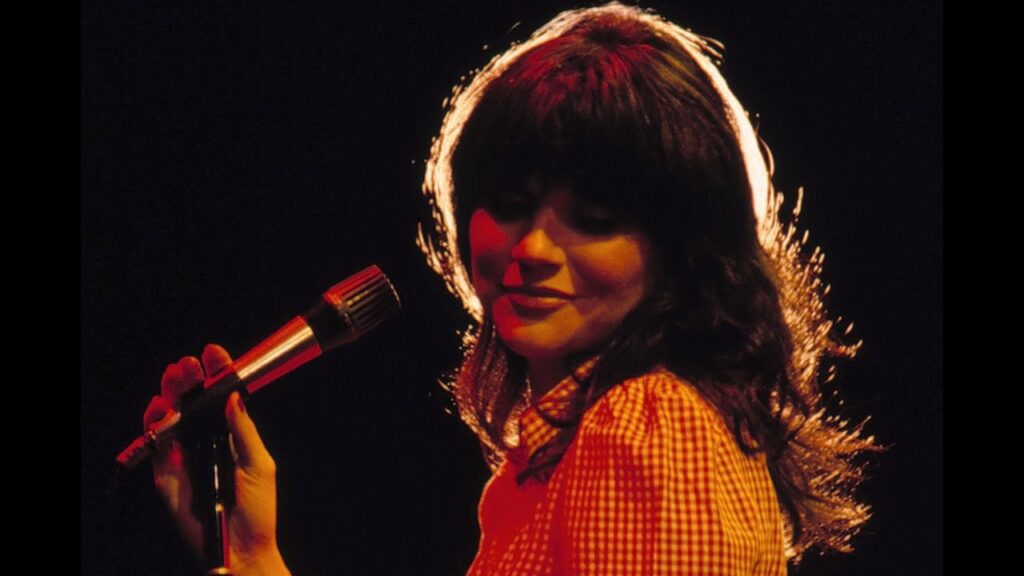
“I Will Always Love You” as a quiet goodbye: love that steps back, blesses the road ahead, and leaves the door gently closed.
When Linda Ronstadt sang “I Will Always Love You” in 1975, she wasn’t chasing a chart battle—she was choosing a song that already carried the weight of a life decision, and letting it settle into her own voice like a handwritten letter kept in a drawer. Her recording appears on Prisoner in Disguise (released September 15, 1975), produced by Peter Asher, with sessions noted as taking place during 1975.
Here’s the important chart-context truth up front: Ronstadt’s “I Will Always Love You” is best understood as an album interpretation rather than a U.S. hit single. A number of retrospectives have pointed out that it wasn’t released as a single in the way pop radio typically demands. At the same time, at least one major European chart database lists “I Will Always Love You” as a Linda Ronstadt single dated 1975 (crediting Dolly Parton as writer and Peter Asher as producer). Those two facts can live together without contradiction if we remember how differently labels handled releases across territories in the 1970s: what wasn’t pushed as a single in the U.S. could still appear as a single listing elsewhere.
The deeper “ranking” of this performance, then, isn’t a number beside a chart. It’s the place it holds in a lineage of interpretations—because the song itself began as a profoundly specific farewell. Dolly Parton wrote it as a goodbye to Porter Wagoner, her mentor and longtime professional partner, as she chose independence and a solo future. Released in 1974, Parton’s original went to No. 1 on Billboard’s Hot Country Songs. That origin matters: it means the song is not a simple love ballad. It’s a mature parting—tender, resolute, and almost painfully polite.
Ronstadt’s genius was always her ability to make other people’s songs feel like memories you didn’t know you had. On “I Will Always Love You,” she doesn’t overplay the drama. She approaches it with that Ronstadt gift for emotional clarity: each line arrives clean, as if she’s determined not to cry until the last possible moment. Where Parton’s phrasing carries the plainspoken grace of country confession, Ronstadt brings a luminous, West Coast stillness—country-rock poise with pop-grade control.
And listen to what that choice says about her in 1975. Prisoner in Disguise sits right after the breakthrough of Heart Like a Wheel, when Ronstadt could have coasted on what radio already wanted from her. Instead, she kept curating—picking songs from friends, peers, and great writers, and threading them into a record that feels like a late-night drive: headlights, doubts, and the strange comfort of movement. In that sequence, “I Will Always Love You” plays like a moment on the shoulder of the road—engine still running, hands on the wheel, a final thought before you pull back into the dark.
The meaning, ultimately, is what makes this recording endure. “I will always love you” is a line that can sound possessive in lesser hands. Here, it becomes something rarer: a blessing spoken through a lump in the throat. Ronstadt doesn’t sing it like a vow meant to bind. She sings it like a truth that survives distance—a love that refuses to become bitterness, even when leaving hurts.
If later decades turned this song into a cultural monument, Ronstadt’s 1975 reading remains something more intimate: not a monument, but a room. Step inside, and you can almost hear the quiet after a hard conversation—the kind where nobody “wins,” yet somehow everyone grows. That’s the kind of artistry Linda Ronstadt practiced so well: making grace sound human.