
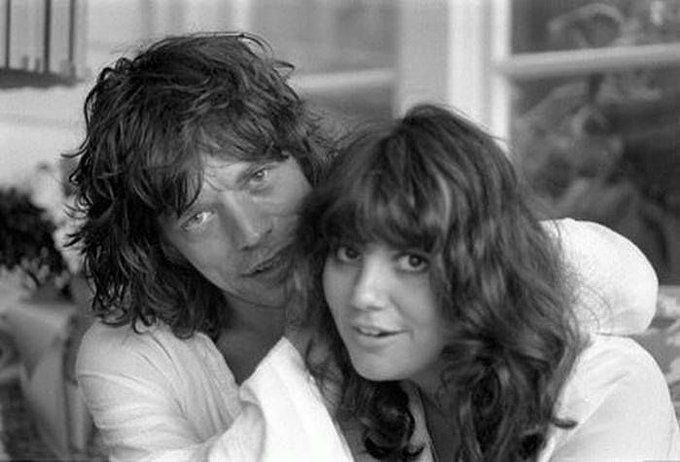
“The Fast One” is heartbreak told in motion—an urgent, late-night resolve to outrun loneliness, even if the road ahead is still wet with yesterday’s tears.
Among Linda Ronstadt’s celebrated recordings, “The Fast One” is not one of the songs that announced itself with radio saturation or a bold chart run. It’s something rarer: an album-track confession that rewards the listener who stays after the singles have had their say. “The Fast One” appears on Don’t Cry Now—Ronstadt’s first album for Asylum Records—released October 1, 1973. The album became a crucial stepping stone in her rise, entering the Billboard 200 in October 1973 and eventually peaking at No. 45 in March 1974, with a notably long 56-week chart run. But “The Fast One” itself was not issued as a single; the album’s single releases instead included “Love Has No Pride,” “Silver Threads and Golden Needles,” and “Colorado.” That context is important, because it tells you how this track was meant to live: not as a public statement, but as a private truth pressed into vinyl.
The songwriting credit goes to J.D. Souther, who wrote “The Fast One” along with other songs on the album (including “I Can Almost See It” and the title track). And if you’ve ever wondered why this song feels like it knows the geography of heartbreak so well—why it sounds less like a performance and more like a diary read aloud—Souther is a strong clue. His writing often carries that sun-bleached Southern California melancholy: plain words, heavy feeling, and a kind of resigned courage that doesn’t need to raise its voice.
On Don’t Cry Now, the track sits late in the sequence—track 8—almost as if it’s waiting for the album to soften the listener up before it speaks. The lyric (as commonly circulated) circles around a particular emotional posture: tiredness—not sleepy tiredness, but the exhausted fatigue of someone who has been lonely too long, someone who has tried patience and politeness and pretending, and now wants speed. Not speed as thrill, but speed as escape: a fast car, a fast bet, a fast way to get past the part that hurts. In that sense, the title “The Fast One” feels double-edged. It suggests a hustle, a shortcut, even a con—yet the narrator isn’t tricking anyone so much as trying to trick herself out of grief. There’s a poignancy in that: when you’ve been worn down, you start bargaining with motion itself, hoping momentum can do what love didn’t.
The album’s creation story adds another layer of bittersweet atmosphere. Don’t Cry Now took a long time to complete and went through multiple production hands—initially involving John Boylan and J.D. Souther, later completed with Peter Asher—with delays reportedly tied to Ronstadt touring with Neil Young. Even without turning biography into gossip, you can hear the emotional truth of that period: a young artist caught between the demands of the road, the complications of close creative relationships, and the pressure of becoming the voice people wanted her to be. When a track like “The Fast One” comes along inside that context, it doesn’t feel incidental. It feels like the sound of someone trying to regain her footing—emotionally, musically, spiritually—without making a dramatic speech about it.
Critically, Don’t Cry Now was often praised for the confidence and control in Ronstadt’s voice, and contemporary commentary highlighted the album’s “fresh” quality and her vocal authority. That praise matters here because “The Fast One” depends on Ronstadt’s specific gift: she can sing vulnerability without making it small. She doesn’t plead; she states. Her tone carries a steady adult ache—hurt that has learned how to stand upright. The arrangement, too, belongs to that early-’70s country-rock crossroads: polished enough to feel modern, rooted enough to feel honest. It gives the song space to breathe, but it never lets it drift into self-pity.
So how should we understand “The Fast One”—its meaning, its staying power—when it never had a chart peak of its own? Perhaps precisely like this: it’s the kind of song that doesn’t “arrive” once; it returns. You hear it at different ages and it changes its face. One day it’s simply a breakup track; another day it’s a portrait of endurance, of the moment you decide you won’t be broken by what broke you. Linda Ronstadt sings it as if she’s already halfway out the door—still bruised, but moving. And that’s the quiet miracle of “The Fast One”: it turns sorrow into forward motion, and makes the decision to survive sound like music.