
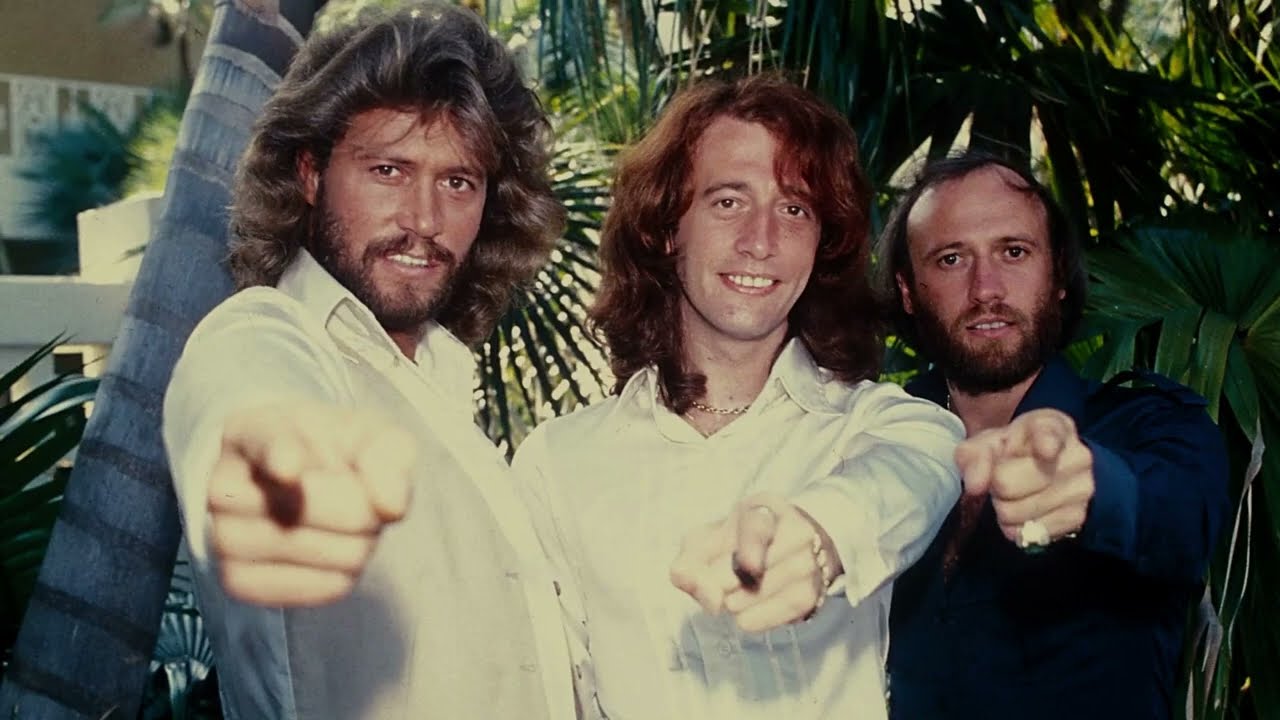
“Love So Right” is the Bee Gees’ softest kind of thunder—a slow-burning memory of passion that felt perfect in the moment, and painful the second it became the past.
Released in September 1976 as the second single from Children of the World, “Love So Right” marked a crucial turning point for the Bee Gees—not just commercially, but stylistically, emotionally, even vocally. In the United States, the song debuted on the Billboard Hot 100 at No. 81 (chart date: October 2, 1976) and rose to a peak of No. 3, a high, steady climb that confirmed the group’s new R&B-leaning direction had real mainstream weight. In the UK, it charted more modestly—first charting on November 13, 1976 and peaking at No. 41—but even there, it carried the unmistakable glow of a band reshaping itself in real time.
What makes “Love So Right” linger isn’t only where it peaked—it’s why it sounds the way it does. The record belongs to a very specific crossroads in the Bee Gees’ story. After Main Course, their working relationship with producer Arif Mardin ended because of label and distribution realities, forcing the group into a creative recalibration. They briefly started the next project in L.A. with Richard Perry, then returned to Miami, re-centering at Criteria Studios and building what would become the Gibb–Galuten–Richardson production era—Barry Gibb effectively steering the sound, with engineer Karl Richardson and musical adviser/arranger Albhy Galuten helping shape the frame.
And right in the middle of that transition sits this song: a velvet R&B ballad written by Barry, Robin, and Maurice Gibb, recorded across Criteria (Miami) and Le Studio (Quebec) during early-to-mid 1976 sessions. It’s also historically telling in one delicious detail: “Love So Right” was the second consecutive Bee Gees single (after “You Should Be Dancing”) to feature Barry Gibb’s falsetto exclusively as the lead vocal—no switching back to the old chest-voice safety net, no compromise. In hindsight, you can hear the future arriving: not yet the full nightclub blaze of Saturday Night Fever, but the door already open, the warm air already spilling into the hallway.
Barry later said the song’s R&B pull came from the group “trying to be The Delfonics.” That confession is almost tender, because it reveals the Bee Gees not as untouchable hitmakers but as serious listeners—students of soul harmony, chasing that particular ache that great R&B groups could summon with a single chord change. And “Love So Right” does chase it: the lyric remembers a love that arrived like nightfall—sudden, enveloping—and made the world feel briefly, intoxicatingly aligned.
But the title is the twist. “Love So Right” isn’t triumph. It’s hindsight. It’s the quiet shock of realizing that the most “right” love can still vanish, still leave you holding nothing but the memory of how perfect it once felt. The narrator doesn’t sound angry; he sounds stunned—like someone replaying a scene over and over, trying to find the exact second when fate turned its face away. That’s the song’s deeper ache: it’s not about being wronged as much as being unmoored. When something feels that right, you build a whole inner world around it. When it goes, the loss isn’t only the person—it’s the collapse of the reality you were briefly allowed to live inside.
Critics heard the craftsmanship, even if they didn’t always agree on the taste. AllMusic, in a retrospective view of Children of the World, singled out “Love So Right” as a “beautiful soul ballad.” Contemporary trade reviews also caught the cross-genre intent: Cash Box noted that the R&B flavor and the Bee Gees’ harmonies kept the appeal “across the board,” while Record World praised the group’s knack for material that still sounded like a sure thing even when it slowed the tempo down from the disco pulse of “You Should Be Dancing.” (And for balance, it’s fair to remember that not every critic was charmed—Rolling Stone’s 1976 review of the album framed the track more skeptically, calling it frothy and closely modeled on earlier work. )
Yet listening now, the song’s importance feels plain. “Love So Right” is the Bee Gees learning to turn vulnerability into polish—discovering that a falsetto, when sung with conviction, can sound less like decoration and more like a confession too delicate for ordinary speech. It’s the sound of a band stepping into the late-’70s without losing the old Bee Gees gift: melody that remembers the human cost of desire.
And maybe that’s why it still hits: because so many love songs promise forever, while “Love So Right” dares to tell the truth that’s harder to say—sometimes the sweetest love is the one you can’t keep. It was “right,” yes. That’s exactly why it hurts.