
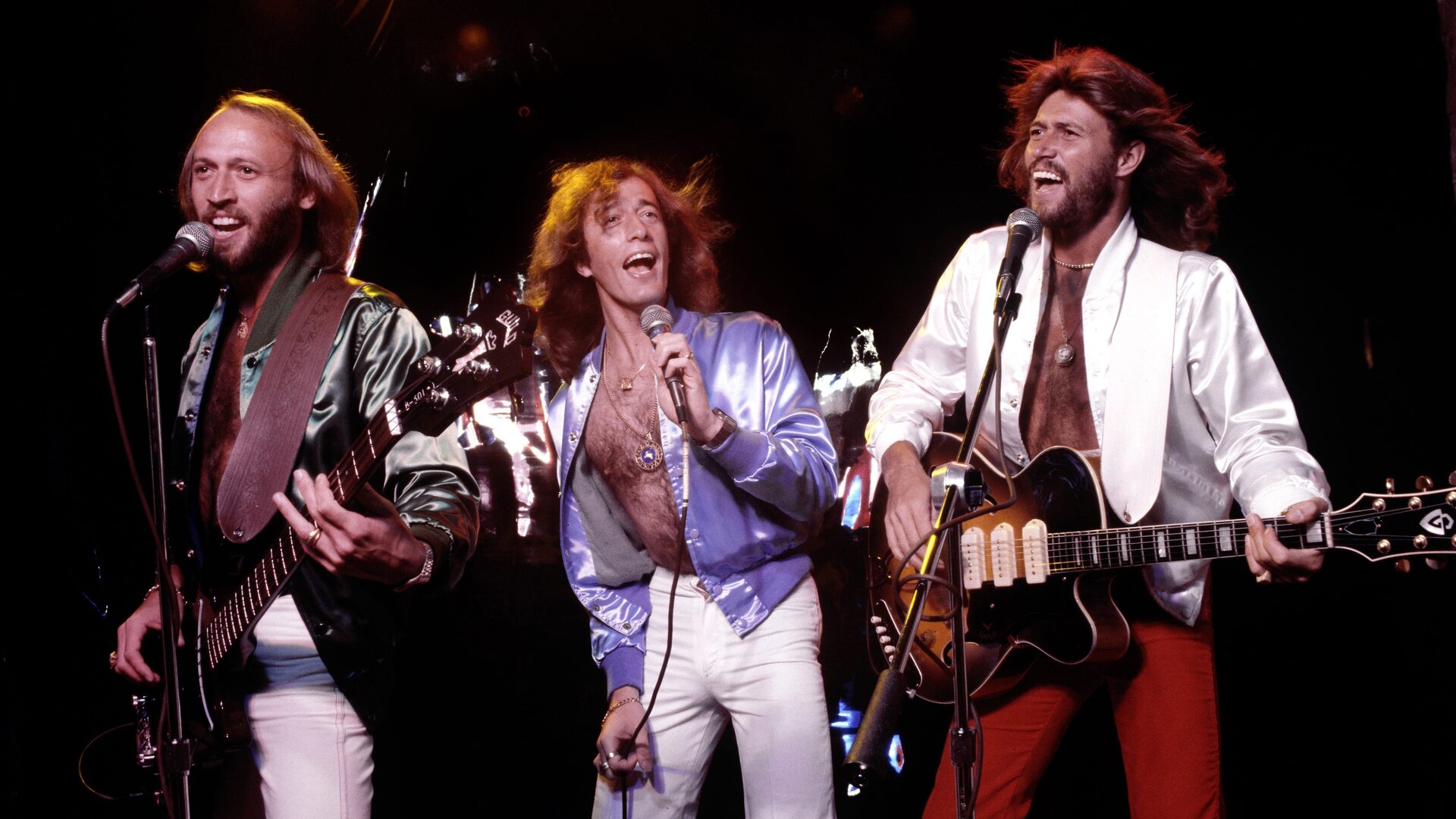
“Above and Beyond” is the Bee Gees’ late-career love pledge that refuses to shrink with age—love as a force of nature, strong enough to carry two people past doubt, past damage, and into something enduring.
The first thing to place firmly in context is where this song sits in the Bee Gees’ story. “Above and Beyond” appears on Bee Gees’ 1993 album Size Isn’t Everything, released in the UK on September 13, 1993 (with the U.S. release following later that fall). What makes it instantly special to longtime listeners is the vocal spotlight: the track is credited with lead vocals by Maurice Gibb (and Barry Gibb alongside him)—a pairing that gives the song its warmth and its slightly different emotional grain from the usual Barry/Robin front line. On the album’s track list, “Above and Beyond” is track 9, running about 4:27.
Because it wasn’t released as a main single, “Above and Beyond” doesn’t have a clean “debut position” of its own. Its public ranking story is tied to the album: Size Isn’t Everything peaked at No. 23 in the UK and No. 153 on the U.S. Billboard 200. Those numbers may look modest next to the imperial Bee Gees years, but they don’t tell you what “Above and Beyond” tells you: by 1993, the brothers weren’t chasing a decade’s fashion so much as they were reasserting their oldest strength—melody and emotional conviction.
And the conviction here is almost elemental. The lyric frames love as something physical and inevitable—“the earth and the wind and the fire”—not a fragile mood, but a living system that shapes your whole weather. That’s the Bee Gees’ romanticism at its most adult: they’re not selling the listener a bright fantasy; they’re describing love as the force that holds you steady and dares you to risk more than you planned. In the chorus, love becomes a destination—“above and beyond”—and the narrator isn’t begging to be chosen. He’s promising to take you there.
This is where Maurice Gibb matters. Maurice had a gift for sounding human even when the arrangement is polished—less theatrical than Robin’s ache, less front-man declarative than Barry’s classic lead, but deeply intimate. In the 1990s Bee Gees era, when their voices carried decades of history, Maurice’s presence could make a song feel like it’s being sung from the same room you’re in. “Above and Beyond” benefits from that closeness: it’s a love song, yes, but it’s also a small act of reassurance—someone saying, late at night, that you and I have enough, that we can outlast the noise outside the door.
There’s a subtle nostalgia in the song’s posture, too. Not nostalgia as “back then was better,” but nostalgia as recognition: the older you get, the more you understand that devotion isn’t proven by grand speeches—it’s proven by the repeated choice to stay kind, to stay brave, to stay faithful to the shared story. “Above and Beyond” feels built for that realization. It’s upbeat, even buoyant, yet it doesn’t sound naïve. It sounds like people who’ve seen enough to know what love costs—and who still choose it anyway.
So if you’re revisiting “Above and Beyond” now, hear it as one of those Bee Gees deep cuts that quietly grows in stature. It isn’t famous for a chart run; it’s treasured for something rarer: a mature, radiant statement of love, sung by brothers who understood that the greatest romance isn’t the first rush—it’s the steady, fearless climb, together, above and beyond.