
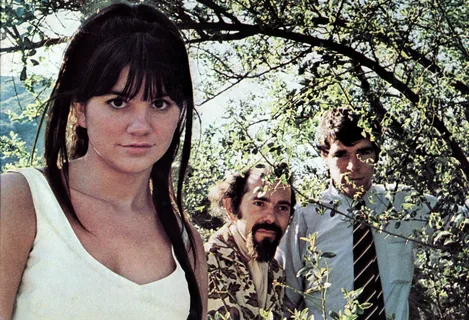
“Perfidia” is betrayal sung with impeccable manners—an old wound carried so gracefully that it almost sounds like devotion, until you notice how deep the knife went.
Linda Ronstadt’s “Perfidia” entered the world in a very specific, quietly triumphant way: as a single from her 1992 Spanish-language album Frenesí, where it climbed to No. 7 on Billboard’s Hot Latin Tracks. That peak matters, because it wasn’t a novelty chart moment—it was the sound of an American pop icon stepping into the bolero tradition and being welcomed by the Latin charts on their own terms. The album itself, released September 15, 1992, reached No. 193 on the Billboard 200, while also placing strongly on Latin-oriented charts (including a No. 3 peak on a Billboard Latin chart listed in contemporary summaries). And just to underline the seriousness of the project: Frenesí went on to win a GRAMMY for Best Tropical Latin Album at the 35th GRAMMY Awards (1993).
On the album, “Perfidia” appears as track 12, credited to Alberto Domínguez with English lyrics credit to Milton Leeds, running 3:44—a small detail that nonetheless tells you something important: Ronstadt is performing a song with a long international life, one that has crossed languages and decades without losing its sting.
The backstory begins far earlier than Ronstadt, back in 1939, when Mexican composer Alberto Domínguez wrote “Perfidia” as a bolero steeped in romantic treachery—perfidia meaning faithlessness, betrayal. The song speaks from the perspective of someone left behind, still staring at the place where love used to stand, trying to make sense of a silence that feels personal and deliberate. Over time, it became a standard—recorded and re-recorded, translated, reshaped—yet always returning to that central ache: the humiliation of loving someone who has already chosen to disappear.
So why does Linda Ronstadt feel so right inside it?
Because Frenesí is built on a kind of disciplined passion—Latin rhythms and orchestral colors held close to the body rather than thrown into the air. According to the album credits and summaries, the production was shared between George Massenburg (for much of the record) and Peter Asher (notably on tracks including “Perfidia”), with arrangements anchored by Ray Santos and recorded at major studios including Skywalker Sound and Conway Studios. That’s a telling combination: technical excellence without emotional distance. The sound is polished, yes—but the feeling is human, warm, fallible.
There’s also a lovely twist in the song’s later life: Ronstadt’s version was featured in the 1992 film The Mambo Kings, a story drenched in old-world romance and nightclub longing—exactly the kind of world where a bolero like “Perfidia” doesn’t feel like a performance, but like part of the air. In that context, the song becomes more than heartbreak; it becomes atmosphere, a language of wounded elegance shared by people who may never say plainly what they have lost.
And the meaning—when Ronstadt sings it—sharpens into something painfully familiar. “Perfidia” doesn’t rage. It doesn’t slam doors. It aches with a kind of restrained disbelief, the way a person sounds when they’re too proud to beg but too honest to pretend they’re fine. The bolero tradition often treats sorrow as something you carry with posture, and Ronstadt—who spent her whole career honoring songs rather than overpowering them—understands that instinct. She sings as if betrayal is not only an emotional injury, but a moral one: a violation of the promise that love is supposed to mean safety.
That’s the quiet brilliance of “Perfidia” in Ronstadt’s hands. It reminds you that the most devastating heartbreak isn’t always loud. Sometimes it’s the kind that still sets the table, still answers politely, still remembers every detail—while privately admitting, in the softest voice, that trust has been broken. And once you’ve heard Linda Ronstadt deliver that confession—inside the shimmering frame of Frenesí, crowned by that Top 10 Latin-chart peak—you understand why this old bolero keeps returning.