
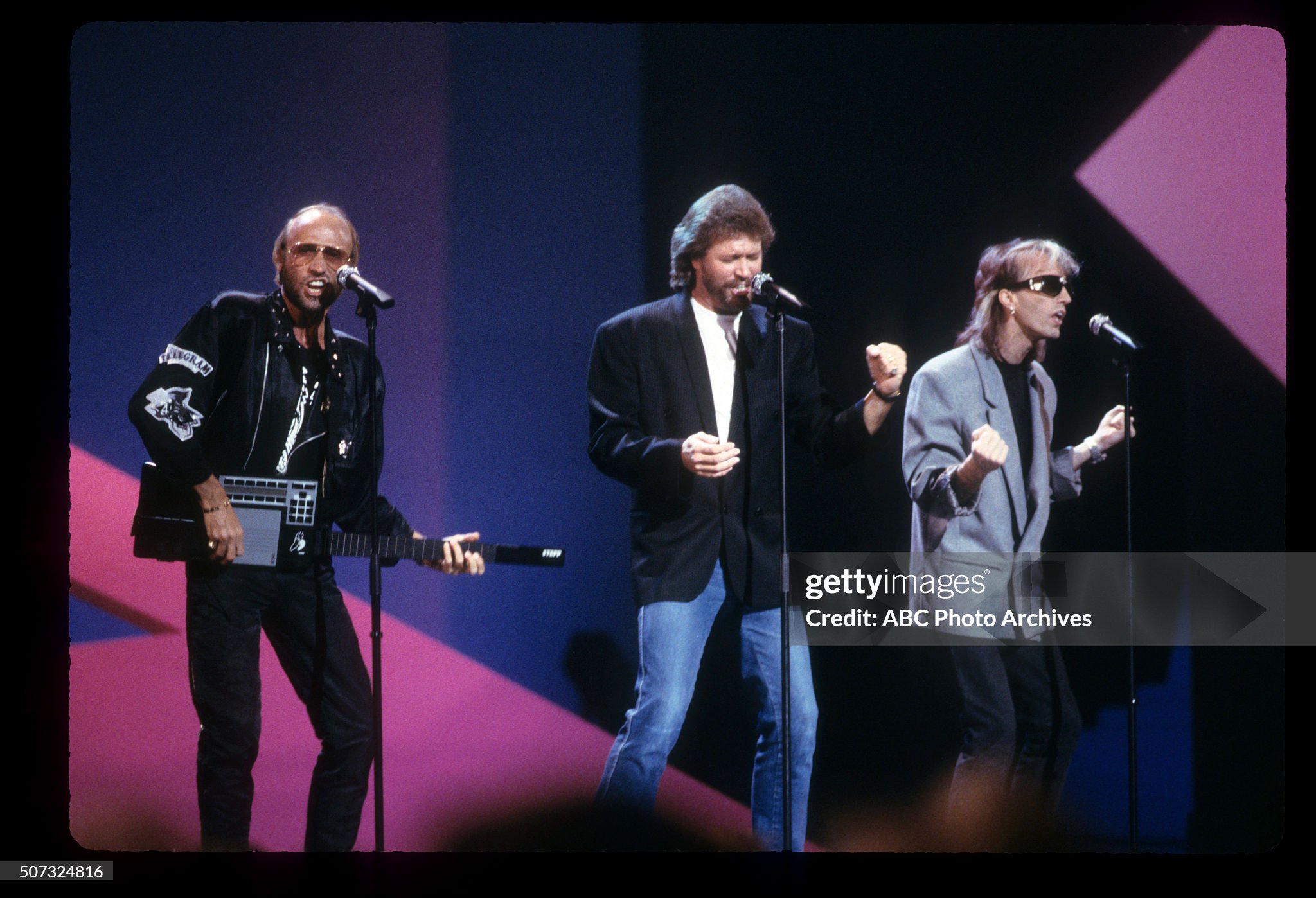
“Red Chair, Fade Away” is a small, dreamy spell from the Bee Gees’ first great era—childhood images and “speaking skies” dissolving like color in an old photograph.
In the vast story of Bee Gees hits and reinventions, “Red Chair, Fade Away” sits in a more secret, more intimate place: not a headline single, but a jewel tucked into the early catalogue—soft-edged, psychedelic, and oddly comforting. It first appeared on Bee Gees’ 1st, the group’s first international album, released in the UK on 14 July 1967 (recorded at IBC Studios, London between 7 March and 21 April 1967, produced by Robert Stigwood and Ossie Byrne). That album would later peak No. 7 on Billboard’s Pop Albums chart and No. 8 on the UK Albums Chart—evidence that the world had already begun listening closely, even before the Bee Gees became the global institution we now take for granted.
But the “ranking at launch” for “Red Chair, Fade Away” isn’t found on a singles chart—its public role was more subtle. In several European territories, it was used as the B-side to “Holiday” (notably Germany, France and Scandinavia) in 1967. That placement tells you how the label heard it: atmospheric, distinctive, and strong enough to be the shadow companion to a promoted A-side—music meant for listeners who flip the record over and discover the song that feels like a private message.
Even the credits carry a faint mystery. On the Bee Gees’ 1st track listing, the song is specifically attributed to Barry Gibb, with a running time of 2:16. Yet detailed session documentation and discographical sources often list it as Barry Gibb and Robin Gibb, reflecting how fluid the brothers’ early writing process could be in practice. Rather than a contradiction to be “solved,” it almost suits the song: “Red Chair, Fade Away” itself feels like something created in shared air—one imagination passing a spark to another.
Musically, it belongs to the album’s most delicate corner: critics have described the track as “chamber psychedelia,” and that phrase is perfect—psychedelia not as explosion, but as perfume, lace, and soft-focus wonder. Research into the 1967 sessions notes that the orchestra on the track was arranged by Phil Dennys, and that an early acetate suggests Maurice Gibb later added the distinctive Mellotron flute color that helps the recording float rather than march. In other words, the song wasn’t just performed; it was finished like a painting, with small details added until the dream became believable.
And what is that dream? The lyric images—memories, lemon trees, a fairy tale atmosphere, the repeated phrase “Red chair, fade away”—feel like a child’s room remembered from adulthood: objects still there in the mind, but losing their sharp edges. The “red chair” becomes more than furniture. It’s a symbol of the safe, familiar center—the seat of early life—gradually dissolving as time insists on forward motion. There’s a gentle ache in the way the song circles its own refrain, as if repetition could keep the picture from fading. Yet it can’t. The very beauty is that it does fade—softly, naturally—like daylight leaving a wall.
This is where Bee Gees were already extraordinary: they could write youthful pop that didn’t talk down to feeling. “Red Chair, Fade Away” doesn’t posture. It doesn’t try to be “important.” Instead it offers something rarer—an emotional truth delivered in pastel tones: that the past is both a comfort and a kind of ghost, and that remembering can be sweet precisely because it hurts a little.
So if you came searching for a chart peak, you’ll find a different kind of measure. “Red Chair, Fade Away” is the sort of song that becomes valuable over time—because it captures what time does. And when you hear Barry Gibb lead it with that early, tender certainty, it feels like listening to 1967 itself: a world of color, harmony, and imagination… already learning, quietly, how to disappear.