
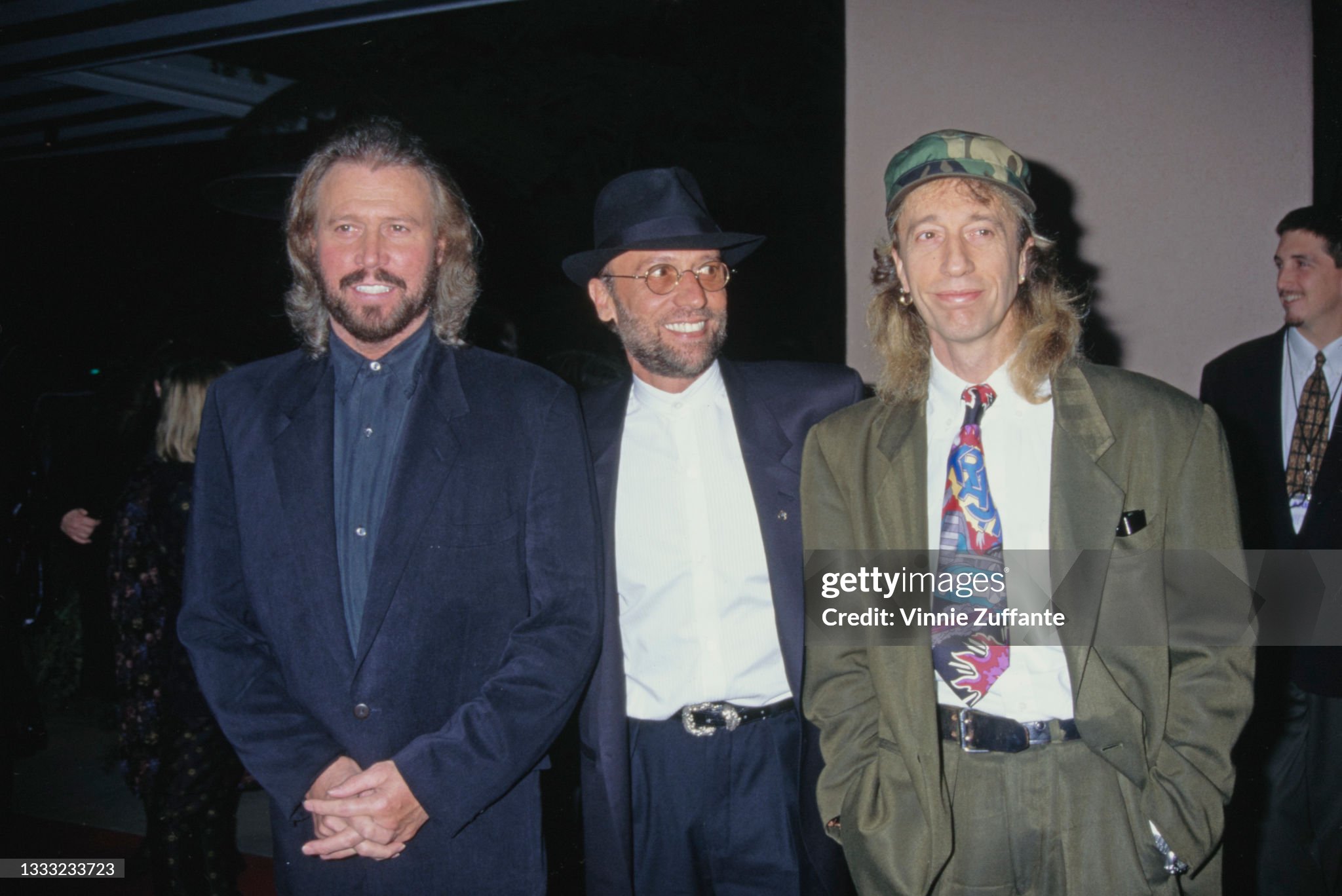
“Ordinary Lives” is the Bee Gees’ late-’80s meditation on how fragile “normal” can be—an elegy in pop clothing, written for the everyday world, and shadowed by absence.
When Bee Gees returned with “Ordinary Lives” in 1989, they weren’t chasing the glitter of disco memory so much as trying to steady themselves inside a changed world. Released as the lead single from their album One (and issued in late March 1989), the song marked a new chapter after the long run from “You Win Again” and E.S.P.—but with a very different emotional weather.
On paper, its chart story looks modest in the UK: No. 54 on the Official Singles Chart, first appearing on the chart dated 1 April 1989, with a five-week run. Yet elsewhere in Europe, the song landed with surprising force. In Germany it climbed into the Top 10, peaking at No. 8 (as documented by Offizielle Deutsche Charts). In Switzerland it also reached the Top 10, peaking at No. 9 on the Schweizer Hitparade. Those numbers tell a quiet truth: “Ordinary Lives” was not a universal blockbuster, but it was clearly heard—especially where late-’80s pop craftsmanship still made room for reflective, adult themes.
The song itself is credited to Barry Gibb, Robin Gibb, and Maurice Gibb, produced by the brothers with Brian Tench, and released through Warner in this era. But the facts that matter most aren’t only in the credits—they’re in the air around the record. After the premature death of their younger brother Andy Gibb in 1988, the Bee Gees dedicated “Ordinary Lives” (and the One album) to him, and that dedication hangs over the track like a soft, persistent rain: not melodramatic, not explained—simply present.
Musically, “Ordinary Lives” wears an approachable sheen—bright enough for radio, steady enough for the dance-pop climate of 1989—yet the lyric keeps drifting toward the bigger questions people ask only when something has been taken away. The title itself is almost a provocation. Ordinary lives. As if to say: we thought we were just living, just moving through the days—until the days proved they could break. That tension is central to the Bee Gees’ late-period gift: the ability to wrap heavy themes in melodies that don’t collapse under their own weight.
There’s also a particular Bee Gees kind of sadness here—less about one heartbreak than about the fragility of the whole human arrangement. The song’s refrain and images suggest a world where love can be nameless, where time rearranges everything, where people keep going because there is no alternative—yet they keep going with a bruise they don’t always show. Wikipedia notes the song was originally titled “Cruel World” before becoming “Ordinary Lives,” and that earlier title still feels like a ghost behind the final wording, as if the brothers softened the phrase without softening the meaning.
And then there is the performance: that unmistakable Bee Gees blend—voices layered like memory itself, with Robin’s plaintive edge and Barry’s steadier lead presence giving the lines their push and pull. The production doesn’t beg for sympathy. It moves forward with a controlled pulse, the way grown-up grief often does: not a dramatic collapse, but a daily discipline.
What “Ordinary Lives” ultimately offers is something rare in pop: permission to feel small while thinking big. It suggests that the most important stories are not always the loud ones—sometimes they’re the ones happening in kitchens, in cars at night, in ordinary rooms where someone realizes life has changed and can’t be changed back. In that way, Bee Gees turned 1989 into a reflective mirror: glossy on the surface, but honest enough underneath to last.
If you return to “Ordinary Lives” today, it doesn’t feel like a nostalgia object. It feels like a late-evening conversation—calm voice, serious eyes—reminding you that “ordinary” is not a guarantee. It’s a blessing.