
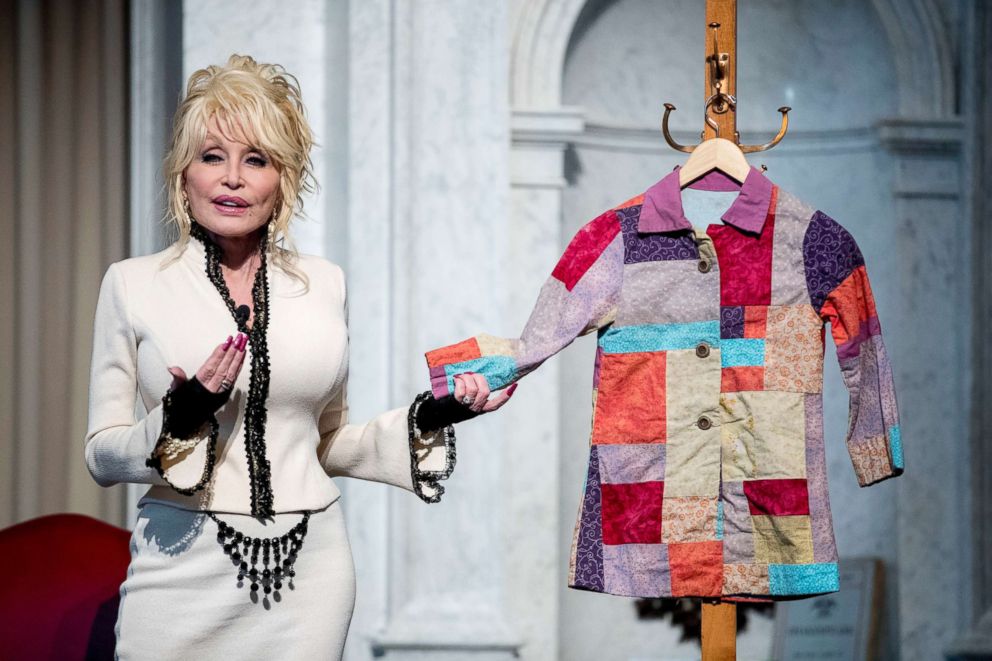
A Patchwork of Love, Memory, and the Radiance of Poverty Transformed
When Dolly Parton released “Coat of Many Colors” in 1971 as the title track from her eighth studio album, Coat of Many Colors, she gifted country music one of its most enduring hymns to humility and heart. The song climbed into the Top 10 on the Billboard Hot Country Songs chart that year, yet its true triumph was never numerical—it was emotional. This was not merely a single spun from Nashville; it was a self-portrait painted in thread and fabric, telling of poverty without shame and of love without measure. In an era when country radio often celebrated honky-tonk bravado or heartbreak balladry, Parton’s song redefined what personal storytelling could mean: a quiet testament that grace could be found in scarcity, and dignity stitched from the simplest cloth.
The story behind “Coat of Many Colors” is as intimate as any in Parton’s canon. She famously wrote it on a piece of dry-cleaning paper while touring with Porter Wagoner, recalling an episode from her childhood in Sevier County, Tennessee. Her mother had sewn her a winter coat from donated rags—each scrap lovingly chosen and pieced together into something uniquely beautiful. At school, however, her classmates mocked it. That moment of innocent cruelty became the seed for this song, transforming a childhood wound into an emblem of pride. The coat’s biblical reference—to Joseph’s garment in Genesis—deepened the metaphor: both coats signified divine favor misunderstood by others. But Parton’s retelling remains rooted not in religious symbolism alone, but in the earthy textures of Appalachian life, where love was the only true wealth a family might possess.
Musically, “Coat of Many Colors” glows with the gentle warmth that defines much of Parton’s early ’70s work. Its melody unfolds like a fireside confession—unhurried, tender, set against simple acoustic strumming and understated harmonies. There is no artifice here; every note feels hand-stitched, like the garment itself. The production resists grandeur, choosing instead to let her crystalline soprano carry the emotional weight. In doing so, Parton reminds us that authenticity often whispers more powerfully than spectacle ever could.
Lyrically, the song traverses three landscapes at once: memory, morality, and metamorphosis. It begins in recollection—the tangible act of sewing—but soon expands into moral revelation: that love can elevate even rags into riches. By its close, “Coat of Many Colors” transcends autobiography to become allegory—a meditation on how stories shape identity and how pride can bloom from adversity. The fabric her mother stitched became a symbol not only of familial devotion but also of creative inheritance; it is as though Parton’s songwriting voice was born from those same scraps, weaving together pain and beauty until they became inseparable threads in the American musical quilt.
More than fifty years later, “Coat of Many Colors” remains one of country music’s purest distillations of empathy. It continues to resonate because it speaks to anyone who has ever been made to feel small for being different—and offers redemption through remembrance. In its humble imagery lies a grand truth: that love, when expressed through care and craft, can make even the poorest child feel adorned with glory.