
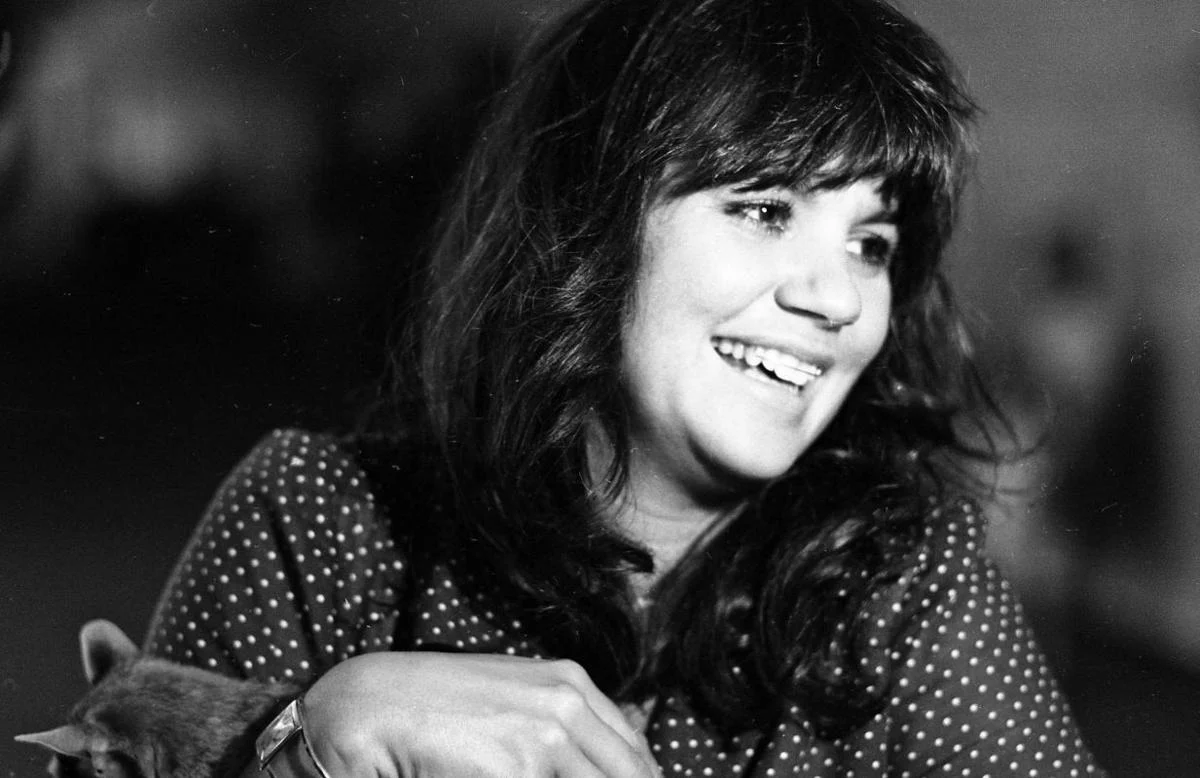
“Down So Low” is Linda Ronstadt letting the mask fall—where desire and hurt stop negotiating, and the voice tells the truth the body has been carrying all along.
Some songs don’t arrive like a “track”—they arrive like a weather front. “Down So Low” is one of those. Linda Ronstadt recorded it for her 1976 album Hasten Down the Wind (released August 9, 1976), placing it late in the sequence—Side Two, track 5—as if the album must first earn the right to go that deep. The album itself came in strong: Billboard’s chart metadata lists a debut position of No. 49 on the Billboard 200 and a peak of No. 3. And in 1977, the record’s emotional ambition was formally recognized when Ronstadt won the GRAMMY for Best Female Pop Vocal Performance for Hasten Down the Wind—a reminder that the industry, for once, heard what listeners already felt.
But “Down So Low” is not famous because of any number. It’s famous—quietly, steadily—because it sounds like a person in a room telling the truth without flinching.
The story begins earlier, away from Ronstadt’s California spotlight. “Down So Low” was written by Tracy Nelson and first released in 1968 by Mother Earth, the band Nelson fronted—already steeped in blues and soul, already carrying that raw “don’t patronize my pain” authority. The song then traveled the way powerful songs often do: from voice to voice, decade to decade, because singers recognize material that can hold real feeling without breaking. When Ronstadt chose it for Hasten Down the Wind, she wasn’t borrowing a trendy title—she was adopting a bruised, grown-up confession and letting it bloom in her own timbre.
It matters, too, where this song sits in Ronstadt’s career. Hasten Down the Wind is often described as a more serious, more searching album than its immediate predecessors—still rooted in rock and country, but increasingly drawn to newer songwriters and harder emotional corners. Peter Asher produced the album, and you can hear his gift here: not forcing the performance into polish, but shaping a space where the vocal can stay human—close enough to feel breath, distance enough to feel loneliness.
“Down So Low” itself wasn’t rolled out as a chart single—unlike the album’s bigger radio moments—so it survives the old-fashioned way: by being discovered on the record, then kept like a private talisman. And that discovery hits hard because Ronstadt doesn’t “act” the lyric. She inhabits it. The plea in the title isn’t coy; it’s exhausted. It’s the sound of someone who has tried pride, tried patience, tried pretending the wound isn’t deep—then finally admits how far down heartbreak can pull you.
One detail in the album credits makes the performance feel even more haunted: “Down So Low” is the track that includes choir vocals in the personnel listing, a subtle but telling choice—like ghostly witnesses to a private collapse. Ronstadt’s voice has always been capable of power, but here power isn’t volume. Power is refusal to sweeten the truth. She doesn’t decorate suffering; she names it, then keeps singing anyway.
There’s a reason so many writers and listeners single this track out as one of the album’s emotional peaks. One retrospective piece even calls it the album’s finest track and notes how widely the song has attracted great singers—yet argues Ronstadt’s reading stands as a definitive non-Nelson version because she doesn’t overplay it. That restraint is exactly what makes it devastating: she trusts the lyric to do its work. She trusts silence. She trusts that a grown listener can hear pain without being shouted into it.
And if you want a final, human image to hold onto: Ronstadt kept performing “Down So Low” onstage in that era—there’s documented footage from Offenbach, Germany (November 16, 1976) that shows how naturally the song lived in her body, not just in the studio. It’s one thing to record a song like this; it’s another to carry it night after night, letting it reopen, letting it heal, letting it remain true.
In the end, “Down So Low” is not just a “great cut” on a platinum-era album. It’s a reminder of what Linda Ronstadt could do when she wasn’t chasing hits—when she was chasing honesty. The song doesn’t promise recovery; it offers recognition. And sometimes that’s the only mercy a great record can give: not a solution, but the feeling that someone else has stood in the same storm… and found a way to sing through it.