
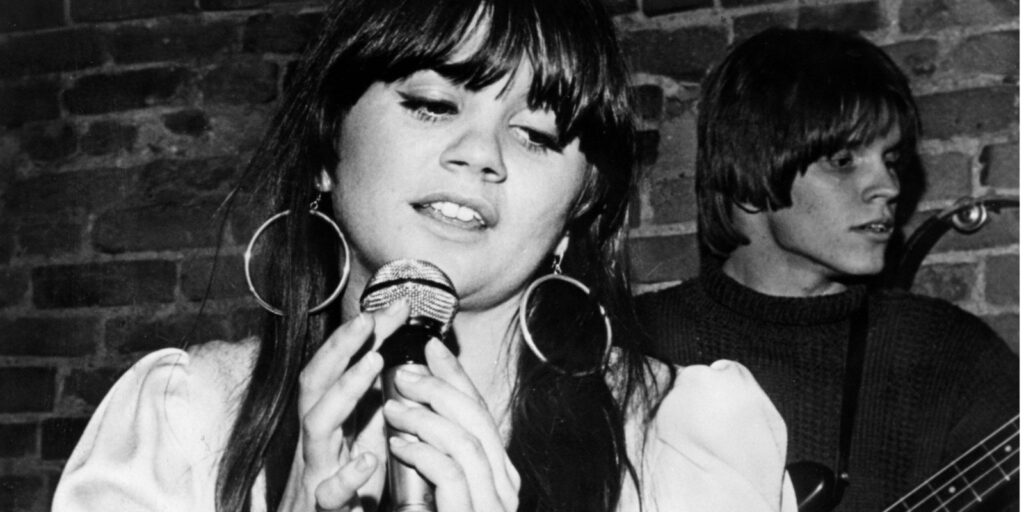
“Life Is Like a Mountain Railway” turns faith into motion—a hymn that treats a lifetime like a hard climb, and hope like the steady hand that keeps the train on the rails.
When Linda Ronstadt recorded “Life Is Like a Mountain Railway” (also known in hymnals as “Life’s Railway to Heaven”), she tucked a 19th-century gospel metaphor into a 1970 country-rock album—quietly, almost mischievously, as if to say that the old songs still know things the modern world forgets. Her version appears as the closing track on side two of Silk Purse, released by Capitol Records on April 13, 1970, produced by Elliot F. Mazer. The album became her first to reach the Billboard 200, peaking at No. 103—a modest number that nonetheless marks the moment her solo career began to register on the national dial.
The song itself, however, was not released as a charting single from Silk Purse—so there’s no Hot 100 debut position to pin to it. The singles from the album were “Will You Love Me Tomorrow” and, most notably, “Long Long Time.” That detail is telling: “Life Is Like a Mountain Railway” was never aimed at the charts. It’s an album’s deep candle—meant to glow when the room is quiet.
On the record, the track is credited as Traditional, arranged by Elliot Mazer and Linda Ronstadt, and runs about 3:24. A track listing source also notes it is accompanied by The Beechwood Rangers, which helps explain why her reading feels less like a church recital and more like a front-porch testimony—gospel carried by country hands.
But the hymn’s story reaches much further back than Nashville sessions and vinyl sides. One widely cited attribution credits M. E. Abbey (lyrics) and Charles D. Tillman (music), with publication dating to 1890. In hymnals it has lived a long, durable life—sometimes under alternate titles and with variant attributions—yet the central image stays constant: life as a mountain railway, with steep grades, dark tunnels, sharp curves, and the constant risk of derailment.
That metaphor is both simple and devastatingly accurate. A railway suggests direction—there is a track, there is a destination—but it also suggests constraint: you don’t get to float above consequences. You travel where the rails lead, and you learn—sometimes the hard way—that momentum can be dangerous without guidance. The hymn’s famous refrain calls on the “Blessèd Savior” as the guide who brings the traveler safely to shore. It’s faith described not as a halo, but as engineering—the calm competence that keeps the whole trembling machine from coming apart.
And that’s where Ronstadt’s choice becomes so moving. Silk Purse was recorded in Nashville (with Mazer at the controls), during a period when she was still shaping her identity beyond The Stone Poneys and “Different Drum.” The album has its famous visual irony—Ronstadt posed in a pig pen, all polish and mud at once—and the music carries a similar tension: youthful poise beside raw, searching instincts. In that context, placing a gospel railroad hymn at the end of side two feels like a private signature: beneath the covers, the sessions, the industry push, there’s a deeper inheritance humming—older than pop, older than fashion.
Musically, she doesn’t oversing it. She lets it roll forward with an easy, almost conversational authority, as if the song has been in her bones for years. That restraint is crucial, because the lyric isn’t asking for theatrical conviction; it’s asking for steadiness. The hymn famously advises, in plain language, to “keep your hand upon the throttle”—a line that, in Ronstadt’s mouth, stops sounding like quaint Americana and starts sounding like survival advice. Hold steady. Watch the rail. Don’t drift. Don’t romanticize the tunnel. Keep going.
The deeper meaning of “Life Is Like a Mountain Railway” is that it dignifies endurance. It doesn’t pretend the road is smooth. It names trials as part of the route—grades, bridges, storms—yet it refuses despair’s final word. That’s why the train metaphor lasts: you can be frightened and still move forward. You can be tired and still arrive.
And perhaps that’s why Ronstadt’s recording remains such a quietly luminous artifact of her early years. “Life Is Like a Mountain Railway” isn’t the sound of a star taking a victory lap. It’s the sound of a young artist, still becoming herself, pausing long enough to nod to something older and sturdier than ambition—a hymn that treats the whole span of life as one long journey, and insists that the truest strength is not speed, but staying on the rails when the night comes down.