
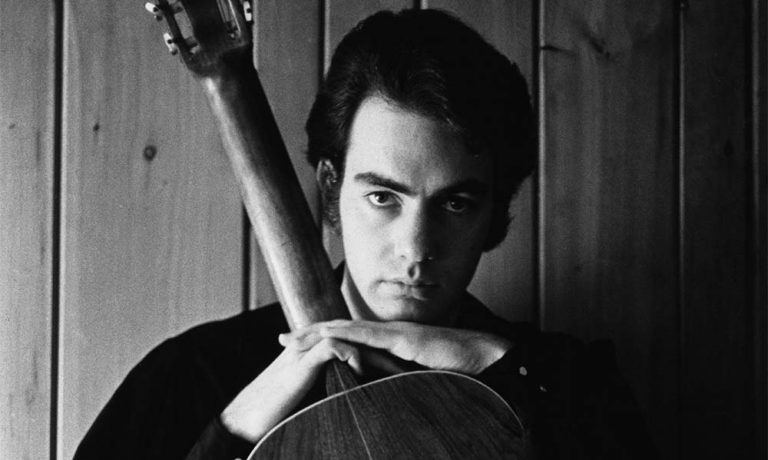
“Hell Yeah” is Neil Diamond answering time itself with a grin and a scar—an unvarnished declaration that even after the losses, the doubts, and the long miles, he still chooses life.
Released on November 8, 2005, “Hell Yeah” sits early and proudly on Neil Diamond’s late-career rebirth album 12 Songs—track 2, running 4:25, with Diamond credited as the sole songwriter. The album’s “ranking at launch” tells you just how loudly this “quiet” record landed: 12 Songs debuted at No. 4 on the Billboard 200, with a debut chart date of November 26, 2005—his strongest opening in decades. “Hell Yeah” itself was not released as a chart single, so it has no separate debut position; it lives as part of the album’s deeper, more intimate narrative.
That intimacy was not an accident. Rick Rubin produced 12 Songs, and his approach—so famously effective with artists who no longer need noise to prove power—helped Diamond strip back toward the grain of the voice, the weight of the words, the feel of hands on instruments. The sessions stretched from April 2004 through summer 2005, spread across studios in Los Angeles and the Hollywood area (including places like Ocean Way, The Sound Factory, and Sound City), as if the record needed time and air around it to become honest.
And honesty is exactly what “Hell Yeah” sounds like.
The title suggests swagger, maybe even novelty—yet the performance carries something more moving: a seasoned man’s refusal to be reduced by his own history. Diamond doesn’t sing this as a young conqueror. He sings it as someone who has lived through the costs of wanting, the costs of leaving, the costs of staying too long, and still finds enough defiance left to say yes. The phrase “hell yeah” becomes a kind of spiritual punctuation—an exhale after hardship, a toast raised not to perfection but to persistence.
There’s a reason this song hits hard for listeners who’ve carried years on their shoulders. It doesn’t pretend the past was gentle. Instead it treats memory like a familiar room: you can walk through it without getting trapped there. That is the central emotional trick of 12 Songs as a whole—this album doesn’t compete with Diamond’s old arena thunder; it speaks from a closer distance. In that frame, “Hell Yeah” feels like a self-portrait painted in warm, worn colors. Not the glossy publicity photo. The real face in the mirror, the one that has earned its lines.
What’s especially striking is the song’s placement. As track 2, it arrives almost immediately—right after the opener “Oh Mary”—like Diamond is intentionally setting the tone: this album will not be coy. He wants you to understand early that the voice you’re hearing isn’t chasing trends; it’s reclaiming essence. The production supports that aim—lean and grounded rather than ornate—allowing the lyric to do the heavy lifting.
The deeper meaning of “Hell Yeah” is not simply celebration; it’s acceptance with teeth. It’s the recognition that life will never be fully “fixed,” and yet it can still be fully lived. There’s a particular kind of courage in that stance, because it refuses both denial and despair. Diamond doesn’t beg the world to be kinder. He simply insists—calmly, stubbornly—that he’s still here, still feeling, still capable of love, still capable of turning pain into something you can sing back to yourself on a quiet morning.
So, in the end, “Hell Yeah” stands as one of those songs that ages beautifully because it was written from the beginning with time in mind. It’s not a young person’s dream of immortality. It’s something better: a grown person’s vow to remain awake. And when Neil Diamond says “hell yeah,” what you hear—under the grin—is gratitude sharpened by survival.