
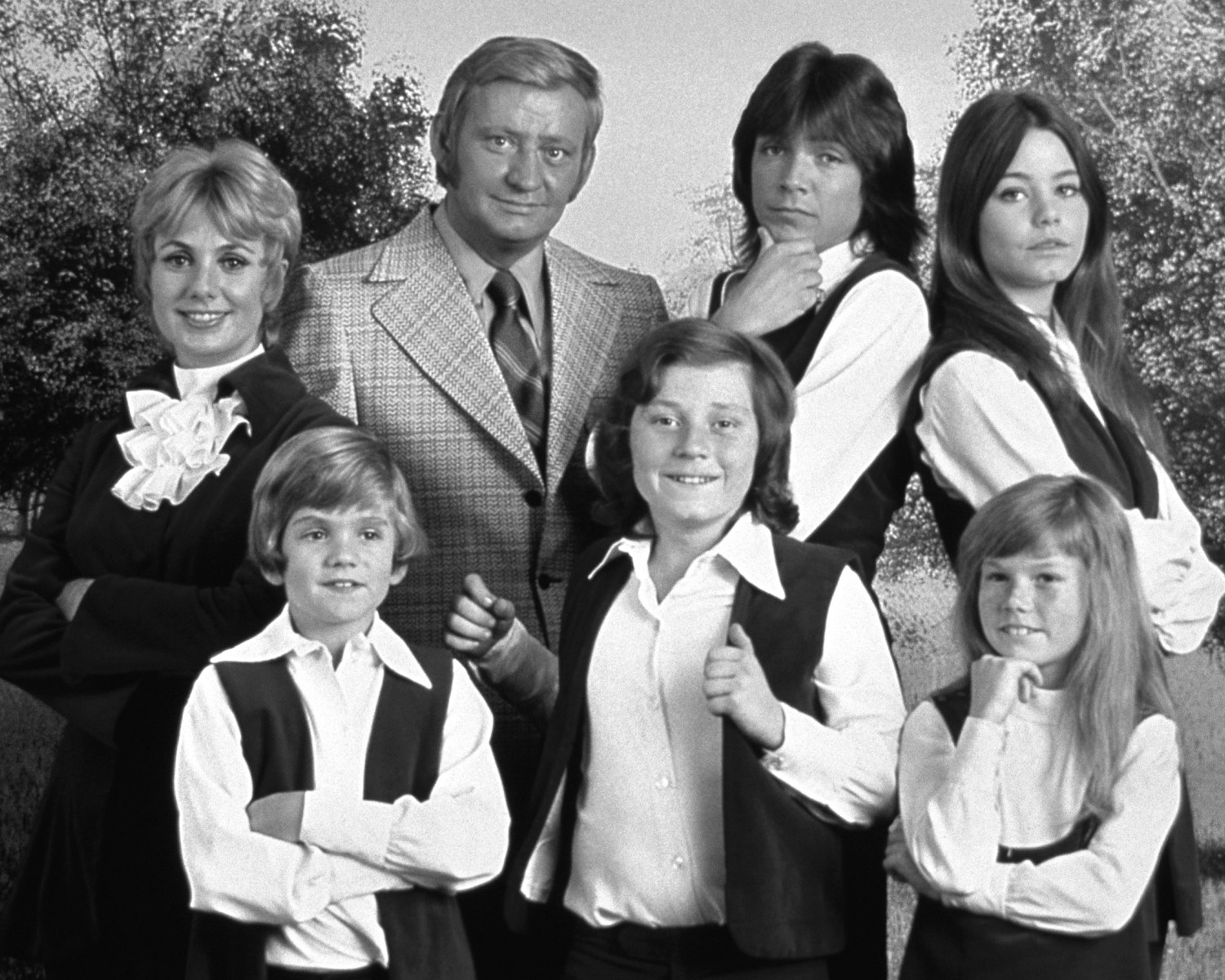
“Point Me in the Direction of Albuquerque” is the Partridge Family’s wistful road-song fantasy—bright on the surface, but quietly aching with that familiar urge to run toward somewhere else when life feels too small.
If you only remember The Partridge Family for their biggest chart headlines, “Point Me in the Direction of Albuquerque” can feel like opening an old photo album and discovering the picture that tells the truer story. It was not released as a major single, so it didn’t arrive with a clean “debut week” on the Billboard Hot 100. Instead, it lived where so many beloved pop memories live: as an album track you fall for by staying a little longer—letting the needle keep traveling after the hit has already played.
The song appears on the group’s first LP, The Partridge Family Album, released in October 1970 on Bell Records, produced by Wes Farrell. That album—powered by the TV show’s sudden cultural presence—rose to No. 4 on Billboard’s Top LPs chart in early 1971. And tucked inside that bright, carefully assembled pop package is this track: written by Tony Romeo (a key songwriting voice in the Partridge orbit) and recorded on August 4, 1970.
Those facts matter, because they help explain the song’s particular flavor. “Point Me in the Direction of Albuquerque” is the sound of professional early-’70s pop craftsmanship being used to paint something surprisingly tender: the emotional geometry of escape. The narrator is walking downtown, feeling “mighty good,” yet there’s a restlessness under the shine—the sense that happiness in one place can still contain the itch for another place. It’s not a song about being broken. It’s a song about being restless while still smiling—a very human contradiction, and one that pop music, at its best, captures with a gentleness that doesn’t judge.
Part of the charm is how vividly the track is staged. Credits databases and reissue track listings consistently attribute the composition to Tony Romeo, and list the recording with the Partridge Family performance credit. The personnel details—where available—read like a who’s-who of top Los Angeles studio players and arrangers associated with this hit-making ecosystem. That doesn’t make the song “manufactured” in a cynical sense; it makes it tight. It means the groove arrives on time, the chorus knows exactly where to land, and the whole track feels like a well-packed suitcase: nothing extra, everything necessary, ready for the road.
And then there’s the title—Albuquerque—which works like a postcard from an imagined West. The lyric isn’t begging for luxury; it’s begging for direction. Point me. Just tell me which way the horizon is. Even if you’ve never been there, you understand the feeling: the desire for a clean line outward, a route that promises you can start again without having to make a speech about why you needed to leave. In that sense, Albuquerque becomes less a city than a symbol—a place-name that stands in for possibility.
It’s also worth noting how the track’s life has been preserved and reintroduced over the decades. It appears on compilations (often credited back to The Partridge Family Album), reminding us how certain “deep cuts” refuse to stay hidden forever. And that’s exactly the kind of song this is: not a chart-trophy, but a slow-bloom favorite—the one you hum later without realizing you learned it in the background of your life.
What makes “Point Me in the Direction of Albuquerque” endure is its emotional modesty. It doesn’t pretend escape will solve everything. It simply admits that sometimes the heart wants motion—wants the clean relief of miles passing under a wheel, wants a new street, a different sky, a name on a sign that feels like permission. In the warm, optimistic universe of The Partridge Family, that longing is never punished. It’s treated as natural—almost sweet. A person can be “mighty good” and still want to go.
And maybe that’s the most nostalgic truth the song carries: it remembers a time when pop could be wholesome without being empty—when a three-minute tune could hold both sunshine and a quiet sigh, and when the idea of “somewhere else” felt like a gentle dream rather than a desperate escape.