
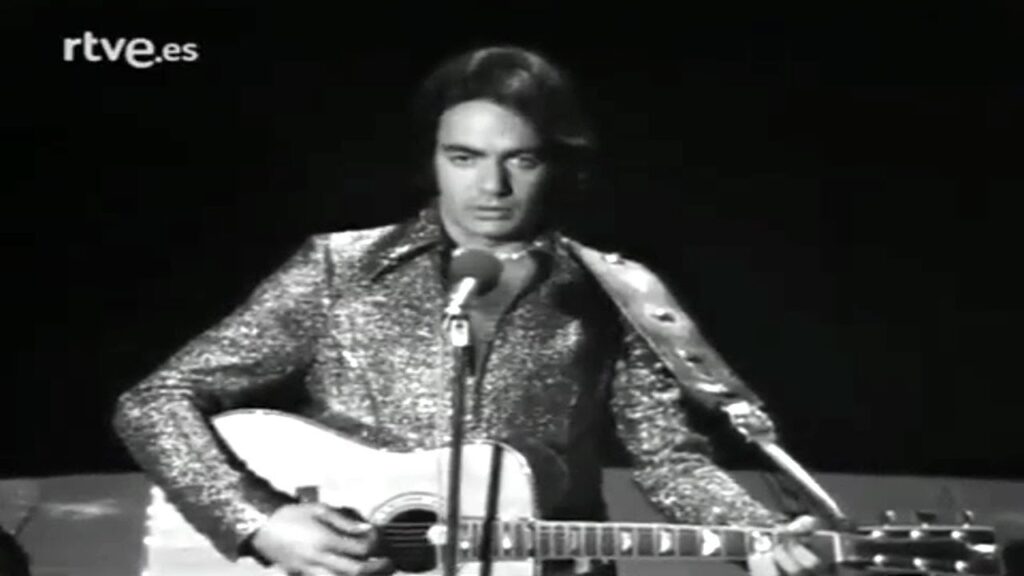
“The Boat That I Row” is Neil Diamond at the beginning of his journey—pure 1960s momentum, where rhythm and resolve say: I may not control the sea, but I will steer my own heart.
“The Boat That I Row” has one of those wonderfully old-fashioned origin stories that begins not with a big “A-side debut,” but with the quiet power of the flip. Diamond first released it in 1966 as the B-side to his Bang Records single “I Got the Feelin’ (Oh No No)”—a single that reached No. 16 on the Billboard Hot 100. That detail is crucial: it means “The Boat That I Row” didn’t “debut on the Hot 100” as its own chart entity in the U.S. at the time—it traveled into people’s lives the way B-sides did, as a reward for turning the record over and listening past the obvious.
Later, the song found a more formal home on Diamond’s second album, Just for You, released August 25, 1967 (Bang Records). In other words, by the time the wider public had begun to recognize his voice and his writing, “The Boat That I Row” was already part of his bloodstream—a song from the “working songwriter” days, when every record had to earn its keep.
And then the song did something remarkable: it slipped out of its original sleeve and sailed into other lives. Most famously, Lulu recorded it as a single, released April 7, 1967, and her version became a major UK hit, peaking at No. 6 on the UK Singles Chart (and reaching No. 1 in Canada later in 1967). That international success is part of the song’s legacy: it wasn’t merely a Diamond deep cut—it was a Diamond composition strong enough to become someone else’s calling card.
Now, musically and emotionally, “The Boat That I Row” is built on a deceptively simple idea: the boat is yours. You row it. Not fate, not fashion, not the people who doubt you—you. In the language of pop, it’s a love song; in the language of adulthood, it’s a philosophy. Diamond’s early Bang-era work often carried that blend of romantic directness and personal willpower, and this track is a compact example of the formula: bright rhythm, clear melody, and a narrator who insists on agency even when feelings are turbulent.
If you imagine hearing it the way people first did—needle down, small speaker, the world still half-black-and-white—it lands like a pep talk dressed as a groove. The beat keeps moving forward, and that forward motion becomes the message: don’t freeze in regret, don’t drift in indecision. Keep rowing. Keep choosing. The sea may be wide, but the hands on the oars are real.
That’s why the song’s “meaning” still feels surprisingly contemporary. We still live in a world that tries to convince people their lives are run by algorithms, headlines, and other people’s approval. “The Boat That I Row” offers a gentler, tougher truth: your direction is still yours—especially in love, where it’s so easy to blame the tide. And because Diamond delivered it early—before the grand anthems, before the stadium mythology—it carries the particular sincerity of an artist who hadn’t yet learned to hide behind polish.
So when you play “The Boat That I Row” now, listen for that youthful insistence beneath the pop craftsmanship. Hear the B-side that refused to stay small. Hear the songwriter whose work was already traveling farther than his own voice could. And hear, in the steady push of the rhythm, a message that never gets old: storms come, currents change—but the boat still moves when you do.