
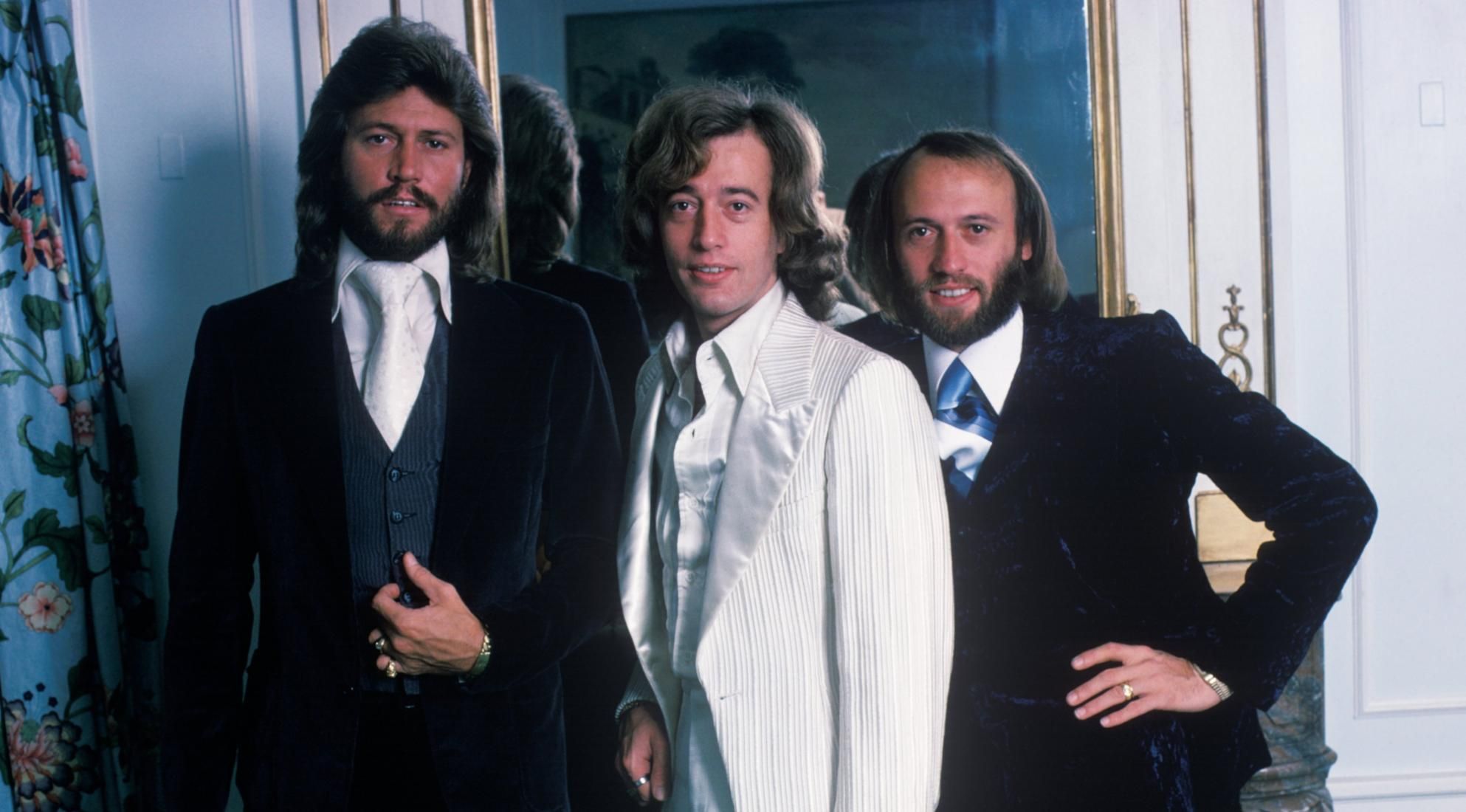
“I Surrender” is a quiet vow made at full volume—love offered without conditions, as if the only way forward is to lay the armor down.
In the spring of 1997, the Bee Gees returned with Still Waters—a late-career revival that didn’t merely whisper “we’re back,” it proved it on the numbers. The album was released 10 March 1997 in the UK (and later 6 May 1997 in the US), and it peaked at No. 2 on the UK Albums Chart and No. 11 on the US Billboard 200. Placed right near the front of that record—track 2, running 4:18 with Barry Gibb on lead vocal—sat “I Surrender.”
Yet here’s the beautiful irony: “I Surrender” is not remembered as a chart-conquering single. In the UK, the official chart record for Bee Gees singles from that Still Waters era lists “Alone” (peak No. 5), “I Could Not Love You More” (peak No. 14), and “Still Waters (Run Deep)” (peak No. 18)—but not “I Surrender,” which suggests it did not register as a charting UK single. In Germany, the song is documented in the official database as a 1997 single with full credits, yet the same listing provides no “chart entry” data for it—an absence that often means a release existed, but the charts did not follow.
So why does it matter? Because “I Surrender” is one of those songs that lives in the listening, not the counting.
The credits tell you the first part of the story. “I Surrender” is written by the brothers—Barry Gibb, Robin Gibb, and Maurice Gibb—and the production credit includes the three of them alongside David Foster. That pairing is significant. Foster’s name carries a particular sheen: high-gloss ballad craftsmanship, the kind of arrangement that knows how to lift a chorus without bruising the lyric. The Bee Gees, meanwhile, had always been masters of emotional architecture—stacked harmonies like pillars, melodies that turn longing into something you can hum. Put those instincts together and you get a track that feels both intimate and “finished,” like a confession delivered through a studio microphone polished to a mirror.
Still Waters itself was made with an unusually wide circle of top-tier producers—an intentional, almost diplomatic way of stepping back into the modern 1990s pop/R&B landscape without pretending it was still 1977. And behind that, there’s another layer of human reality: the Bee Gees’ plans in the mid-1990s had been complicated by Barry Gibb’s arthritis issues, which affected touring plans and reshaped how the band moved through that period. When bodies insist on limits, songs sometimes become the place where limitless feeling can still go.
That’s where “I Surrender” lands emotionally: not as youthful surrender (the dramatic kind that burns bright and fast), but as the older, harder surrender—earned, deliberate, almost brave in its simplicity. The lyric imagery (a “highest tower,” a calling home) suggests distance, not just between two lovers, but between who we were and who we became. And the title phrase—“I surrender”—isn’t defeat here. It’s release. It’s the moment you stop negotiating with your own pride.
Musically, the song leans into the Bee Gees’ great late-period strength: restraint. They had nothing left to prove about hooks. What they offered instead was tone—warmth, patience, a kind of controlled ache. Barry’s vocal sits in that familiar place where tenderness and steel meet; you can hear how easily the melody could have been sung as a power-ballad plea, yet it’s shaped more like an oath. The chorus doesn’t strut. It opens.
And perhaps that is the quiet meaning at the heart of “I Surrender”: love as an act of choosing, not chasing. The song doesn’t flirt with irony or cleverness. It commits. It says: if the world has made you wary, I will be the opposite of the world. I will be the place you can come back to.
In a career filled with songs that defined eras, “I Surrender” feels like something rarer—a song that refuses the urgency of fashion. It belongs to that late-night hour when the house is still, the day’s noise finally stops, and you realize what you truly want is not to win… but to return. To soften. To offer your hands, open, and mean it.