
A Quiet Plea for Understanding in a World That’s Forgotten How to Listen
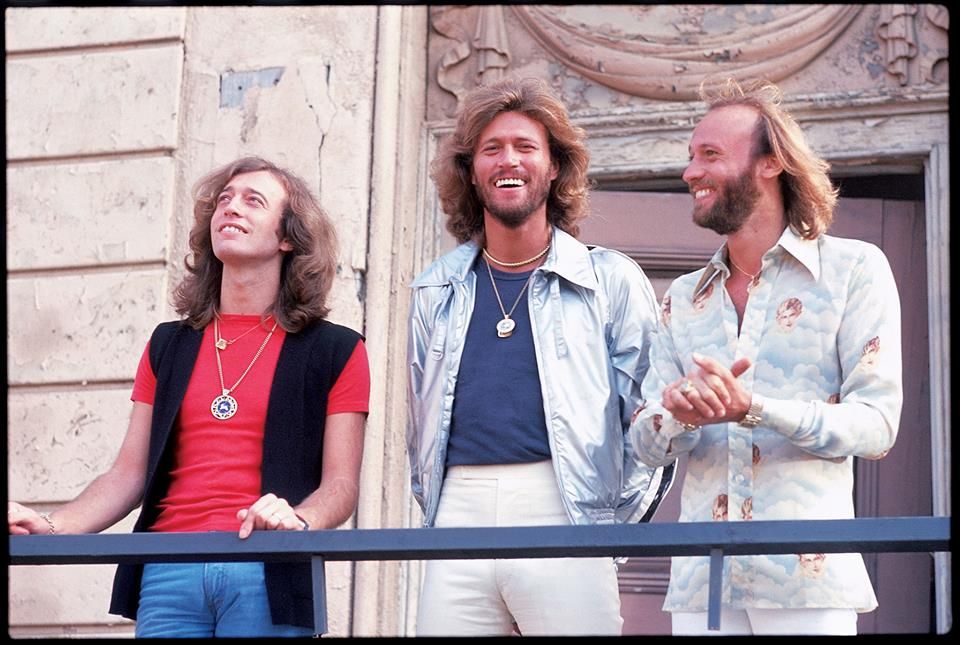
When “Throw A Penny” appeared on the Bee Gees’ 1974 album Mr. Natural, it arrived in a moment of artistic limbo for the Gibb brothers—a time suspended between the waning grandeur of their orchestral pop era and the disco renaissance that would soon make them cultural icons. The song was not a chart single; it lived quietly within an album that itself struggled commercially, though it marked a critical pivot point in their creative evolution. Produced by the seasoned Arif Mardin, Mr. Natural revealed the Bee Gees searching for new colors in their palette—earthier tones, subtler grooves, and deeper emotional inquiry. Within that framework, “Throw A Penny” stands as one of the album’s most contemplative tracks, a gentle hymn to empathy wrapped in melancholy elegance.
In this composition, the brothers retreat from the grandiosity of their earlier baroque pop style and instead offer something more intimate and human. The melody unfolds like a slow exhale—softly cyclical, underscored by delicate piano phrases and hushed harmonies that seem to hover just above resignation. There is something of a prayer here, though not in the religious sense; it is a yearning for recognition amid indifference, a cry for compassion directed at a world preoccupied with its own noise. Barry Gibb’s vocal delivery carries that ache with quiet dignity—his tone less theatrical than before, more lived-in, suggesting an artist beginning to understand that profundity can dwell in restraint as much as in grandeur.
The lyrical core of “Throw A Penny” is deceptively simple: an image of charity, an act of giving framed within broader social alienation. But behind that simplicity lies the Bee Gees’ enduring gift—the ability to turn commonplace sentiment into something mythic through melodic grace and emotional precision. The “penny” becomes symbolic currency for attention, care, or even love—small gestures capable of immense spiritual consequence. It’s as if the Gibbs were writing not just about poverty or compassion but about the modern condition itself: our collective failure to see one another fully.
Musically, the track anticipates the Bee Gees’ later sophistication—the fusion of introspection with rhythm and atmosphere that would soon define their mid-’70s reinvention. Mardin’s influence is unmistakable; his subtle production weaves layers of acoustic texture around an almost spectral vocal arrangement. The result feels suspended between eras: the wistful balladry of their past still intact but softened by hints of soul and contemporary groove.
In retrospect, “Throw A Penny” captures a fleeting moment of transition—the sound of artists rediscovering vulnerability before fame’s second tidal wave returned to claim them. It is one of those overlooked songs that whisper rather than shout, yet linger long after the stylus lifts—a quiet appeal for tenderness from three brothers who always sang best when reaching beyond themselves toward our shared humanity.