
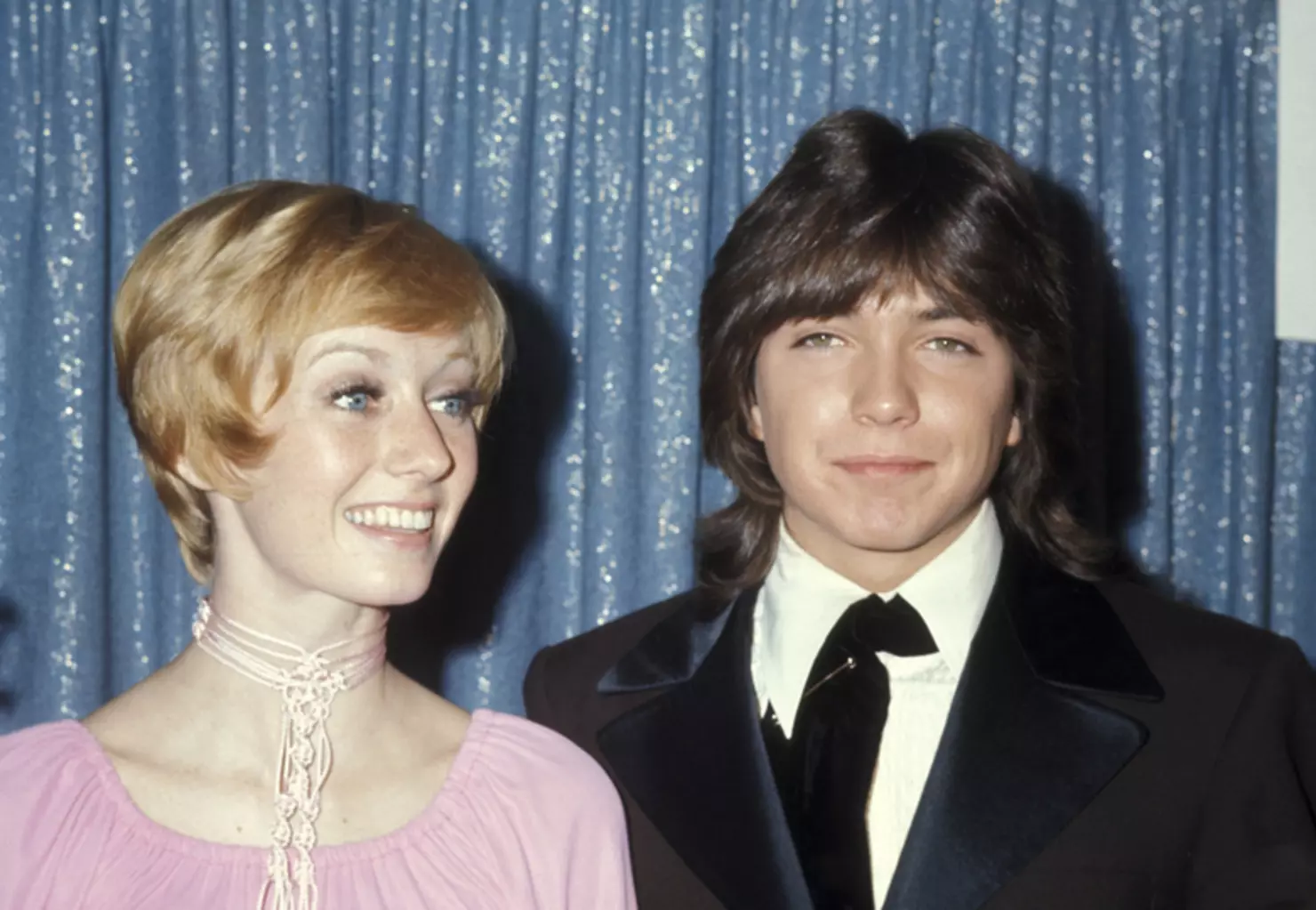
“Be-Bop-A-Lula” in David Cassidy’s hands is a love letter to rock’s first rush—a way of saying: I’m not just the face you remember; I’m the music that raised me.
If you want the truth upfront, it’s this: “Be-Bop-A-Lula” was not a marquee hit single for David Cassidy—it was a statement track. He recorded it for his 1975 RCA album The Higher They Climb (The Harder They Fall) (released July 1975), produced by David Cassidy and Bruce Johnston of The Beach Boys. On the album’s original track list it sits proudly at Track 2, credited to Gene Vincent and Tex Davis.
Because the song wasn’t a major chart-pushed single, the most honest “debut chart position” to report is the album’s arrival. In the UK, The Higher They Climb entered the Official Albums Chart as a new entry at No. 26 (chart dated 03/08/1975) and later reached a peak of No. 22. (The Official Charts artist summary also confirms the album’s UK peak and chart weeks.) Meanwhile, Germany’s official chart database lists “Be-Bop-A-Lula” as a 1975 single crediting Cassidy/Johnston as producers—yet it does not show a chart run there, so there’s no German “debut position” to cite from that listing.
Now, the story behind why Cassidy chose this particular song is where the heart of it lives.
“Be-Bop-A-Lula” is one of rockabilly’s founding pulses—first recorded by Gene Vincent and His Blue Caps on May 4, 1956, and released as a single on June 4, 1956. It became a genuine cross-genre smash, reaching No. 7 on Billboard’s charts (with additional country and R&B success noted in standard reference summaries). That original record doesn’t just belong to the 1950s; it belongs to the idea of rock ‘n’ roll as escape: leather-jacket desire, jukebox heat, the thrill of breaking out of whatever small town—or small identity—was trying to name you.
And in 1975, David Cassidy badly needed that kind of escape, not from music, but from a frame. By the mid-’70s he was already wrestling with the afterimage of teen-idol superstardom, trying to be received as a serious recording artist rather than a memory pinned to a bedroom wall. Even the album’s title, The Higher They Climb, is widely read as self-aware commentary on fame’s rise-and-fall mechanics.
So he built the record like a bridge—part confession, part reclamation. A thoughtful reissue essay notes how the album deliberately mixed covers (including The Beach Boys’ “Darlin’” and Gene Vincent’s “Be-Bop-a-Lula”) with originals and personal rewrites, as if Cassidy were saying: here are my roots, and here is my voice—take both or take neither.
That’s the emotional meaning of his “Be-Bop-A-Lula.” It isn’t nostalgia for its own sake. It’s identity work.
Listen to what the song allows him to do: it lets him step into a lineage older than television, older than magazine covers, older than the hysteria that once followed him down streets. Rockabilly has no patience for polish. It wants nerve. It wants grin-in-the-dark confidence. And that’s exactly what Cassidy is reaching for—two and a half minutes where he can sound like a man playing to the band, not performing to the image.
There’s also something quietly poignant about the choice of producer. Bruce Johnston, a pop craftsman with deep harmony DNA, helps Cassidy frame this early-rock shout inside a mid-’70s studio sheen—respectful, not museum-stiff. In other words, Cassidy doesn’t cosplay 1956; he translates it. He keeps the song’s youthful voltage, but he sings it from the other side of the whirlwind—when you’ve already learned what fame can take, and you still choose the music anyway.
And that may be the most bittersweet beauty here: “Be-Bop-A-Lula” is, at its core, a song about uncomplicated devotion—she’s my baby—yet Cassidy’s version carries the faint shadow of a more complicated life. It’s joy with experience behind it, a little scuffed at the edges. Not tragic—just real.
In the end, David Cassidy didn’t record “Be-Bop-A-Lula” to borrow someone else’s glory. He recorded it to remind you that before the roles, before the noise, there was always this: a boy hearing rock ‘n’ roll for the first time and realizing the world could be larger than whatever was handed to him. And if you listen closely, you can still hear that first realization—still bright, still stubborn—beating under the track like a second heart.