
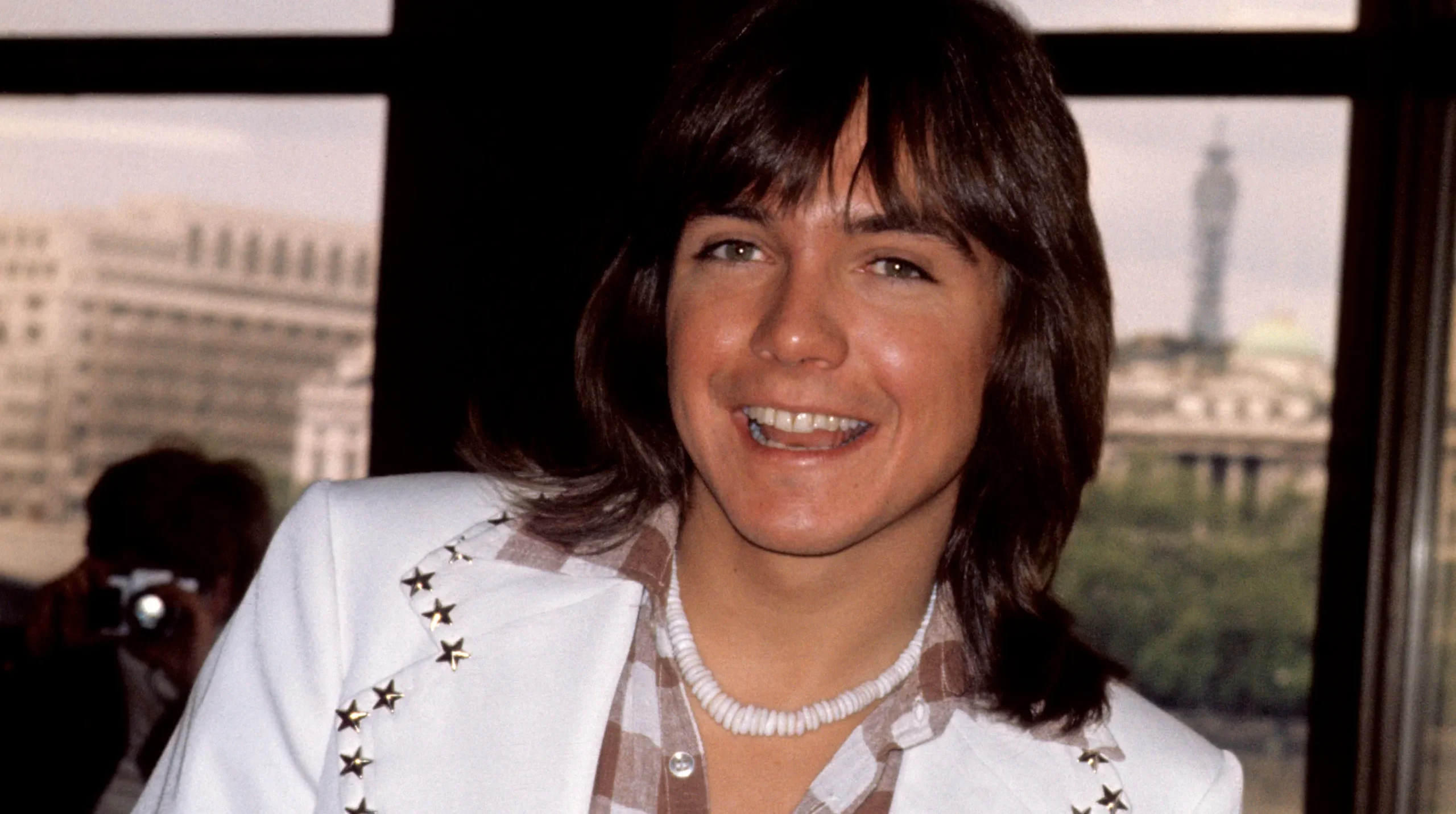
“Love in Bloom” is the sound of bruised pride softening into hope—a gentle promise that after the fall, something tender can still begin again.
By the time David Cassidy recorded “Love in Bloom” in 1975, he was no longer trying to outrun the shadow of his earlier fame—he was trying to outgrow it. The song appears on his RCA-era pivot album The Higher They Climb (The Harder They Fall) (released July 1975), a record co-produced by Cassidy and Bruce Johnston. In the UK, the album’s chart “arrival” is clearly documented: it entered the Official Albums Chart as a new entry at No. 26 on August 3, 1975, later reaching a peak of No. 22. Those numbers don’t shout like a teen-idol-era stampede—but they speak in a different tone: steady, adult, earned.
“Love in Bloom” sits late in the album sequence—track 10—and that placement feels almost symbolic, like it’s waiting until the noise quiets down before it tells you what it really believes. The writing credit is one of its most meaningful facts: it was co-written by David Cassidy and Richie Furay (of Buffalo Springfield and Poco), a partnership that immediately tilts the song toward West Coast country-rock warmth rather than pop gloss. And the record’s wider cast makes that warmth feel like a community gathering: Record World reported the album was cut at RCA’s Hollywood recording facility, with contributors including Carl Wilson, Jerry Beckley and Dewey Bunnell of America, and Richie Furay among the names surrounding Cassidy.
That sense of “friends in the room” isn’t just romantic imagination—it’s baked into the credits. One Discogs release entry for the album details “Love In Bloom” with Richie Furay and Dewey Bunnell on backing vocals, and even lists a texture you can practically feel: Henry Diltz on harmonica, with David Cassidy credited for arranging on that track in certain international editions. This is not the sound of a star being manufactured. It’s the sound of a singer assembling a new identity out of real musicianship and real alliances.
And then there’s the quietly fascinating “chart life” of the song itself. “Love in Bloom” wasn’t pushed as a big headline single—yet in the U.S., it still made its way into hands and jukeboxes as the B-side to “Get It Up for Love” on RCA (PB-10321). There’s something beautifully appropriate about that: a song about recovery and renewed tenderness living on the reverse side of a more outward-facing track, like a private truth pressed into vinyl for anyone curious enough to flip it over.
So what is “Love in Bloom” saying?
It opens with the emotional posture of someone who has taken a few hits—romantically, financially, spiritually—someone left “busted” in more ways than one, staring up at the night and trying to understand how giving your best can still leave you empty-handed. (Cassidy delivers those images not with melodrama, but with a kind of weary clarity.) Yet the song refuses to stay in the wreckage. The title itself is its argument: love doesn’t always arrive like fireworks; sometimes it returns the way spring returns—slowly, stubbornly, almost without asking permission.
In that way, “Love in Bloom” becomes a small mirror of Cassidy in 1975. Even the album’s name—The Higher They Climb (The Harder They Fall)—carries a knowing nod to what he’d lived through: the dizzy height of adoration, and the bruising reality that follows when the world changes its mind. Against that backdrop, this track feels less like a simple love song and more like a statement of survival: the belief that tenderness can still be possible after humiliation, that a heart can be cautious and hopeful at the same time.
That’s why David Cassidy’s “Love in Bloom” lingers. It doesn’t pretend the fall didn’t hurt. It simply insists—quietly, almost kindly—that the story doesn’t have to end at impact. Somewhere after the bruises, after the long stare into the moonlit silence, something in the chest still stirs… and begins, once again, to open.