
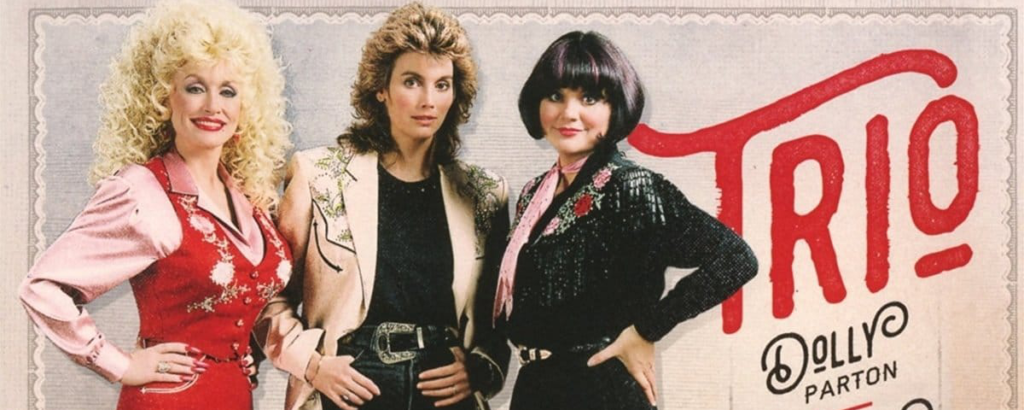
“The Sweetest Gift” is a three-voice benediction—Dolly Parton, Linda Ronstadt, and Emmylou Harris folding harmony around a mother’s unconditional love until it feels like a hand laid gently on the heart.
The essential truths belong at the top. “The Sweetest Gift (A Mother’s Smile)” is a gospel song written by James B. Coats in 1942. In 1976, long before the landmark album Trio made their partnership official, Dolly, Emmylou, and Linda brought the song to national television on Parton’s syndicated variety series Dolly—a performance widely circulated as one of their earliest “Trio” moments on screen. The episode is commonly cataloged by collectors as The Dolly Show #104, dated October 18, 1976, with the trio segment list explicitly including “The Sweetest Gift.”
And the song itself—its story—is not sentimental decoration. It’s a quiet, devastating parable: a mother visiting her imprisoned son, offering love without bargaining, without performance, without conditions. That’s the whole point. In a world that loves to attach price tags to mercy, the mother in “The Sweetest Gift” refuses the transaction. The gift is not freedom from consequences; it’s the steady presence of love inside consequences.
This is why the 1976 performance matters. Television variety shows were usually built for sparkle—quick laughs, bright costumes, brisk applause. Yet when these three women stand together and sing “The Sweetest Gift”, the room seems to change temperature. The melody doesn’t rush. The lyric doesn’t wink. It simply states what it believes: that compassion can outlive disgrace. And in that belief, you can feel something older than show business—something like church, something like porch-light faith, something like the memory of being forgiven before you had the words to ask.
Part of the magic is how different their voices are—and how naturally they braid. Dolly Parton brings that high, Appalachian clarity, a tone that can sound like sunlight on tin. Linda Ronstadt carries strength and polish—an alto that can cut through a band, then soften into velvet at will. Emmylou Harris floats between them with that otherworldly purity, like a pale ribbon tying two bright colors together. The miracle isn’t that they match; it’s that they don’t, and still become one instrument. In this song, harmony isn’t “pretty”—it’s symbolic. Three voices agree on one truth: love is not earned.
There’s also a beautiful thread of continuity running through the moment. The year before, Linda Ronstadt had recorded “The Sweetest Gift” as a duet with Emmylou Harris on Ronstadt’s 1975 album Prisoner in Disguise (released September 15, 1975). That studio version even had a real chart footprint: it appeared as the B-side to Ronstadt’s single “The Tracks of My Tears,” and “The Sweetest Gift” reached No. 12 on Billboard’s country chart in early 1976. So when Dolly joins them on television later in 1976, it doesn’t feel like a random booking. It feels like a door opening: a friendship and a shared musical conscience becoming visible.
And what a choice of song for that first televised glimpse. Not a showstopper. Not a flirtation. Not an anthem engineered to win the room. A mother’s love, offered in the hardest place. It’s as if these three stars—each already commanding her own corner of American music—decided that the most powerful thing they could do together was not to dazzle, but to kneel. To honor the kind of love that doesn’t trend, doesn’t tour, doesn’t get reviewed—yet quietly holds families and futures in place.
If you listen closely, “The Sweetest Gift (Live on The Dolly Show, 1976)” carries a special kind of nostalgia: not nostalgia for youth, but nostalgia for sincerity. For a time when television occasionally allowed stillness, when a song could speak about grace without irony, when three famous women could stand shoulder to shoulder and let a simple gospel narrative do the heavy lifting. The performance doesn’t ask you to be religious. It asks you to remember what mercy sounds like—when it’s sung plainly, beautifully, and together.