
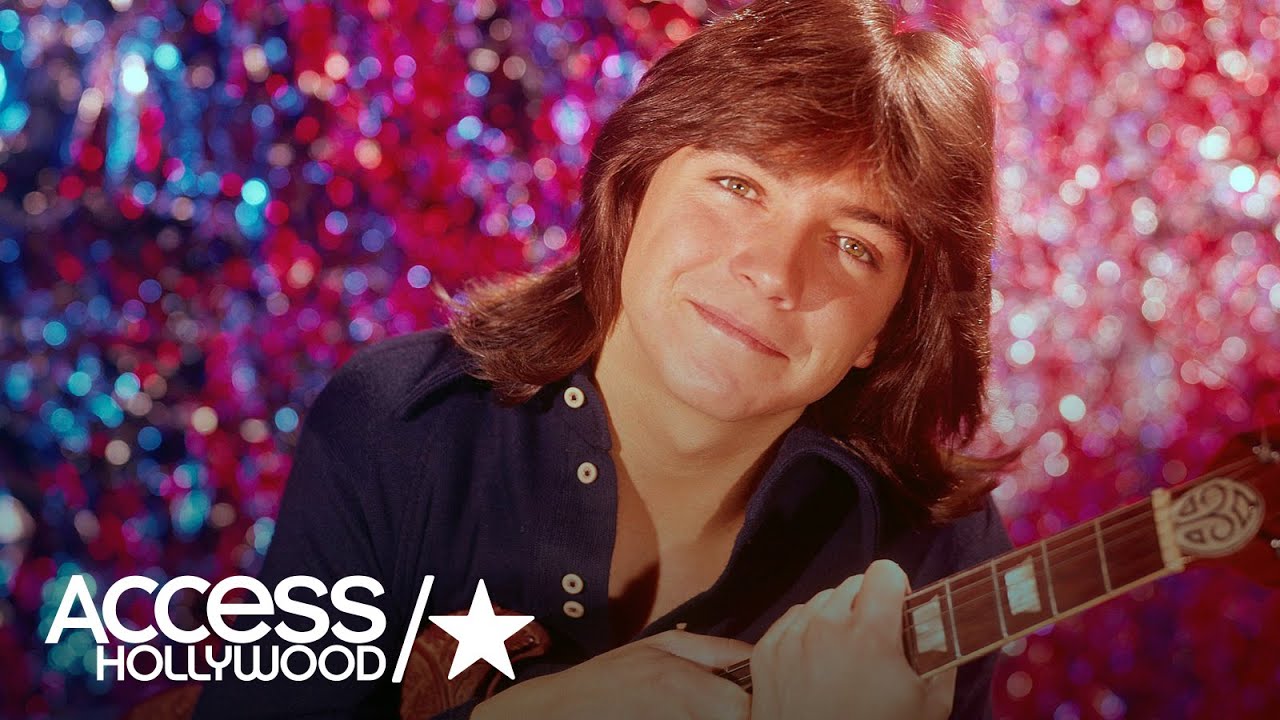
“Heart of Emotion” feels like a midnight vow—when the world goes still, and love is measured not by noise, but by the quiet certainty that you’ve finally arrived where you belong.
The most practical headline comes first: “Heart of Emotion” is an album track from David Cassidy’s 1985 LP Romance, and it wasn’t promoted as a major stand-alone single—so it doesn’t carry its own “debut” number on the singles charts. Its chart story is the album’s story: Romance first entered the UK Official Albums Chart on 8 June 1985 at No. 24, and reached a peak of No. 20 the following week (15 June 1985). In Germany, the album charted as well—entering on 24 June 1985 and peaking at No. 22.
That matters because Romance itself is one of the most quietly poignant artifacts in Cassidy’s discography: it was his only studio album of the 1980s, and—tellingly—Arista did not release it in the United States, issuing it instead in markets like Europe, Japan, and Australia. So “Heart of Emotion” belongs to that bittersweet category of songs that feel like a private confession pressed onto a record the wider world only partly noticed at the time.
The record’s DNA is stamped all over the song. Romance was produced by Alan Tarney—a craftsman associated with sleek, modern pop textures—and nearly the entire album was written or co-written by Tarney with Cassidy. “Heart of Emotion” specifically is credited to Alan Tarney and David Cassidy. This is not the Cassidy of the early teen-idol blaze, where the world often told him what he was supposed to be. This is Cassidy deliberately co-authoring his own language—building songs that feel grown, bruised, romantic in a way that accepts life’s weather.
Even the album’s broader narrative leans toward intimacy. Accounts of Romance describe it as written across the period of Cassidy’s relationship and marriage to Meryl Tanz, with Cassidy acknowledging how much the project’s emotional fuel came from that chapter of his life. And while the album had a clear commercial spearhead—“The Last Kiss,” featuring backing vocals by George Michael, which became a sizeable UK hit (peaking at No. 6 on the UK Singles Chart)—the deeper cuts are where you hear Cassidy trying to make peace with himself.
That’s where “Heart of Emotion” sits, like a lamp left on in the hallway.
The song’s emotional architecture is nocturnal: stillness, breath, the sense that something is “meant” to happen—an inward romance rather than a public one. (Even the lyric fragments commonly circulated by fans emphasize nighttime quiet and a feeling of inevitability.) What I hear in it is not the drama of a chase, but the tenderness of arrival. The title, “Heart of Emotion,” is almost disarmingly plain—yet that plainness is the point. It suggests a man who’s tired of clever disguises. He wants the center of the feeling, not the costume around it.
Musically, the track belongs to the mid-’80s moment when adult pop was learning to sound glossy without losing its pulse. Tarney’s world often favored clean lines and a kind of luminous restraint, and Cassidy—when placed inside that frame—comes across less like a “character” and more like a narrator you can trust. There’s a particular ache in that: Romance charted in the UK, it had real momentum, and yet it remained geographically limited—almost as if the record was living proof that reinvention sometimes happens off to the side, while the headlines are elsewhere.
And perhaps that’s the song’s deeper meaning, beyond the love story on the surface. “Heart of Emotion” sounds like someone choosing sincerity as an identity. Not perfection—sincerity. The courage to say: I feel this, I mean it, I’m not hiding behind the old myth of who you thought I was. In the soft light of Romance, that becomes its own kind of triumph: a romantic song that doubles as an act of self-retrieval.
Some records shout their place in history. “Heart of Emotion” doesn’t. It simply stays—like a memory you didn’t realize you’d kept, until one evening you hear it again and recognize, with a start, that it was describing you all along.