
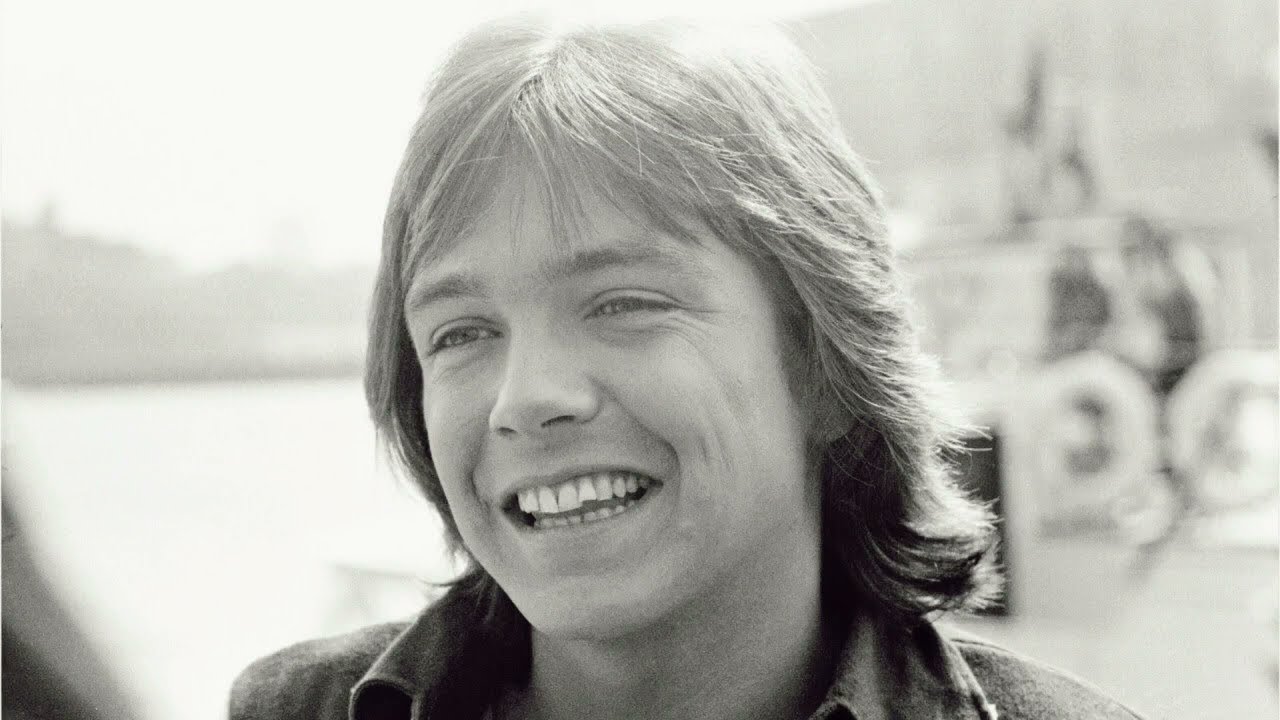
“Somebody To Love” is David Cassidy’s quiet midlife pivot—less a plea for romance than a weary, honest hunger for something real in a world that keeps offering substitutes.
By 1992, the name David Cassidy carried more than pop nostalgia; it carried a whole afterlife of fame—what it gives you, what it takes, and what it leaves behind when the screaming fades. “Somebody To Love” arrived in that exact emotional territory, released as a single (1992) and also appearing as track 4 on his album Didn’t You Used to Be…. The album itself is documented as released in September 1992, recorded February–June 1992 at Santa Monica Sound Recorders, with production credited to Eric “E.T.” Thorngren.
The most concrete “at-launch” chart detail tied specifically to the song is one that surprises many people who assume Cassidy’s later work disappeared without a ripple: in Switzerland, “Somebody To Love” reached No. 4 (listed with a one-week peak) on the Swiss charts. That’s not a footnote—it’s a small but telling sign that this particular track connected, briefly but vividly, outside the usual old-hits orbit.
A key part of the song’s story is authorship. “Somebody To Love” was written by David Cassidy with Sue Shifrin, his longtime collaborator (and wife at the time), and that partnership gives the track a different kind of intimacy—less “performer meets material,” more “a life being translated into melody.” Even the official German chart database page for the song foregrounds that credit pairing—Shifrin/Cassidy—and again confirms Thorngren as producer.
Musically, this is not teen-idol pop and it isn’t trying to be. “Somebody To Love” sits in that early-’90s adult-pop space: polished, steady, emotionally direct, built to carry a vocal that has lived a little. It’s the sound of a singer who no longer needs to win the room in the first ten seconds—because he’s more interested in saying what he means. The song’s running time is commonly listed at 4:01, reinforcing that radio-ready shape even as the mood leans reflective.
What gives the track its lingering ache is the way it frames desire. The title might suggest romantic pursuit, but the song’s imagery (as documented in Cassidy discography notes) points toward a broader longing: the shiny distractions—money, status, the “big-life” symbols—are painted as loud but emotionally empty, while the one thing that matters is plain and almost childlike in its simplicity: a human bond. In other words, “Somebody To Love” is less about wanting more and more about wanting true. That’s a subtle distinction—yet it’s the line between being impressed by life and being nourished by it.
Placed on Didn’t You Used to Be…, the song also reads like a conversation with Cassidy’s own public history. The album title itself feels like a mirror held up to an identity the world refuses to stop revisiting. And in that light, “Somebody To Love” becomes almost defiant in its softness: it suggests that behind every image—teen idol, tabloid figure, comeback story—there remains the same human need, unchanged and unglamorous. Not applause. Not a headline. Just closeness.
That’s why the song can feel so affecting now. It doesn’t chase the past; it doesn’t rewrite it either. Instead, it stands in the present tense of feeling: the moment when you realize that the things you once thought would satisfy you… don’t. And you’re left, not with bitterness, but with clarity. David Cassidy sings “Somebody To Love” like someone who has learned that clarity can be lonely—but also cleansing.
If you’ve ever looked back at an earlier version of yourself and felt both tenderness and distance, this song understands you. It’s not trying to be a grand statement. It’s simply naming the one wish that outlasts every era: when the lights go down, when the noise drifts away, what we want is still the same—somebody to love, and somebody who truly loves us back.