
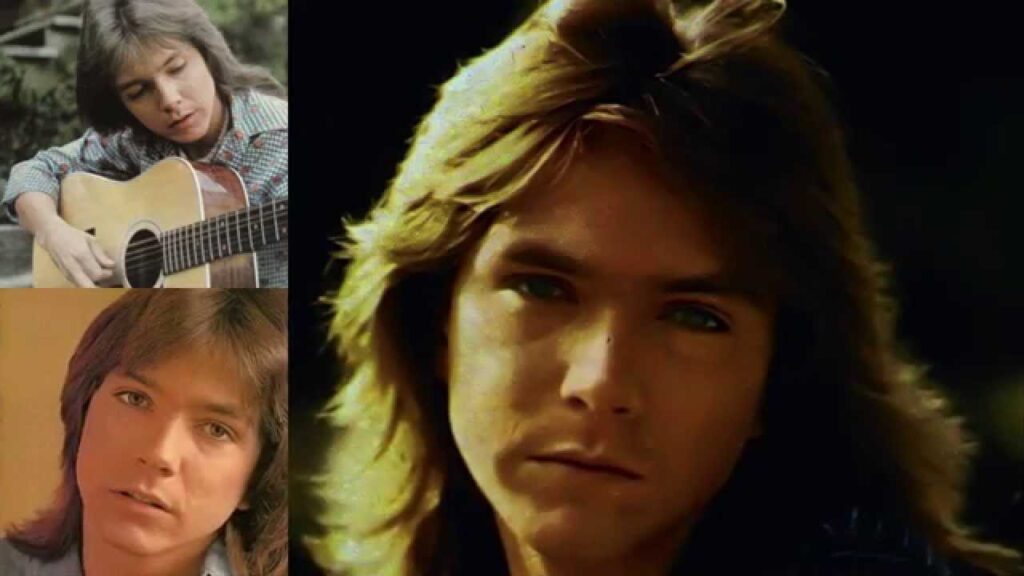
“Boulevard of Broken Dreams”: David Cassidy looking back at fame’s bright promise—and the quiet wreckage it can leave behind.
If you want the most important context up front, it’s this: “Boulevard of Broken Dreams” wasn’t a nostalgic leftover from the teen-idol era—it arrived as part of David Cassidy’s grown-up return, on his self-titled comeback album David Cassidy (released in October 1990). The album itself peaked at No. 136 on the Billboard 200, modest on paper but significant as a public re-entry after a long American album drought. And while “Boulevard of Broken Dreams” didn’t come with a headline chart run of its own (the campaign focus was the single “Lyin’ to Myself”), that lead single did the heavy lifting—reaching No. 27 on the Billboard Hot 100.
Placed as track 4 on David Cassidy, “Boulevard of Broken Dreams” is credited to David Cassidy and Sue Shifrin—a partnership that matters here, because it sounds like two people writing with the lights on, unafraid of the unflattering angles. (They would marry soon after, on March 30, 1991, which casts this song’s intimacy in an even more personal glow.) The recording itself runs a little over five minutes—5:12 in common album listings—long enough to breathe, long enough to let regret and warning share the same room without rushing each other out.
What makes “Boulevard of Broken Dreams” linger is its refusal to dramatize heartbreak as romance. This is not the lonely boulevard of lovers who missed their chance. It’s the boulevard of public lives—of reputations, headlines, backstage doors, and the particular silence that follows applause when you’re left alone with what it cost. Right from the opening image, the narrator isn’t merely sad; he’s reckoning. The song sketches a fallen figure—“Fallen far from the glory / Remembered as another sad story”—and in two lines you can hear the chill of being reduced, by the world, to a cautionary tale.
Then comes the harder turn: the lyric doesn’t just mourn the fall—it studies the machinery of it. Power is described as a “dangerous seductress,” a phrase that lands like hard-earned wisdom rather than poetic flourish. In other words: it isn’t simply that you lose your way; it’s that you’re invited to lose it, flattered into it, told—sweetly, persuasively—how far you can go. The song keeps returning to distance: how far from the starting point, how far from the person you were, how far from any ordinary measure of “enough.” That’s the boulevard: a long, illuminated stretch that can feel like destiny while you’re walking it, until one night you realize the scenery has changed and you don’t recognize yourself in the shop windows.
Musically, it fits the broader intent of David Cassidy—a record built to present him not as a memory, but as a contemporary adult voice in pop-rock production, guided by producers including Phil Ramone and E.T. Thorngren. The sheen is there, but the center is weathered: a vocal that sounds less like performance and more like testimony. And that’s the emotional twist the song offers, almost quietly, near its core: even after the wreckage, something remains. The lyric insists that “some dreams don’t die,” and that idea is both comforting and heartbreaking—because it suggests we carry our earliest hopes like old photographs, creased at the corners, kept even when the people in them are gone.
So “Boulevard of Broken Dreams” becomes more than a title. It becomes a place you can visit in memory: not to punish yourself, but to understand. To look back at the glow that once felt like salvation and admit that it was also a kind of fog. And to keep walking—not toward the old spotlight, but toward a quieter truth: that surviving the story is its own kind of dignity.