
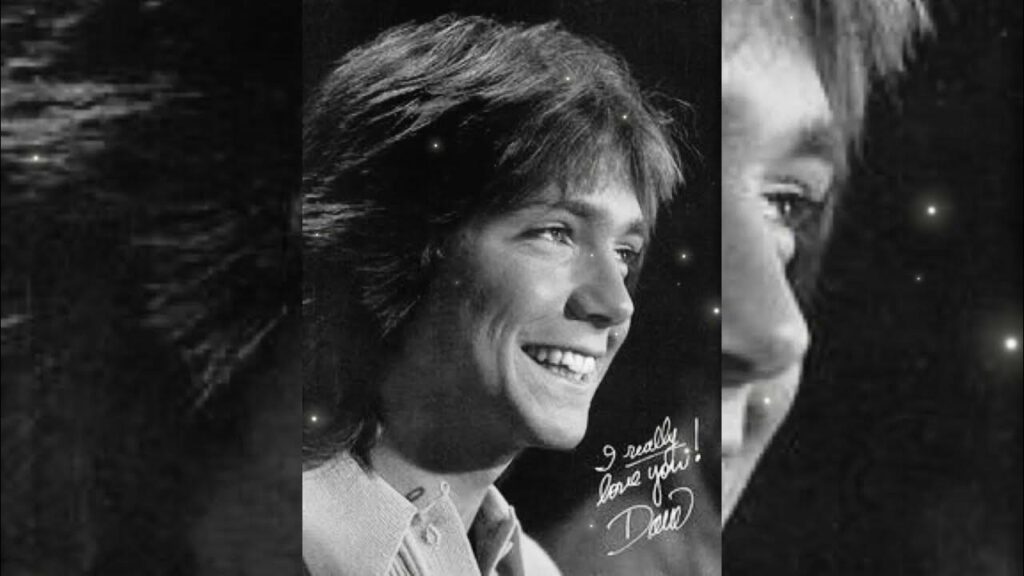
“Stranger in Your Heart” is the soft ache of realizing you’re still there—yet somehow already gone,a love-song for that quiet moment when intimacy fades into distance without anyone slamming a door.
David Cassidy recorded “Stranger in Your Heart” for his self-titled comeback album David Cassidy, released in August 1990 on Enigma Records—his first U.S. studio album in 14 years, and, poignantly, his only release for Enigma. The album itself reached No. 136 on the Billboard 200, a modest peak that still mattered: it meant Cassidy had found his way back into the national conversation on his own grown-up terms. The promotional spotlight went to the featured single “Lyin’ to Myself,” which returned him to the Billboard Hot 100 with a No. 27 peak (after debuting at No. 90). In contrast, “Stranger in Your Heart” was not the campaign’s headline single—its power is the kind that lives inside the album, waiting for the listener who stays long enough to hear it.
That placement matters. “Stranger in Your Heart” sits as Track 8, running about 4:18—a full, late-night length that gives the emotion room to unfold instead of racing toward a hook. And it carries a particularly telling set of co-writers: David Cassidy, Mark Spiro, and Mike Reno. (If you hear a certain polished, arena-ready ache in its shape, that collaboration helps explain why: Spiro and Reno both came from a world where big choruses weren’t just decoration—they were emotional architecture.)
The story behind this era of Cassidy is, in its own way, the song’s subtext. By 1990, the “Keith Partridge” myth had long since calcified into pop culture shorthand, but Cassidy was doing something more difficult than reenacting youth: he was trying to sound like a man who had lived through the aftershocks of early fame and still wanted to speak plainly. David Cassidy is filled with that adult pop-rock sheen of the time—clean guitars, radio-ready weight, a sense of late-80s/early-90s gloss—but underneath the production you can hear a more human project: reclaiming identity, reshaping the voice the world thought it already understood.
And then the title lands: “Stranger in Your Heart.” Not “stranger to you,” but in your heart—the most intimate location imaginable. That phrasing is the knife-twist. It suggests a relationship that still looks intact from the outside—shared history, familiar habits, maybe even shared rooms—yet something essential has drifted away. The narrator isn’t describing a dramatic betrayal; he’s describing the colder mystery: how someone can remain physically close while becoming emotionally unreachable. It’s the loneliness of staying, not leaving.
What the song means, at its deepest level, is the recognition that love can fail quietly. Sometimes there’s no final argument, no cinematic ending—just a gradual rearrangement of feeling until you realize you’re speaking a language your partner no longer understands. To be a “stranger” in the place where you once belonged is a particular kind of grief. It doesn’t explode; it settles. And because it settles, it haunts.
That’s why David Cassidy sings this kind of material so effectively in his later career voice. He had always been capable of tenderness, but by 1990 there’s an added grain to the emotion—less wide-eyed yearning, more lived-in knowledge. “Stranger in Your Heart” isn’t asking for puppy-love certainty. It’s asking for recognition. See me again. Remember who I was to you. Even the title implies the cruelest fear of all: that the person you love may still be present, but the version of you they once held dear has already slipped out of reach.
If you return to “Stranger in Your Heart” now, it doesn’t feel like a nostalgia object. It feels like a private scene—one of those songs that plays best when the room is quiet and you’re honest enough to admit how often relationships end not with anger, but with absence. And maybe that’s its quiet triumph: in the middle of a comeback album built to reintroduce him to radio, Cassidy left a track that speaks less like a product and more like a confession—soft, steady, and painfully familiar, like the moment you realize you’re being loved less… and no one has said it out loud yet.