
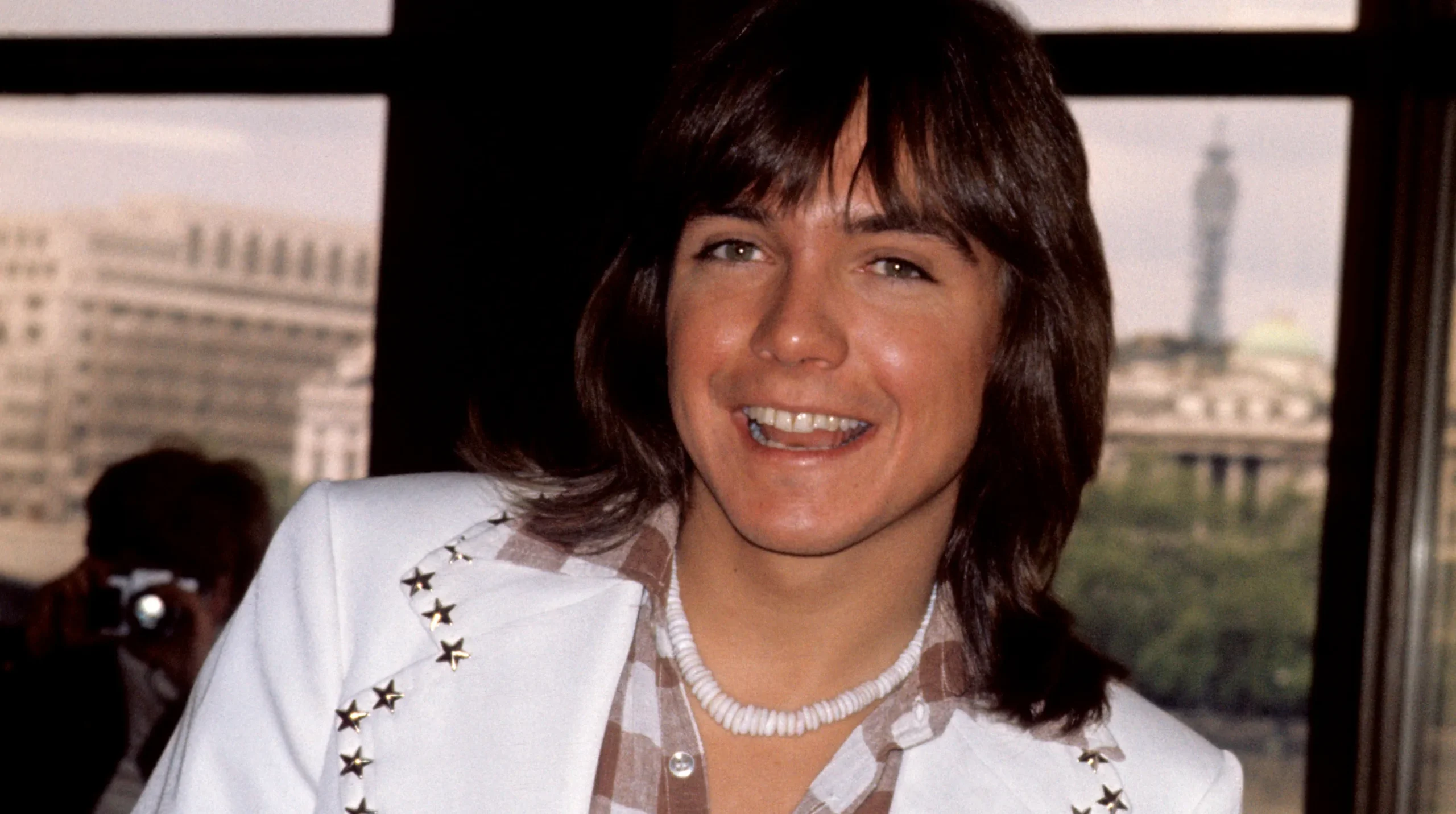
“Hollywood Nights” becomes, in David Cassidy’s hands, a late-career postcard to youth—glittering at the edges, but shadowed by the price of chasing light.
David Cassidy recorded “Hollywood Nights” as a cover of Bob Seger’s classic, releasing it on his final studio album, A Touch of Blue (2003). The album itself has the weight of an ending: Wikipedia identifies A Touch of Blue as Cassidy’s 17th and final studio album, issued on Universal Music, produced by Ted Carfrae, and packaged with a bonus disc of re-recordings. The UK release date is listed as November 3, 2003, and the official fansite discography places “Hollywood Nights” on Disc One, crediting the song to Bob Seger.
That’s the “where” and “when.” The more interesting question is why this song—why this story of a Midwestern boy swallowed by Los Angeles glamour—would call to Cassidy so late in his recording life.
Because “Hollywood Nights” isn’t merely about Hollywood as a place. It’s about Hollywood as a spell: the kind that makes you believe the next streetlight, the next party, the next beautiful stranger will finally explain your life back to you. In a newspaper profile from 2003, Cassidy is quoted calling Seger’s “Hollywood Nights” a tune that “perfectly captures” the essence of the years he spent growing up as a teenager in sunny Southern California. Even without the full article in front of you, that single remark is revealing. It suggests he wasn’t reaching for a fashionable cover. He was reaching for an atmosphere he recognized—an old, familiar electricity in the air.
To appreciate Cassidy’s choice, it helps to remember what Bob Seger originally built. Seger released “Hollywood Nights” in 1978 as a single from Stranger in Town, and it reached No. 12 on the Billboard Hot 100—a major hit at the height of his commercial power. Seger later explained how the chorus came to him while driving around the Hollywood Hills, and how a Time cover image helped him imagine the story of a guy from the Midwest meeting a glamorous “bizarro” version of L.A. life. The song is fast, cinematic, a little dangerous—its romance and its warning braided into the same guitar-driven rush.
So when David Cassidy sings it decades later, you don’t only hear a classic-rock cover. You hear a man who knows the landscape, and knows the illusion. There’s a particular poignancy in that—because Cassidy, too, lived inside a kind of bright machine. Fame doesn’t have to look like film studios and limousines to be disorienting; sometimes it looks like people recognizing you before they know you, mistaking an image for a person. “Hollywood Nights” is, at its core, about that very confusion—about desire getting tangled up with spectacle until you can’t tell which one you’re truly chasing.
Musically, Cassidy’s version sits naturally among A Touch of Blue’s broader concept: an album of standards, pop memories, and carefully chosen material that leans into reflection rather than reinvention. The fansite track list places “Hollywood Nights” alongside songs like “Spooky,” “Blackbird,” and “A Song for You,” which tells you the emotional neighborhood he wanted to inhabit—songs with history, songs that carry their own shadows.
The meaning of “Hollywood Nights” doesn’t change from version to version; it deepens. The original is the rush of headlights and hormones. Cassidy’s reading can feel like a second glance in the rearview mirror—still thrilled by the speed, but more aware of where the road tends to end. It’s not that he drains the song of energy. It’s that he lets the listener sense the aftermath: the quiet moment after the night breaks, when you’re left with your own name again and the lights don’t feel quite as forgiving.
In that way, David Cassidy’s “Hollywood Nights” becomes less about arriving and more about remembering—remembering the first time the city dazzled you, the first time you mistook excitement for fate, the first time you realized glamour can be a beautiful kind of loneliness. And maybe that is the final grace of the cover: it doesn’t try to outshine Bob Seger. It simply stands beside him, holding the same story under a different light—one warmed by time, and made more human by everything it has already lived through.