
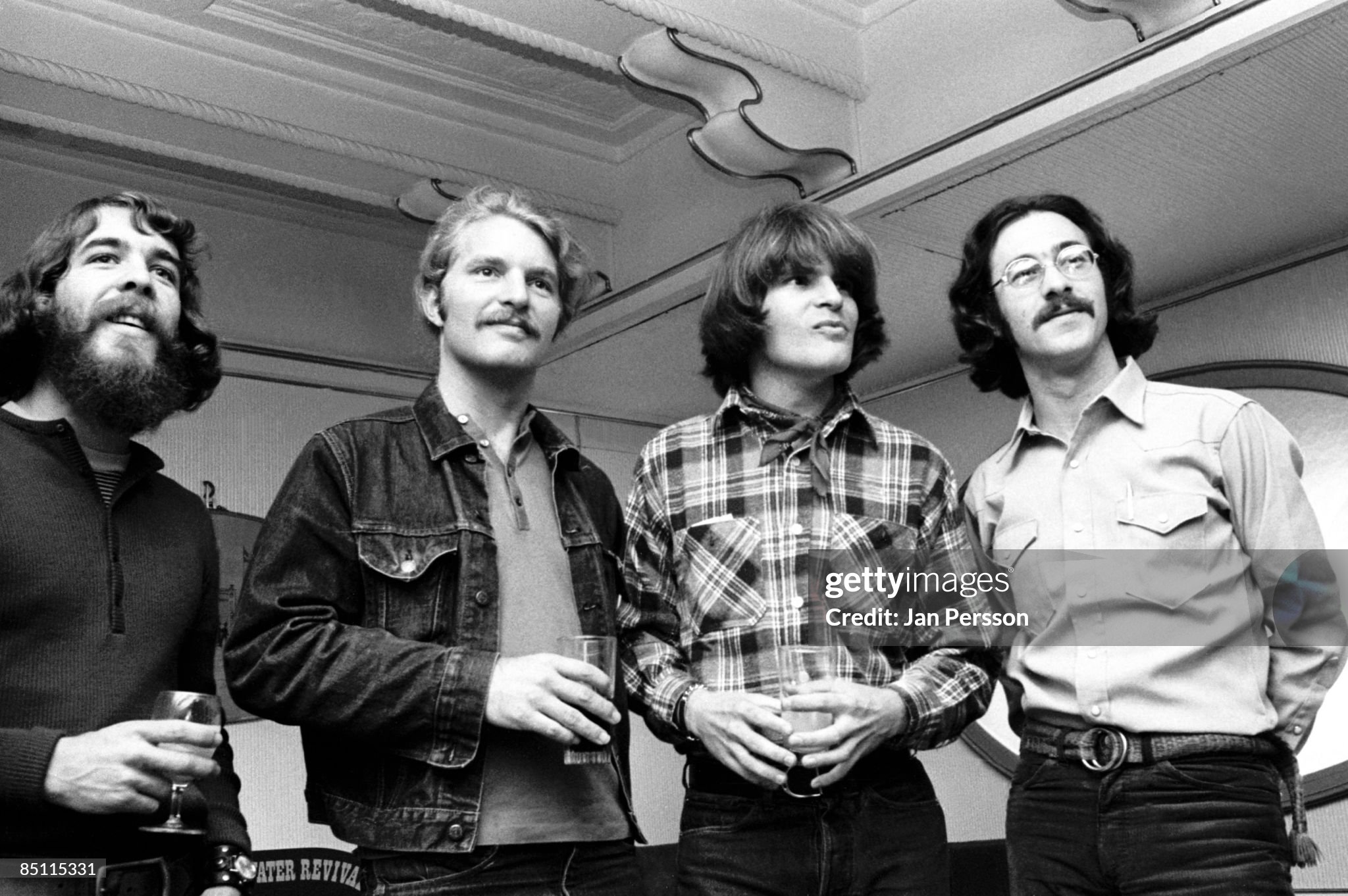
A farewell without bitterness, “Long As I Can See the Light” turns leaving into something tender, where distance hurts but love still glows at the edge of the dark.
Some goodbyes arrive with slammed doors and broken glass. Creedence Clearwater Revival’s “Long As I Can See the Light” chooses another path. It moves with the sadness of departure, but never with spite. There is longing in it, certainly, and loneliness too, yet the song carries itself with a kind of quiet dignity, as though John Fogerty understood that the deepest ache is often the one that speaks most softly. Released in July 1970 on Cosmo’s Factory and paired with “Lookin’ Out My Back Door” as a double-sided single, it helped send the record to another major commercial moment for the band; in the United States, that single reached No. 2 on the Billboard Hot 100, while in the UK “Long As I Can See the Light” was treated as the lead side and climbed to No. 20.
What lingers is not the chart story, though, but the feeling of a man stepping out into uncertainty and asking for only one thing in return: a light left burning somewhere behind him. It is one of the most beautiful images in the entire CCR catalog. Not triumph, not revenge, not even reunion promised in grand language—just a light. A sign of home. A small mercy against the darkness. In lesser hands, that image might have sounded sentimental. Here it feels elemental, almost biblical in its simplicity, and that simplicity gives the song its extraordinary grace.
Fogerty later said the song came from “the loner” in him, from the need to feel understood and to know that those at home would shine a light so he could find his way back. Once you know that, the song opens even wider. What first seems like a leaving song begins to sound like a confession of need. The traveler is not fearless. He is not leaving because he has ceased to care. He is leaving with the hope that care will remain, visible in the distance, steady enough to guide him when the road grows dark.
There is a spiritual hush in the music that sets it apart from the band’s harder-driving records. Writers and critics have often heard a hymnal or church-like quality in it, and that feels exactly right. The melody does not rush. The arrangement does not crowd the emotion. Everything seems built to let the song breathe, to let the listener stand for a moment in that dusky space between departure and return. On an album filled with force, motion, and pressure, “Long As I Can See the Light” arrives almost like a benediction at the end. Even AllMusic’s reading of Cosmo’s Factory points to the song as a source of solace, a comforting, elegiac close to a record made amid stress and chaos.
That emotional balance is part of the song’s beauty. It misses home without collapsing into self-pity. It admits weariness without surrendering to despair. The singer sounds tired, perhaps even a little haunted, but never bitter. And that absence of bitterness is what makes the song feel so human. Many farewells in popular music burn hot with accusation. This one glows low and steady. It knows that love can survive distance, and that yearning does not need to become anger in order to be real.
There is also something deeply moving in the way the “light” itself seems to hold two meanings at once. It can be heard as the sacred kind of light, spiritual and sustaining, but also as the plain earthly light of love—the lamp in the window, the welcome left on for someone not yet home. That double meaning gives the song its resonance. It belongs equally to the world of gospel feeling and to the ordinary heartbreak of human absence. A man can be singing to God, to a lover, to family, or to all three at once. The song never pins it down too tightly, and because of that, it remains open enough for almost anyone to enter.
Heard now, “Long As I Can See the Light” feels like one of Creedence Clearwater Revival’s most generous moments. The band could shake the earth when they wanted to. They could sound urgent, furious, wild. Here they offer something else—patience, tenderness, and the kind of sorrow that does not ask to be admired. It simply asks to be felt. That may be why the song has remained so cherished, turning up again and again on CCR compilations and continuing in John Fogerty’s solo performances long after the band itself had passed into legend.
Some songs about leaving sound like endings. “Long As I Can See the Light” sounds like faith held against the night. The road is still there. The separation is real. But somewhere behind the singer, there is still a lamp in the window, and in that small, steadfast image, Creedence found one of the most beautiful ways rock music has ever spoken of longing.