
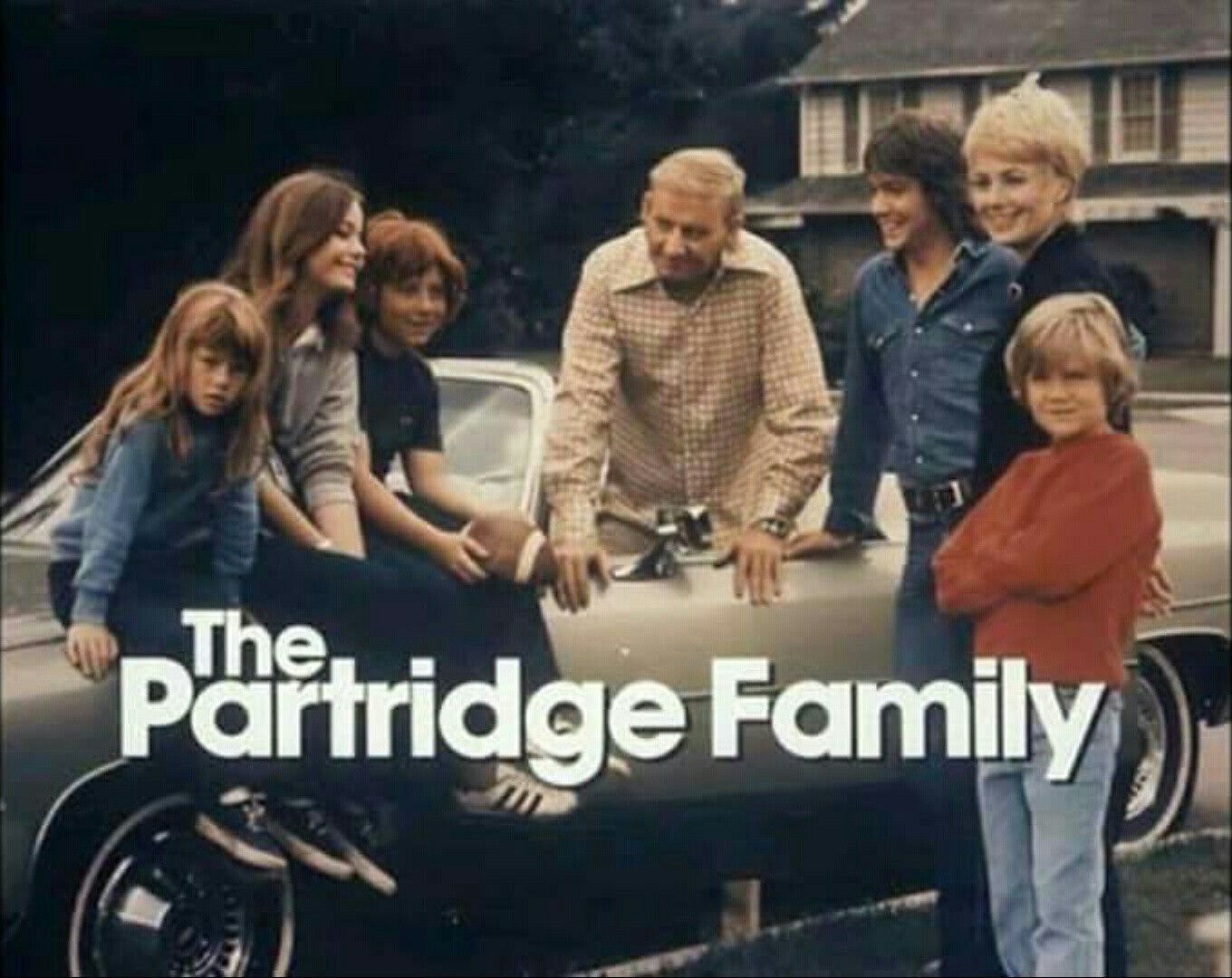
A heartbreak hidden in sunshine, “She’d Rather Have The Rain” lets The Partridge Family step out from their bright television glow and into something far lonelier, more wounded, and more quietly human.
There are songs that seem to carry their sadness in full view, and there are songs that hide it behind a soft surface, letting the ache rise only slowly. The Partridge Family’s “She’d Rather Have The Rain” belongs to that second kind. On paper, it sits inside one of the most polished and approachable pop worlds of the early 1970s, surrounded by the familiar warmth of a group many people still associate with cheerful harmonies, youthful charm, and the safe colors of television pop. But this song moves differently. It feels bruised from the start. The sadness is not theatrical, not dramatic in the usual pop sense. It is quieter than that, and perhaps more painful for being so.
Released on Up to Date in February 1971, the song lives on an album that reached No. 3 on Billboard’s Top LPs chart and produced major hits such as “Doesn’t Somebody Want to Be Wanted” and “I’ll Meet You Halfway.” Yet “She’d Rather Have The Rain” does not sound like it is reaching for the same kind of easy embrace. It sounds more inward, more exposed, as though a private disappointment had somehow slipped into the middle of a very public pop machine. The album itself arrived at a moment when The Partridge Family were at the height of their visibility, which only makes a song like this more striking now. A bright, beloved act was capable of holding a mood this overcast.
The title tells you almost everything, and yet not quite enough. “She’d Rather Have The Rain” is a beautiful phrase because it reverses what pop music so often promises. Usually rain stands for sorrow, for loneliness, for disappointment. Here, the heartbreak runs deeper: she prefers the rain to the singer himself. That is not merely rejection. It is a preference for melancholy over the comfort he can offer. There is something devastating in that idea. It suggests a distance so complete that even bad weather feels more welcome than the wrong love.
That emotional turn is what makes the song feel sadder than many fans might expect. The Partridge Family could certainly sing about longing and uncertainty, but they often did so within a frame of sweetness that softened the blow. This song lets the blow remain. It was written by Terry Cashman and Tommy West, and they gave it a premise that cuts much more sharply than the group’s sunny image might lead one to expect. The song was first released by The Partridge Family in 1971, and that pairing of title and group remains one of those small, surprising contrasts that make old pop catalogs so rewarding to revisit.
Its place on Up to Date matters too. The album was not simply a collection of carefree tunes; even listeners looking back on it now often note how much of its emotional life turns on hurt, regret, rejection, and the wish to be loved. That broader setting helps “She’d Rather Have The Rain” feel less like an accident and more like part of a hidden emotional thread running through the record. The sunshine was there, certainly, but so was the shadow behind it.
There is also something poignant in the recording history. The song was recorded on May 16, 1970, during the sessions for Up to Date, very early in the group’s rise. That date gives it a kind of innocence, but not a shallow one. The Partridge Family were still becoming a phenomenon, still settling into the sound the public would carry in memory, and yet here was a song willing to linger in rejection rather than rush toward reassurance. It reminds us that even the most commercial pop often holds small pockets of genuine feeling, if one listens closely enough.
What stays with the listener is the strange softness of the hurt. The song does not rage. It does not accuse. It simply lets the disappointment stand there in the open, almost politely, which can be far more affecting than a louder display. That restraint is part of why the sadness deepens over time. A song like this does not try to force tears. It lets the line itself do the damage. A woman would rather have the rain. There is no flourish needed after that.
And that may be the real beauty of “She’d Rather Have The Rain.” It reveals that beneath the polished surfaces of The Partridge Family, beneath the bubblegum label that can make people underestimate them, there were songs capable of real emotional delicacy. Not everything in their catalog smiles. Some of it sighs. Some of it looks out the window and knows the weather inside the heart is harder to clear.
So the sadness here is not hidden because it is weak. It is hidden because it is refined. It comes wrapped in melody, in gentleness, in a group sound built to charm. That contrast is exactly what makes the song memorable. “She’d Rather Have The Rain” lets The Partridge Family sound less like a bright television dream and more like something closer to ordinary human longing — tender, unreturned, and lonelier than expected.