
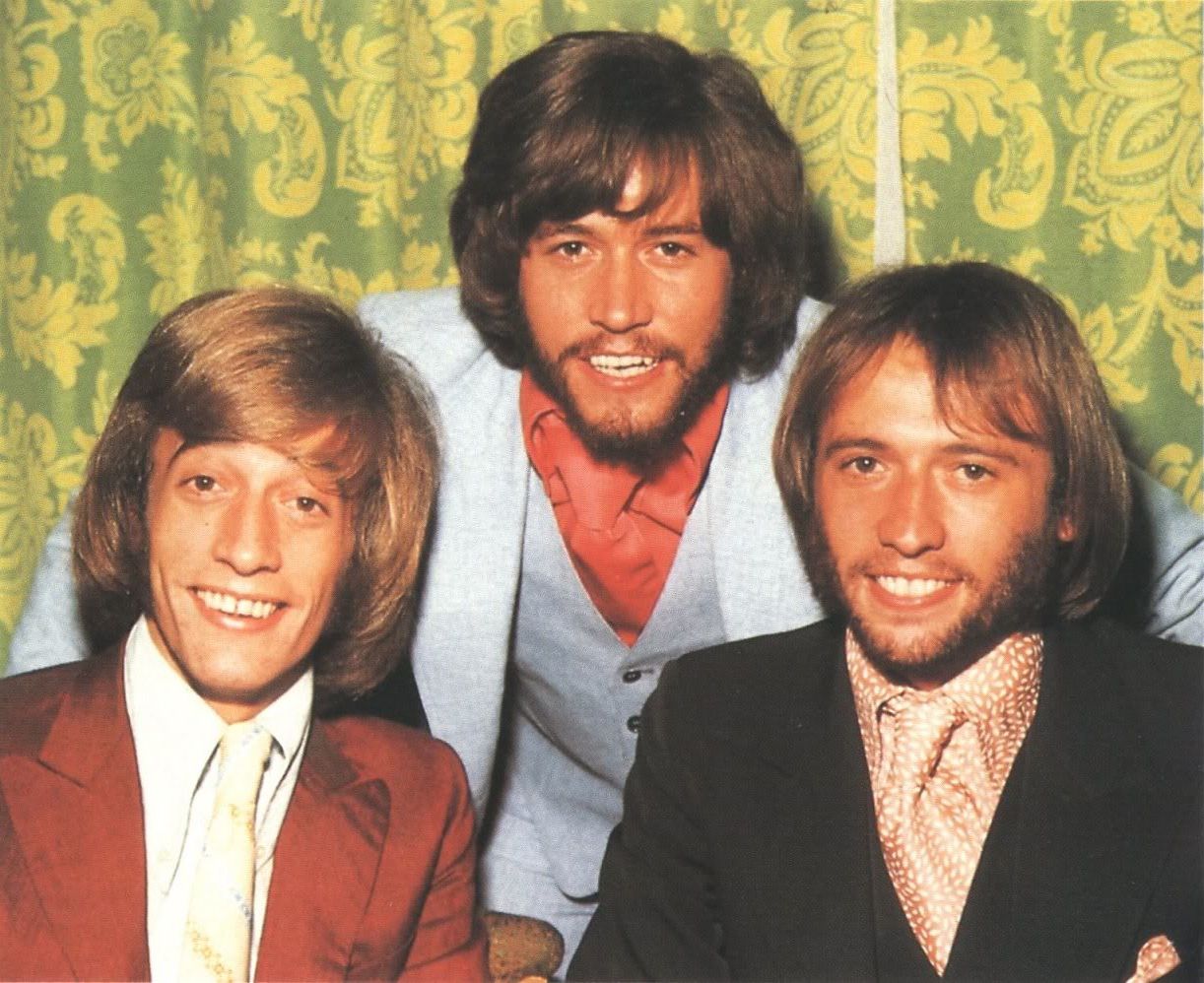
“Barker of the UFO” is the Bee Gees in miniature—an eccentric, psychedelic postcard from 1967, tucked behind a world-conquering hit, like a wink only the faithful were meant to find.
If you met “Barker of the UFO” by accident—flipping a single, letting the needle fall on the “other side”—you met it the way many people did at the time: as the UK B-side to “Massachusetts”, released 19 September 1967. And that pairing tells you almost everything you need to know about its charm. On the front: “Massachusetts”, the longing-laced anthem that became the Bee Gees’ first No. 1 on the UK Singles Chart, topped charts in a dozen other countries, and even crossed the Atlantic to No. 11 on the U.S. Billboard Hot 100. On the back: “Barker of the UFO”, a short, odd little creature—more whim than statement—yet oddly unforgettable once it’s lodged in your ear.
The track is from the same 1967 creative burst that later fed into their 1968 album Horizontal era, and its very existence feels like a reminder: the Bee Gees were never only solemn balladeers. Even at their most romantic, they carried a playful, studio-curious streak—an appetite for sound effects, sideways ideas, and titles that sound like they were overheard in a London basement club at 2 a.m. One detailed session-history account even suggests the title may nod toward the UFO Club scene, and notes that the recording “randomly features backwards-recorded cymbals and a tuba,” the sort of glorious mismatch that only makes sense when you stop demanding sense and start enjoying the ride.
About authorship: “Barker Of The UFO” is widely documented as being written by Barry Gibb—a rare instance in that period where a Bee Gees recording is credited to a single brother rather than the familiar shared banner. (If you browse modern streaming databases, you’ll sometimes see all three brothers listed in various credit fields; that’s part of the messy afterlife of catalog metadata. But the Bee Gees’ own song documentation and major reference listings commonly identify Barry as the songwriter here.)
What makes the song feel so special is precisely what it refuses to be: it doesn’t try to compete with the grandeur of its A-side. Where “Massachusetts” carries homesickness like a slow tide, “Barker of the UFO” darts and twitches—more sketch than portrait, more prankish atmosphere than narrative. Its running time sits around the one-minute-and-fifty-seconds mark depending on the release, which only heightens the impression that you’re catching a band mid-experiment, leaving a bright scribble in the margin rather than a finished painting.
And yet—this is the strange truth of B-sides—sometimes the margin is where the personality lives. “Barker of the UFO” lets you hear the young Bee Gees not as polished legends, but as hungry studio kids with curious hands: trying odd textures, sneaking jokes into the groove, trusting that a pop record could carry a little harmless mischief. It’s also an artifact of that brief cultural moment when “psychedelic” didn’t always mean grand epics—it could mean small weirdness, a toy-box arrangement, an off-kilter sound that made you smile before you could explain why.
So if “Massachusetts” was the message in the bottle that sailed around the world, “Barker of the UFO” was the seashell stuck to the glass—unnecessary, maybe, but somehow the part you remember touching. And decades later, when you hear it again, it does what the best forgotten flipsides always do: it brings back not only the band, but the feeling of discovery—of turning the record over, and finding that the story kept going after the hit had already said goodbye.