
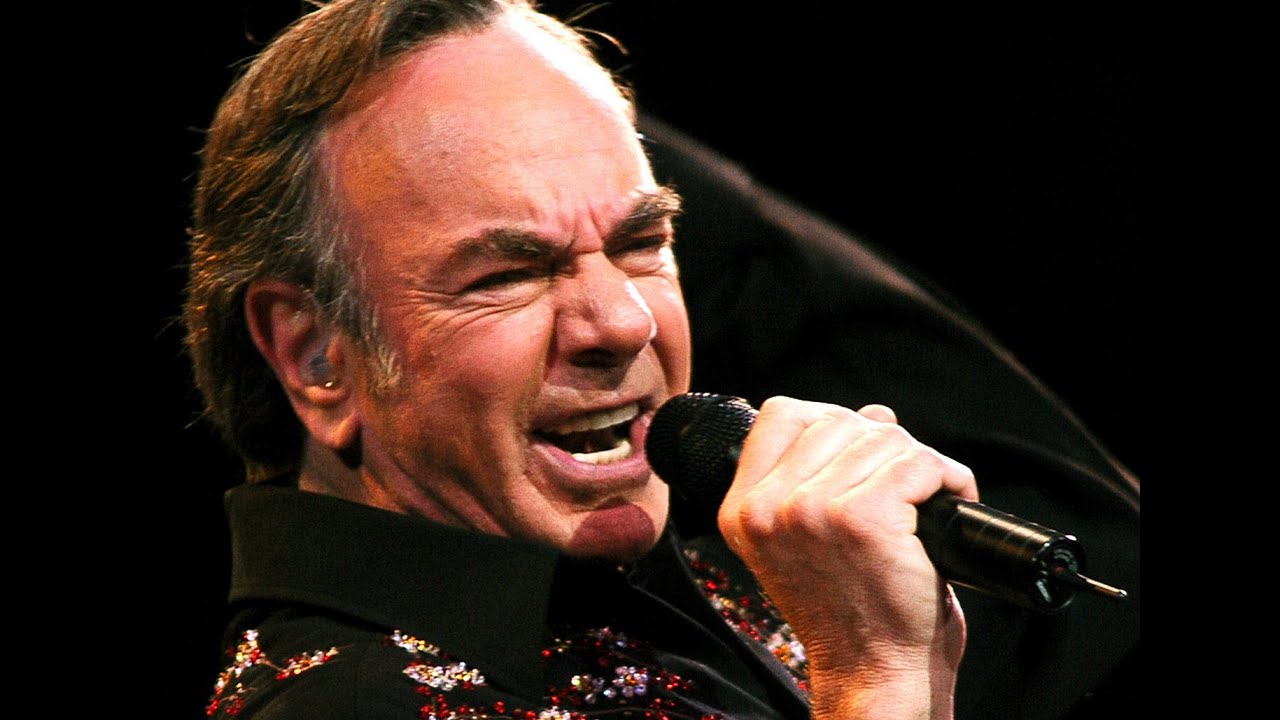
“The American Popular Song” is a self-portrait of pop itself—celebrating the way a simple tune can seize the heart, outlast its era, and keep our memories marching in time.
There’s something wonderfully circular—almost mischievous—about Neil Diamond opening an album with a song that praises the idea of the hit song. “The American Popular Song” isn’t a love letter to one person; it’s a love letter to the invisible force that has followed so many of us through kitchens, car radios, living rooms, and late-night drives: the chorus that won’t let go. It appears as track 1 on You Don’t Bring Me Flowers, Diamond’s twelfth studio album, released November 3, 1978 on Columbia, produced by Bob Gaudio.
Those facts already carry a quiet significance. You Don’t Bring Me Flowers was assembled to capitalize on the runaway success of the title song (including the famous duet connection with Barbra Streisand), so the album begins in a moment when Diamond was standing squarely inside mainstream visibility. Yet instead of leading with a grand romantic statement, he leads with a meta-anthem—an ode to the machinery and magic of the pop tradition itself. And it’s not even written by Diamond. The songwriter credit goes to Tom Hensley—Diamond’s pianist/keyboardist—who also handled the orchestral arranging and conducting for this track. That detail matters: you can almost hear the “bandstand” perspective in the song’s bones, as if it’s written by someone who watched audiences night after night—watched how a room changes the instant a familiar hook arrives.
If you’re looking for the “ranking at launch,” the song’s chart story is modest compared with Diamond’s giants, but it’s real. “The American Popular Song” did appear as a single in at least some territories, and it reached No. 38 on the UK Singles Chart (as reflected in major discography listings). The album’s performance, meanwhile, was far stronger—peaking at No. 4 on the U.S. Billboard 200 and No. 15 on the UK Albums Chart. In other words: the song wasn’t one of the era’s unavoidable radio monuments, but it lived at the front of a very successful record—like an opening speech before the main drama begins.
And what does that opening speech say?
At its core, “The American Popular Song” is about surrender—happy surrender. It describes how a tune “grabs you” and “holds you,” how it makes you want to clap, stomp, sing along: the body answering before the mind has time to judge. (Even paraphrased, the idea is unmistakable.) This is Diamond—via Hensley—acknowledging something he’d understood since the Brill Building days: pop is not merely entertainment; it’s a kind of social gravity. A “simple story,” dressed in glory, can carry people through the day the way coffee carries the morning.
What makes the track especially poignant on You Don’t Bring Me Flowers is the contrast it sets up. The album contains some of Diamond’s most adult, bruised material—songs about distance, disappointment, the slow chill that can fall between two people. Placing “The American Popular Song” at the very beginning feels like lighting the marquee outside a theater that’s about to show you something darker. It’s as if the record whispers: Yes, heartbreak is here—but remember, the song itself is still a kind of refuge. Even when the story hurts, the melody can keep you moving.
The “behind-the-scenes” tenderness is this: Tom Hensley, the man credited as writer and arranger here, wasn’t the star on the poster. He was part of the working machinery that helped Diamond translate private feeling into public spectacle. So when Neil Diamond sings “The American Popular Song,” it lands like a tribute from inside the band—an acknowledgement that this whole enterprise is bigger than one name on a sleeve. The song becomes a toast to everyone who’s ever built the scaffolding of a record: players, arrangers, producers, the unseen hands that help a melody become memory.
In the end, “The American Popular Song” isn’t asking you to admire it as a chart statistic. It’s asking you to recognize yourself in the reflex: the foot tapping, the hands clapping, the sudden desire to sing along—even if you haven’t heard the tune in years. It’s the sound of American pop culture talking about itself with unusual honesty: not pretending to be eternal art, yet quietly proving it can be—because it goes on and on, carried forward by all the moments we attach to it.