
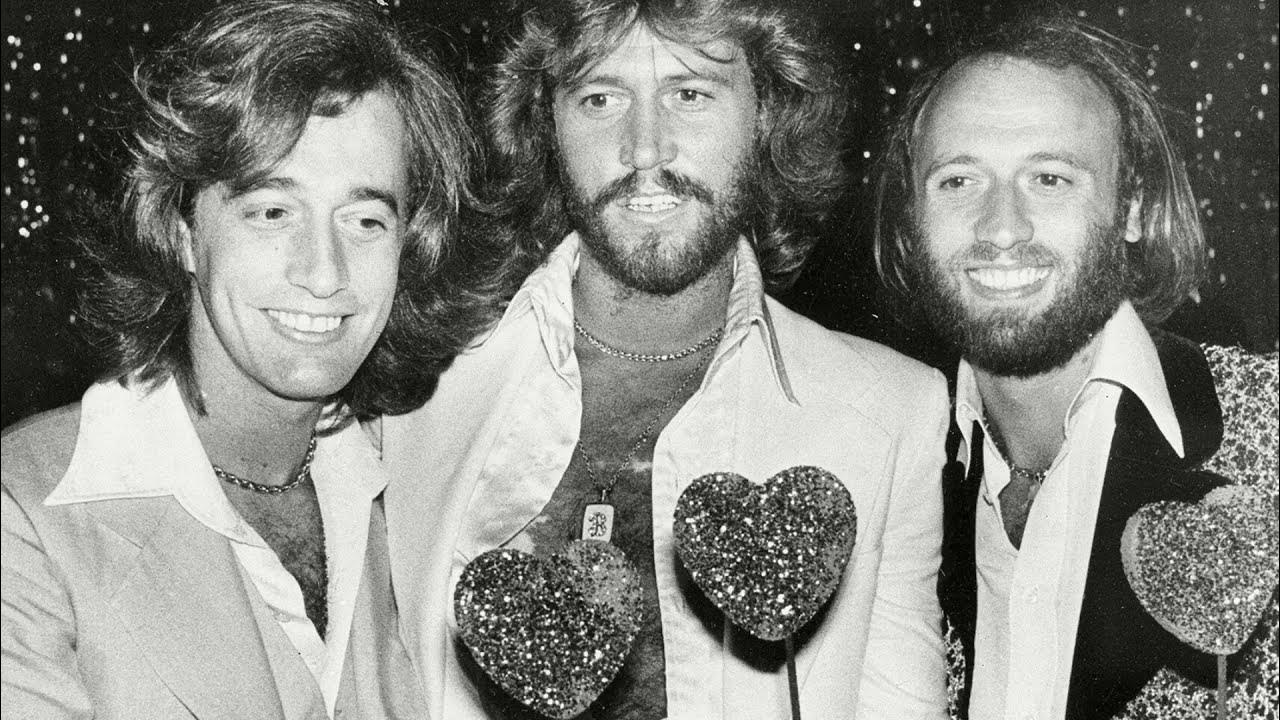
“E.S.P.” is the Bee Gees’ late-night transmission—an intimate signal sent through modern electronics, proving that even in a new decade, the old gift for longing could still arrive right on target.
When Bee Gees released “E.S.P.” as a single on 30 November 1987, it carried the unmistakable feeling of a band re-entering the room with its head held high—older, wiser, and somehow freshly wired for the times. Coming just after their triumphant comeback single “You Win Again”, “E.S.P.” served as the next message in the story of an unlikely return: not a nostalgia act, but a group willing to speak in contemporary sounds while keeping their emotional grammar intact. In the UK, the single first charted on 12 December 1987, ultimately peaking at No. 51 on the Official Singles Chart (with a five-week run). It wasn’t a chart-dominating smash—yet it was something arguably more revealing: a document of the Bee Gees learning how to be modern without losing their soul.
The song belongs to the album E.S.P., released 21 September 1987 in the UK and 12 October 1987 in the US—their first studio album in six years, and their first under Warner Bros. That context matters. After the post-disco backlash and years spent largely writing and producing for others, the brothers didn’t simply “return”—they reintroduced themselves. The album’s credits read like a careful balancing act between legacy and reinvention: produced by Arif Mardin along with Barry Gibb, Robin Gibb, Maurice Gibb, and Brian Tench. You can hear that blend in “E.S.P.”: a polished late-’80s sheen, yes—but beneath it, the old Bee Gees heartbeat of yearning and insistence.
The story behind the title is one of those small, telling decisions that reveal how artists protect their songs from misunderstanding. The original working title was reportedly “XTC” or “Ecstasy,” but the brothers changed it because it sounded too much like a drug reference—so it became “E.S.P.”, a more mysterious, more poetic kind of chemistry. That change is not cosmetic. It reframes the song’s entire meaning. Instead of chasing the language of intoxication, it reaches for something older and stranger: extrasensory perception, the idea that love can be felt before it is spoken, that two people can communicate through air and distance the way radios do—imperfectly, but unmistakably.
Musically, “E.S.P.” is built like an after-hours conversation set to a sleek pulse. The album version famously begins with an a cappella intro, though that opening was edited out for radio airplay, a practical compromise that also hints at how carefully the Bee Gees shaped their presentation in 1987. In the vocal distribution, you can feel the familiar hierarchy and the subtle change: Barry carries most of the lead, while Robin slips in for a few lines and edges toward that signature falsetto glow in the choruses—like a sudden shaft of moonlight across a room you thought you knew.
And what is the song saying, really? Not “I love you” in the simple way. “E.S.P.” speaks in the language of signals—unseen forces, impressions, the sense that desire can travel faster than logic. It’s a song about the feeling that someone is reaching for you at the exact moment you are reaching for them, even if pride, geography, or circumstance has placed miles between your hands. In the late ’80s, surrounded by glossy production trends, that idea could have turned cold. But the Bee Gees never let it. They make the technology feel human again: synth-lit romance, yes, but still romance—still that ancient ache dressed in new clothes.
Even the single’s physical details carry a little nostalgia. “E.S.P.” was issued with “Overnight” as its B-side, reminding us of that older ritual—flipping the record over to find the song that wasn’t the “main” one, yet sometimes felt more personal because you had to seek it.
So “E.S.P.” may not have worn the crown of a Top 10 hit in 1987. But it did something subtler and, in its own way, braver: it proved Bee Gees could still build a believable world out of longing—could still make intimacy feel like an event—without leaning on yesterday’s formulas. It’s the sound of a band turning experience into signal… and trusting that, somewhere out there, the right listener would receive it.