
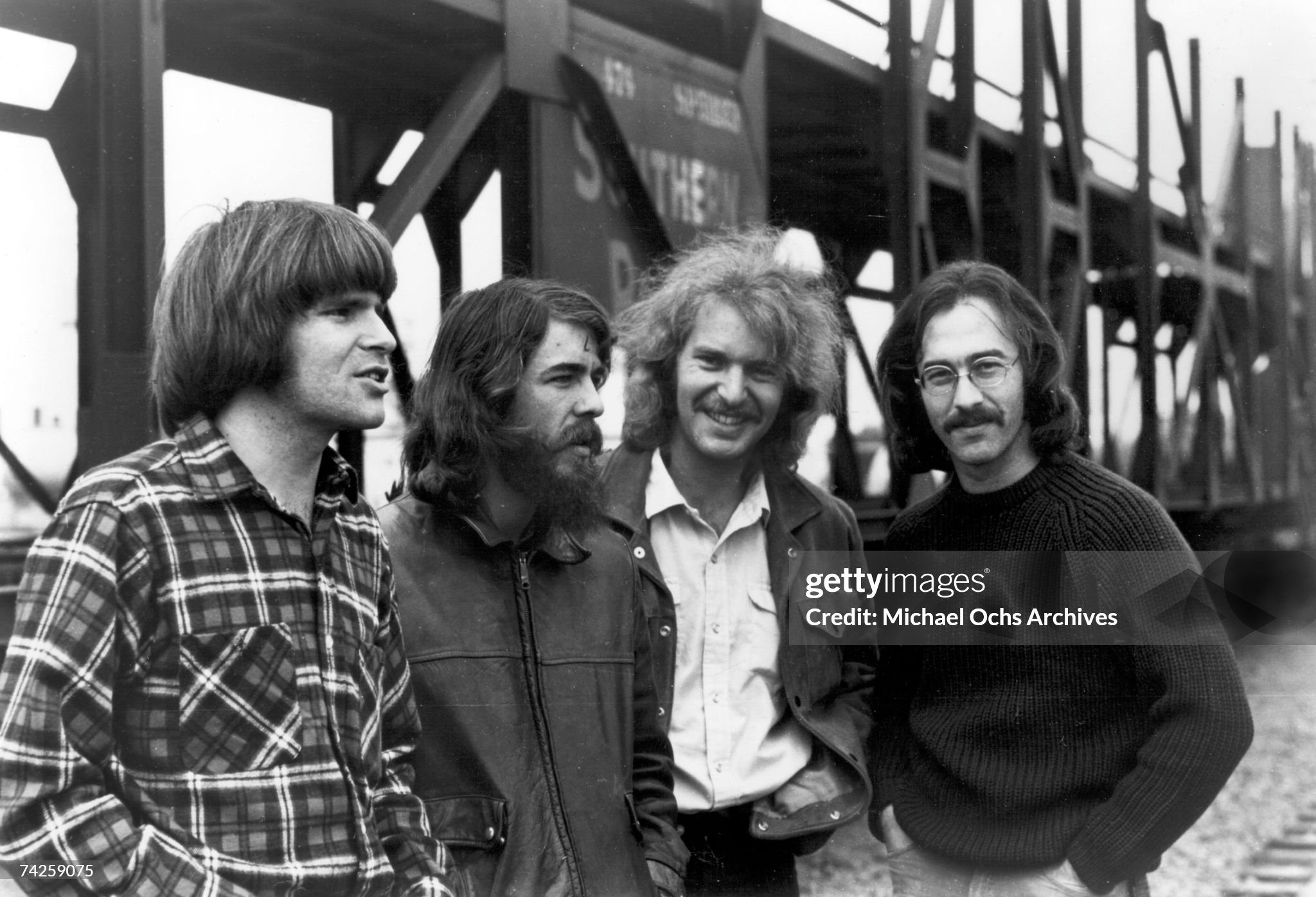
On their 1968 debut, Creedence Clearwater Revival turned The Night Time Is the Right Time into a smoky midnight vow—raw, restless, and already pointing toward the swamp-rock power that would soon make them unforgettable.
The Night Time Is the Right Time is not one of the most discussed recordings in the Creedence Clearwater Revival catalog, yet it tells us something essential about who they were before fame arrived in full. The track appeared on the band’s self-titled debut album, Creedence Clearwater Revival, released in 1968 on Fantasy Records. It was not issued as a major charting single of its own, so it did not earn a separate Billboard placement. But the album that carried it eventually climbed to No. 52 on the Billboard 200, and that early LP was helped into public view by Suzie Q, which reached No. 11 on the Billboard Hot 100. In other words, this song lived not as a radio smash, but as part of the atmosphere of a band just before the world knew how far they were about to go.
That matters, because The Night Time Is the Right Time was already a song with a long memory behind it. Its roots reach back to the blues tradition of the 1930s, and by the late 1950s it had already been given a much more widely known, emotionally explosive life by Ray Charles. When CCR approached it, they were not trying to out-sing the giants who had touched it before. They did something more revealing. They stripped the song down to a tougher, leaner frame and let it move with the kind of rough-edged confidence that would soon become their signature. You can hear a young American band studying the past, but you can also hear them quietly bending it toward their own future.
What makes the CCR version so interesting is the tension inside it. The song itself is built on an old and enduring idea: daytime belongs to order, routine, and watchful eyes, but nighttime belongs to truth, desire, temptation, release, and sometimes trouble. It is a simple theme on the surface, yet it has always carried more than romance. In songs like this, night is the hour when masks slip. People stop pretending. Longing comes closer to the skin. Regret, need, pleasure, loneliness, rebellion—they all step forward when the world goes dim. Creedence Clearwater Revival understood that instinctively. Their performance does not sound polished or theatrical. It sounds hungry. It sounds like a band drawn to the danger and freedom inside the lyric.
John Fogerty is the center of that effect. Even this early, before the great run of Proud Mary, Bad Moon Rising, Lodi, and Green River, his voice already carried that hard, weathered grain that made him sound older than his years. He did not sing like a man posing for authenticity; he sang like someone who had swallowed old blues, country, rockabilly, and rhythm and blues until they came out as one rough, unmistakable language. On The Night Time Is the Right Time, he does not overstate the song. He presses into it. The band follows with admirable restraint: steady drums from Doug Clifford, a grounding pulse from Stu Cook, and the compact, workmanlike force that defined early CCR. There is no wasted motion. No grandstanding. Just groove, tension, and attitude.
That is why this recording feels important in hindsight. The debut album as a whole still shows a group in transition, carrying traces of its pre-CCR bar-band history while searching for a sound that belonged entirely to itself. In that sense, The Night Time Is the Right Time is almost like a doorway. Behind it stands the older America of blues clubs, juke-joint pulse, and midnight confession. Ahead of it stands the coming Creedence Clearwater Revival identity: swampy, concise, working-class, unsentimental, and somehow both regional and universal at once. They were a California band, yet they could evoke river towns, back roads, heat, dust, and darkened rooms with uncanny conviction. This song helps explain how they learned to do that.
There is also something deeply moving about the fact that CCR chose to record a song like this so early. It reminds us that the band’s greatness was never just in writing hits. It was in understanding the emotional bloodstream of American music. They knew that a song could be sensual without being flashy, direct without being shallow, repetitive without losing power. Their version of The Night Time Is the Right Time is not the definitive reading in a historical sense, and it was never meant to overshadow the towering names associated with the song’s past. But it reveals taste, instinct, and reverence. More than that, it reveals how deeply Creedence Clearwater Revival believed in the old architecture of rhythm and feeling.
Listening now, the song carries a special kind of nostalgia. Not just nostalgia for the late 1960s, but for that brief moment before a band becomes legend—when the edges are still rough, the ambition is still burning close to the surface, and the records feel less like monuments than like late-night signals from somewhere nearby. The Night Time Is the Right Time may sit in the shadows of bigger CCR songs, yet those shadows suit it. This is music built for dim lights, half-spoken promises, and the restless hours after midnight when memory and desire begin speaking the same language. For listeners who return to the early catalog with patient ears, it offers a rewarding truth: before Creedence Clearwater Revival became one of America’s defining rock bands, they were already capable of making old songs feel dangerous, lived-in, and hauntingly alive.
And perhaps that is the song’s lasting meaning inside the CCR story. It captures the band before the mythology hardened, when they were still proving themselves by feel rather than by reputation. In that performance, one hears respect for tradition, but also a quiet refusal to be trapped by it. The night, after all, is where transformation happens. In 1968, Creedence Clearwater Revival stepped into that darkness and came out sounding more and more like themselves.