
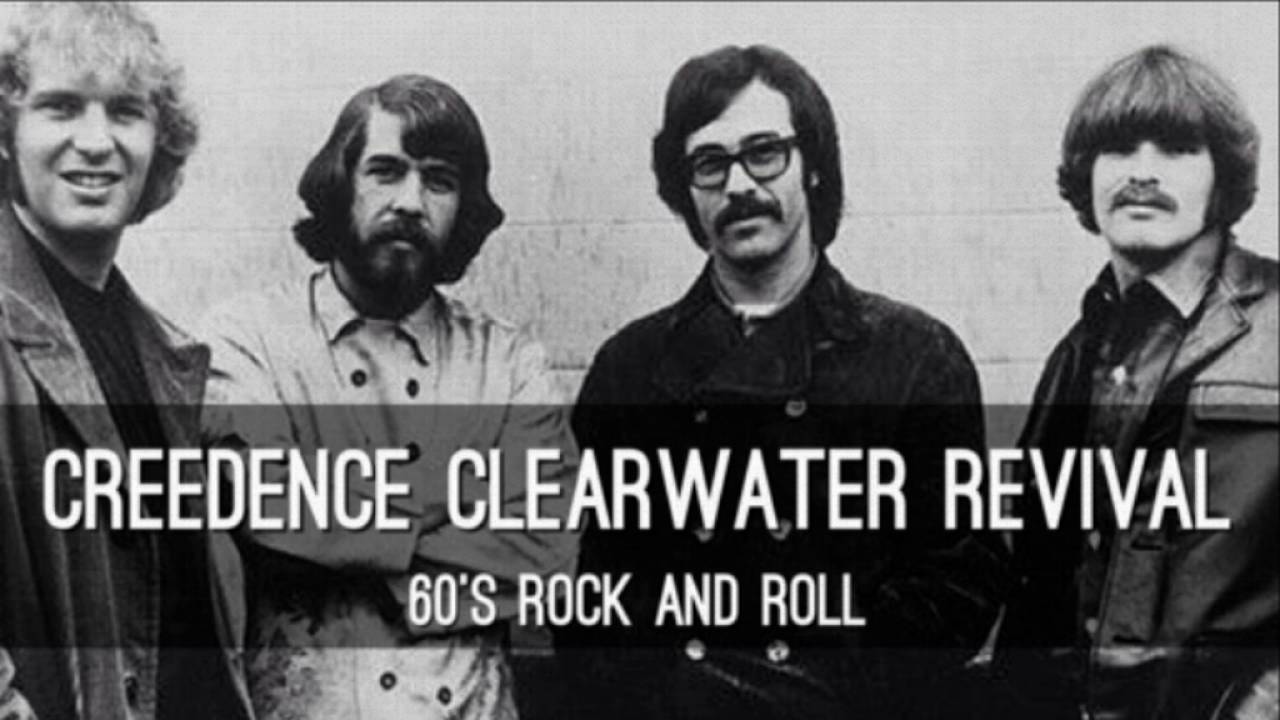
Gloomy is one of those early Creedence Clearwater Revival tracks that never chased glory, yet quietly showed how much feeling, tension, and shadow the band could summon before the big hits arrived.
Long before Creedence Clearwater Revival became one of the defining American bands of the late 1960s and early 1970s, “Gloomy” sat on their 1968 self-titled debut album like a half-hidden storm cloud. It was not released as a major charting single, so it did not make the Billboard Hot 100. But the album Creedence Clearwater Revival, powered in part by the success of “Suzie Q”, later reached No. 52 on the Billboard 200. That matters, because “Gloomy” belongs to that first chapter of the band’s story, when the sound was still forming, the identity was still tightening, and John Fogerty was already showing just how strongly atmosphere could carry a song.
Written by John Fogerty, “Gloomy” is not one of the titles most listeners mention first when they talk about CCR. It is overshadowed by giants: “Proud Mary,” “Bad Moon Rising,” “Green River,” “Have You Ever Seen the Rain”. Yet that is exactly why it deserves another listen. It captures something essential about the early band: the ability to make a recording feel humid, heavy, and emotionally unsettled without ever sounding theatrical. There is no need for elaborate production tricks here. The power comes from restraint, from feel, from the way the band leans into a mood and trusts it.
By 1968, the group had only recently left behind its earlier identity as The Golliwogs. That name change was more than cosmetic. It marked the beginning of a new seriousness, a new direction, and eventually a new place in American music. On the debut album, one can still hear the transitional energy. There are covers that connect the band to rhythm and blues roots, but the Fogerty originals reveal where the real future lies. “Gloomy” is one of those signposts. It is less famous than “Porterville” or “Walk on the Water”, perhaps, but it is every bit as revealing.
What makes “Gloomy” linger is not just its title, but the way the performance lives up to it. The song moves with a brooding pulse, and the arrangement feels earthbound, almost swampy before CCR had fully built the bayou mythology that would soon define them. Doug Clifford and Stu Cook keep the rhythm compact and steady, while the guitars create a dark, close air rather than a bright rock attack. And over it all is John Fogerty’s voice, already capable of sounding weathered, insistent, and haunted all at once. He does not oversing the song. He inhabits it.
That may be the hidden strength of “Gloomy”: it understands that sadness in music does not always arrive as a grand confession. Sometimes it comes as pressure in the room, as a color in the arrangement, as a mood that settles in before the listener can even name it. The song is not built around the kind of instantly quotable chorus that turns into a radio staple. Instead, it works like a dim light in an old hallway. The feeling reaches you first. The meaning follows.
There is also something deeply of its time in the track, though not in a fashionable way. In the late 1960s, rock music was often becoming more ornate, more psychedelic, more eager to announce its importance. Creedence Clearwater Revival went another way. Even on this early record, they sounded more direct, more rooted, more interested in groove and tension than in decoration. “Gloomy” reflects that instinct beautifully. It does not ask to be admired as an experiment. It simply creates a world and lets the listener sit inside it.
For anyone tracing the emotional map of CCR, this song matters because it shows that the band’s darkness was present from the beginning. Later songs would sharpen that instinct into unforgettable forms. “Born on the Bayou” would make the landscape mythical. “Bad Moon Rising” would turn dread into a singalong. “Who’ll Stop the Rain” would give uncertainty a human face. But “Gloomy” is one of the earlier sketches in that gallery, and there is something moving about hearing it before the legend fully arrives.
Its meaning, then, is larger than the lyric alone. “Gloomy” feels like a portrait of emotional weather, of inward heaviness, of that familiar hour when the world seems a little dimmer and the heart a little quieter. Many songs tell us exactly what happened. This one lets us feel what it was like. That difference is why some deep cuts continue to matter long after the charts have spoken.
So while “Gloomy” may never rank among the most famous recordings in the Creedence Clearwater Revival catalog, it remains one of the most revealing. It reminds us that before the triumphs, before the anthems, before the run of era-defining singles, there was already a band that understood tone, mystery, and emotional weight. And sometimes that first shadow tells you more than the spotlight ever could.