
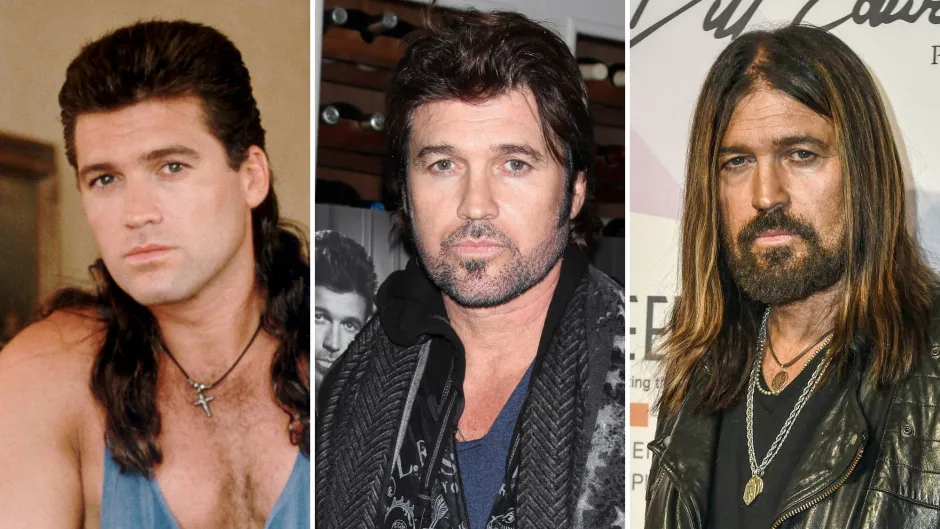
A rough-edged promise of late-found love and second chances, whispered by a man who knows he’s far from perfect but still dares to say: I could be the one
There is a kind of weathered tenderness running through “I Could Be the One” by Billy Ray Cyrus—the tenderness of someone who has lived long enough to see his own flaws clearly, and yet still holds onto the quiet hope that he might be good for somebody, just as he is. The song sits on his 2009 album Back to Tennessee, not as a headline single but as one of those honest album cuts that listeners discover later, often by accident, and then keep close like a private confession.
Back to Tennessee was released on April 7, 2009, at a time when Cyrus was juggling his country roots with the glare of Hollywood and the Hannah Montana years. The album itself made a respectable showing: it debuted at No. 41 on the US Billboard 200, No. 42 on the Top Comprehensive Albums chart, and No. 13 on the Top Country Albums in the United States, also reaching No. 21 in Canada. “I Could Be the One” wasn’t pushed as a single, so it never carried a chart position of its own, but it helped give the record its emotional center—one more piece in a portrait of a man looking back, taking stock, and edging his way home to himself.
Written by Jay Knowles and Thom McHugh, the song runs just about 3:03 in length, yet in that short time it sketches a surprisingly complete character. This isn’t the polished, romantic hero of a young love song. This is a man who admits—plainly, almost with a rueful half-smile—that he can be stubborn, loud, difficult, and hard to handle. The whole piece is built on that contrast: the roughness on the outside, and the hidden yearning on the inside to be someone’s safe place.
Musically, “I Could Be the One” sits comfortably in late-2000s contemporary country. Produced by Mark Bright, like most of Back to Tennessee, it rides along on steady drums, electric guitars with a clean, modern crunch, and just enough polish to fit on country radio of the time—though, ironically, it never got that chance. The tempo is easy, mid-paced, with a melody that rises just enough in the chorus to feel like a declaration, but never so high that it stops sounding like a real man talking. It’s as if Cyrus is leaning against a truck at dusk, dust on his boots, trying to put into words something he’s never quite said out loud.
What makes the song resonate, especially for those who have lived through their own share of mistakes and missteps, is the honesty of its core idea: I’m not easy—but I still might be right for you. Without needing to quote the lyrics, you can feel the tension it holds: the narrator freely lists his faults, but then quietly insists that inside all that noise is a loyal heart, steady arms, and a love that could be a place to fall and rest. It’s not the naïve promise of “I’ll be perfect”; it’s the humbler, more believable offer of “I’ll be real, and I’ll stay.”
In the larger story of Billy Ray Cyrus, this song arrives at an interesting moment. The world still remembered him first as the young man behind “Achy Breaky Heart”, and a new generation knew him mainly as the TV dad orbiting around his daughter’s rising star. But on Back to Tennessee, he was deliberately stepping back toward his own musical identity, working again with Nashville songwriters and producers, and letting that familiar, slightly gritty voice carry songs that sounded like they belonged to a grown man, not a character.
“I Could Be the One” feels like a natural child of that moment. There’s no grand concept here, no cinematic storyline—just the kind of quiet truth that tends to appear in middle age: that by the time we’re ready to love deeply, we are also carrying scars, habits, and histories that can’t be hidden. The song doesn’t pretend otherwise. Instead, it turns that reality into a kind of promise: I know exactly who I am now—and I still choose you, if you’ll let me.
The song also has an interesting life beyond this album. The same composition was later recorded by country singer Glen Templeton, who released his version as a debut single in April 2011; that rendition reached No. 58 on the Billboard Hot Country Songs chart. It’s a small detail, but it says something about the strength of the writing: even outside Cyrus’s own story, the song spoke strongly enough that another artist chose it to introduce himself to the world.
For listeners who find it on Back to Tennessee today—often while letting the album play through on a quiet evening—the song has a way of opening old doors. It can call to mind the times when we felt too flawed to be worthy of someone’s love, or when we looked at another person, rough edges and all, and sensed that there was something fiercely good behind the noise. It invites reflection on second chances, on late-blooming love, on the possibility that the person who doesn’t look perfect on paper might be the one who stands by you when the years turn hard.
There is also a touch of bittersweetness in knowing what came after. Back to Tennessee ended up being Cyrus’s last album with Lyric Street Records; their partnership ended shortly after the final single’s modest chart run. In that light, “I Could Be the One” feels almost like a personal note tucked into the end of an era: a declaration that, whatever the label, the image, or the charts might say, there is still a man here who believes he has something real to offer.
For anyone listening with years behind them, the song can feel like a mirror. It doesn’t celebrate perfection, youth, or glamour. It celebrates persistence, imperfect loyalty, and the quiet hope that, even now, we might still be capable of being “the one” for someone who sees us clearly and chooses us anyway. And that is a hope that does not age.