
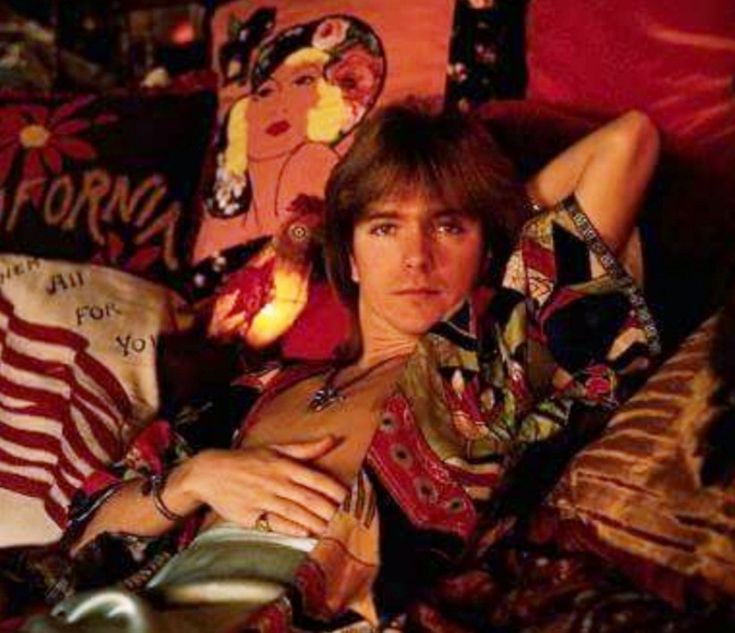
“Delta Lady” in David Cassidy’s live repertoire is a surprising kind of confession—part swagger, part surrender—where a teen-idol voice steps into grown-up Southern soul and comes out sounding bruised, bold, and unmistakably alive.
Let’s get the important facts in place first. “Delta Lady” was written by Leon Russell and was first released by Joe Cocker in September 1969. Cassidy’s version is best known as “Delta Lady (Live)” from his concert album Cassidy Live!, released in July 1974 and recorded live in Britain during his touring peak; the track is credited to Leon Russell and runs about 4:04 on standard listings. The album itself reached No. 9 on the UK album chart, capturing the extraordinary intensity that surrounded Cassidy’s shows in that era.
Now, the real story—the one you can hear between the notes.
By 1974, David Cassidy was living in a strange contradiction: adored on a scale most singers never experience, yet constantly fighting to be heard as an artist rather than a phenomenon. A live album like Cassidy Live! doesn’t hide that contradiction—it practically frames it. The record is frequently described as documenting the “mass hysteria” that followed him, which matters because it means every song is performed against a wall of noise and expectation. In that atmosphere, choosing “Delta Lady”—a smoky, adult Leon Russell soul piece associated with Joe Cocker’s gravel-and-gospel grit—feels like a deliberate statement. It’s Cassidy stepping out of the neat, brightly lit room people imagined for him and walking into a darker club where the air is thicker and the emotions are less polite.
“Delta Lady” is built on a particular kind of admiration: not the harmless crush of pop fantasy, but the magnetic pull of someone who feels almost mythic—earthy, independent, a little dangerous. Leon Russell wrote it with that Southern Delta mystique in mind, and Cocker’s original made it feel like a sweaty, late-night testimony. When Cassidy tackles it live, the fascination shifts: it becomes less “I’m singing about her” and more “I’m proving I can live inside this kind of song.” And that’s a different emotional charge altogether.
You can sense why it works best as a live performance. On record, Cassidy could be polished to a shine; on stage, there’s always a little risk—breath, timing, adrenaline, the momentary rough edges that make a singer sound human. A song like “Delta Lady” needs that risk. It needs a voice willing to lean into the groove, to flirt with the grit without faking it. And on Cassidy Live!, framed by a set that moves through pop, rock ’n’ roll, and big crowd moments, “Delta Lady” lands like a pocket of heat—something more sensual and grounded than the teen-magazine version of Cassidy ever allowed.
There’s also a quiet poignancy in the song’s lineage. “Delta Lady” begins as Leon Russell’s writing, passes through Joe Cocker’s signature interpretation, and then finds its way into Cassidy’s live set in July 1974—a date SecondHandSongs explicitly documents for his release. That chain tells you something about what Cassidy was reaching for: credibility not through image, but through material. He wasn’t trying to out-Cocker Cocker. He was trying to stand near that fire long enough to be warmed by it—and maybe to show the world that his voice could carry more than pop sweetness.
So what does “Delta Lady (Live)” ultimately mean in Cassidy’s catalogue? It’s the sound of an artist insisting on depth in the middle of spectacle. It’s a reminder that behind the screams and the headlines was a performer hungry for a wider vocabulary—songs with shadows, with body, with adult longing that couldn’t be reduced to a poster. And if you listen with that in mind, the performance stops being a curiosity and becomes a small act of self-definition: David Cassidy taking a classic written by Leon Russell and saying, in the only way a singer really can—I belong here, too.