
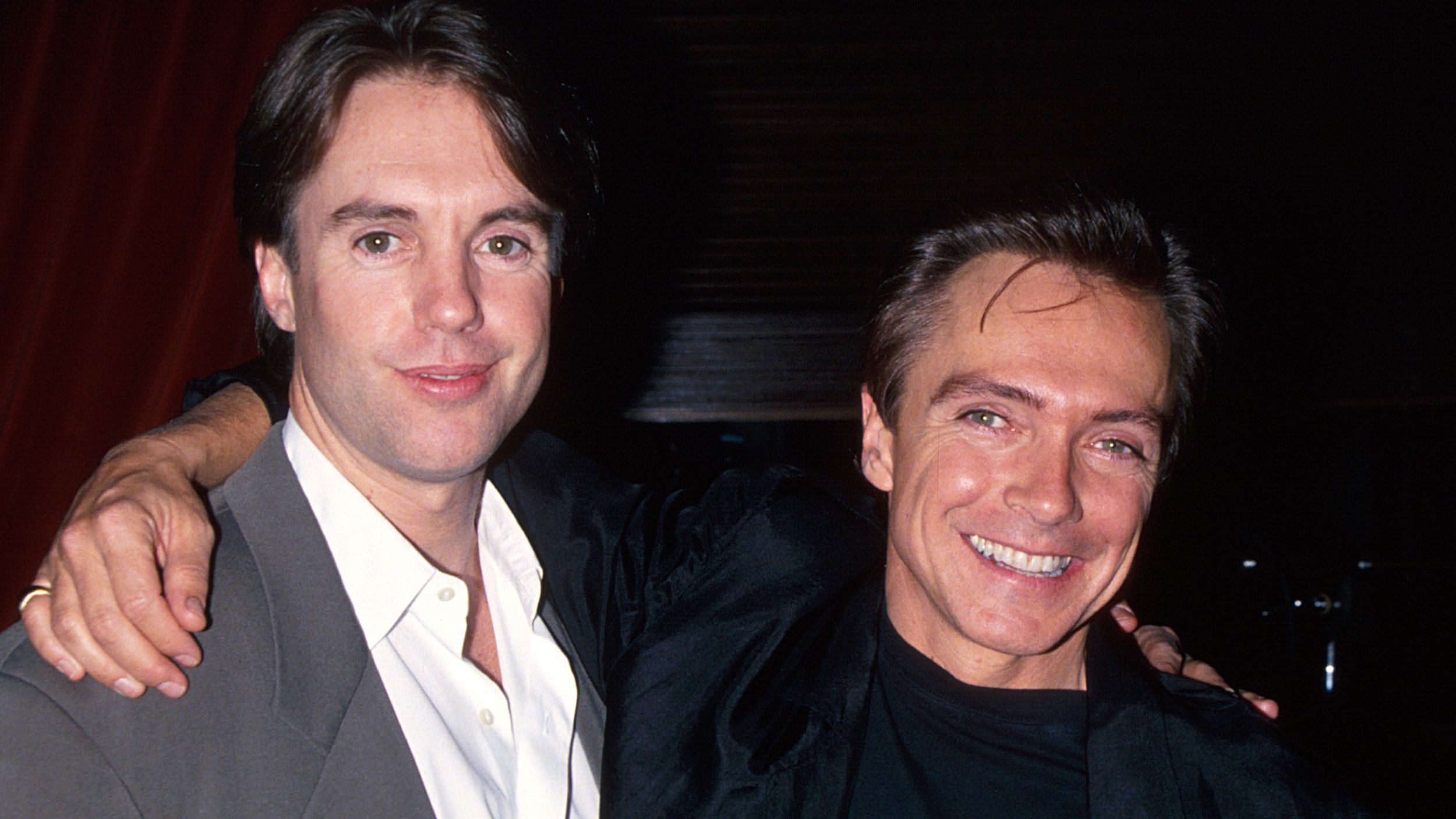
“Go Now” in David Cassidy’s voice is not an argument—it is a quiet release, love loosened gently because holding on would hurt more.
When David Cassidy recorded “Go Now”, he was stepping into a song already heavy with history and emotional gravity. “Go Now” was written by Larry Banks and Milton Bennett, and first brought to life in 1964 by The Moody Blues, whose stark, aching original became one of the earliest blueprints for rock balladry built on restraint rather than melodrama. It is a song that does not plead for love to stay—it asks it to leave, precisely because staying would become cruelty.
Cassidy’s version appears on his 1972 album “Rock Me Baby”, a record that marked a deeper step away from the carefully managed innocence of his early fame and toward more adult emotional territory. This context matters. “Go Now” is not a youthful breakup song. It is a song about emotional responsibility—about recognizing when love has reached the point where honesty must replace hope.
Unlike many breakup songs that thrive on accusation, “Go Now” does something far more difficult: it accepts the end without assigning blame. The narrator does not rage. He does not bargain. He acknowledges the truth and opens the door. That emotional maturity is what makes the song endure—and it is why Cassidy’s interpretation feels especially fitting at this point in his career. His voice, softer and more reflective than in his earlier recordings, carries the weariness of someone who understands that love sometimes survives only by letting go.
Musically, Cassidy does not attempt to overpower the song’s original mood. The arrangement remains restrained, allowing the lyric to breathe. The tempo is unhurried, almost hesitant, mirroring the emotional hesitation at the heart of the song: the reluctance to say goodbye even when goodbye is necessary. There is space in the production—space that allows silence to speak alongside melody. That space is crucial. “Go Now” needs room to echo.
Cassidy’s vocal delivery is notably sincere. He sings without dramatic flourish, leaning instead on clarity and tone. There is a quiet firmness in his phrasing, as if the decision has already been made, even if it still hurts. This is not the sound of someone trying to convince the other person to leave; it is the sound of someone convincing himself that letting go is the right thing to do.
The meaning of “Go Now” lies in its refusal to romanticize endings. Love does not always fail because it was false. Sometimes it fails because circumstances change, feelings shift, or time reveals incompatibility. The song acknowledges this with dignity. It suggests that true care sometimes expresses itself not through persistence, but through release. Cassidy understands this instinctively. His performance carries empathy rather than ego.
Importantly, Cassidy’s version of “Go Now” was not positioned as a major hit single, and it did not define an era through charts. That absence feels appropriate. This is not a song built for dominance or repetition on the radio. It is built for recognition—for the quiet moment when a listener realizes the song is speaking directly to their own experience. Its power lies in intimacy, not exposure.
Within the broader arc of David Cassidy’s work, “Go Now” represents a subtle but meaningful shift. It shows him engaging with material that values emotional honesty over romantic fantasy. It aligns with a period when he was increasingly interested in being heard as a singer rather than merely seen as a symbol. In that sense, the song becomes part of his ongoing conversation with adulthood—learning when to speak, when to sing, and when to step aside.
Over time, “Go Now” tends to deepen rather than fade. Heard young, it may sound sad. Heard later, it often sounds compassionate. Cassidy’s interpretation leaves room for both reactions. He does not instruct the listener how to feel. He simply offers the truth as he understands it, trusting that truth to find its place.
In the end, “Go Now” is not about loss—it is about respect. Respect for the other person. Respect for oneself. And respect for the idea that love, when it is real, should never be used to imprison either heart. In David Cassidy’s voice, that message arrives quietly, without force, and lingers long after the final note fades.