
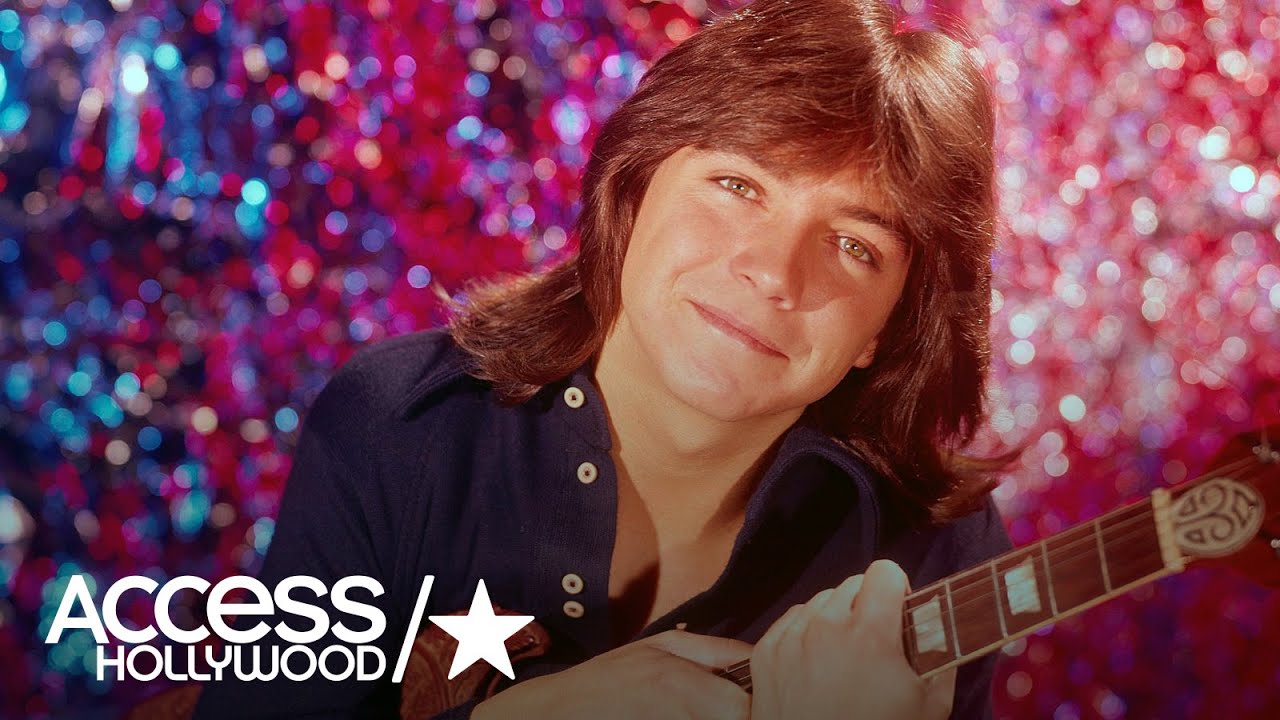
“Like Father, Like Son” is a grown man’s reckoning—an intimate pop confession about inheritance, the kind you can’t return, even when it hurts to carry.
By the time David Cassidy recorded “Like Father, Like Son”, he was no longer singing from inside the bright, frantic glare of teen-idol mythology. This song belongs to his 1992 comeback-era album Didn’t You Used to Be…—a record released in September 1992, recorded February–June 1992 at Santa Monica Sound Recorders, and produced (and mixed) by Eric “E.T.” Thorngren. That frame matters, because it’s the sound of Cassidy choosing adulthood on purpose: not chasing yesterday, but speaking from the quieter, more complicated room that opens up when fame stops being a costume and becomes a biography.
On the album, “Like Father, Like Son” sits as Track 8, running 4:18—a mid-album moment that feels like a private page slipped into a public book. It was written by David Cassidy, his wife Sue Shifrin, and Steve Diamond—with Apple Music listing all three as composers/lyricists. Even the personnel notes read like a deliberate sharpening of focus: Steve Diamond handles drum and keyboard programming specifically on this track, as if the production itself wanted a tighter, more modern pulse under a deeply personal theme.
And then there’s the title—so ordinary it’s almost dangerous. “Like father, like son” is the kind of phrase people toss off as a joke or a shrug, a tidy proverb meant to explain away complexity. But in Cassidy’s life, it couldn’t be tidy. His father was Jack Cassidy, a celebrated stage and television performer who died in 1976 in an apartment fire. In later reflections from the Cassidy family, the legacy of that relationship is described as talented, complicated, and emotionally uneven—admired in the spotlight, difficult in the living room.
So when David Cassidy sings “Like Father, Like Son,” the phrase stops being a saying and becomes a question: What exactly gets passed down? Not just the gifts—the voice, the charm, the stage-light instincts—but the shadows too. The habits. The disappearances. The pride that can look like strength until you realize it was fear in a better suit.
What makes the song land is that it doesn’t feel written for gossip, revenge, or neat moral verdicts. It feels written for that late hour when the house is quiet and memory gets louder than the television. The emotional center of a song like this is rarely the “story” in a literal sense; it’s the recognition that you can spend years insisting you’re nothing like your parent… and then one day you hear your own voice, making the same choices, using the same defenses, reaching for the same exits. That’s the ache the title promises: heaven and heartache in the same bloodline.
Didn’t You Used to Be… is often described as a deeply personal project in its writing credits alone—Wikipedia notes that the album’s ten tracks are all written or co-written by Sue Shifrin (often with Cassidy). That’s not a trivial detail; it suggests a closed circle of trust. And trust is what a song like “Like Father, Like Son” needs. You don’t sing these lines convincingly unless you’re willing to be seen without makeup—unless you’re willing to admit that inheritance isn’t only a blessing. Sometimes it’s a script you’re trying to rewrite in real time, with the ink still wet.
There’s also a bittersweet elegance to Cassidy choosing this theme in 1992. In the early ’70s, he was often sold as a dream—soft lighting, bright choruses, a face that could be printed on a million bedroom walls. But real life keeps moving, and it asks different questions. By the ’90s, the performance becomes less about being adored and more about being understood. “Like Father, Like Son” belongs to that second kind of artistry: the kind that doesn’t ask you to scream—only to listen.
In the end, this song lingers because it speaks to something most people learn slowly: we don’t only inherit eye color and talent. We inherit unfinished stories. And sometimes the bravest thing a son can do is not deny the resemblance—but look it straight in the face, name it, and decide what he will carry forward… and what he will finally lay down.