
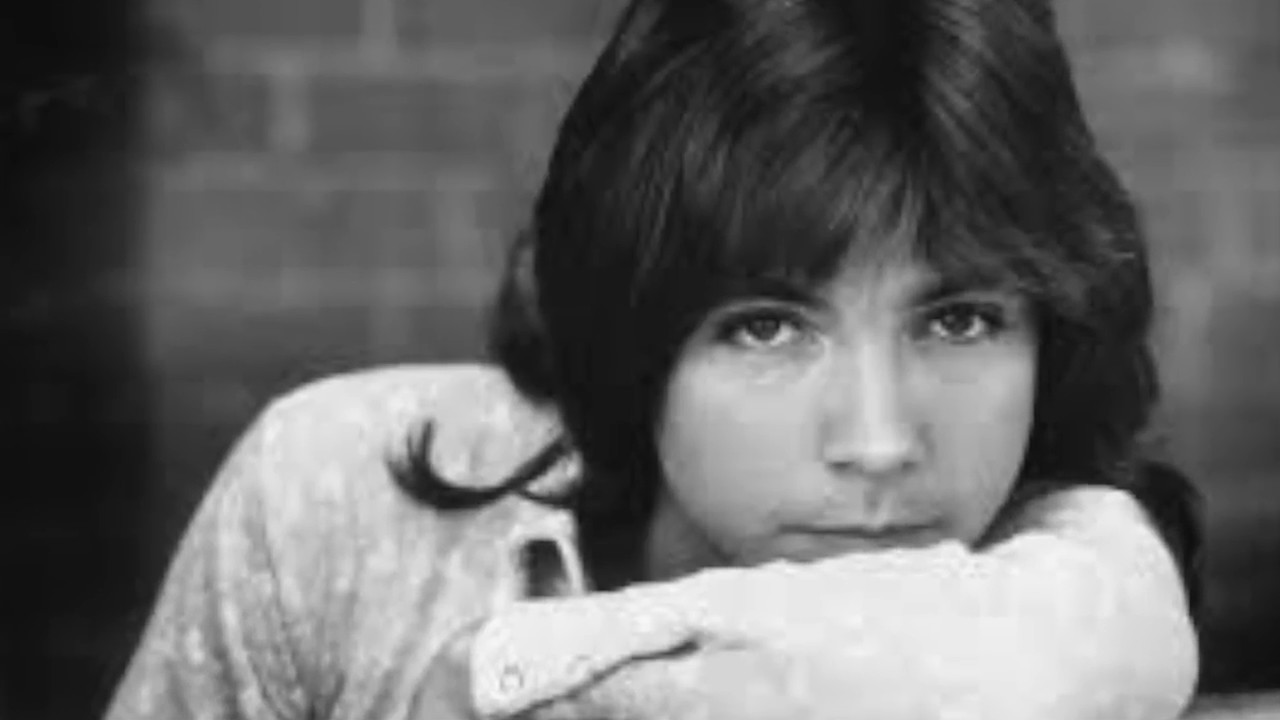
A late-night confession in soft focus: seeing everything at last—yet still choosing love, even when it hurts to look clearly.
“I Can See Everything” sits in an interesting corner of David Cassidy’s later discography: it isn’t a seventies-era chart racer, and it isn’t a comeback single with a neat weekly climb. It’s a thoughtful, adult-pop cover—credited to songwriter Timothy B. Schmit—that Cassidy recorded for Classic Songs, a Curb Records compilation released in August 1998. At the same time, many digital services list the track under the February 27, 1996 dating (the date attached to the album/track metadata on Apple Music). That mismatch isn’t unusual for catalog releases from this period—projects assembled, reissued, or distributed across territories and formats—yet it adds a fitting haze to a song about finally seeing the truth through the fog.
What matters most is what Cassidy chooses to sing here. “I Can See Everything” wasn’t originally his song; it began life in the country-rock world of Poco, appearing on their 1972 album A Good Feelin’ to Know (released October 25, 1972), with Schmit credited as the writer. In Poco’s hands, it’s a gentle, West Coast confession—sunlit harmonies, a certain soft resignation. Cassidy’s later reading carries a different weight: not the wistfulness of youth, but the weary clarity of someone who has spent years learning what denial costs.
And the lyric is built around that painful kind of clarity. The narrator isn’t accusing the other person; he’s accusing himself. He admits the conversation keeps failing—words “distort the view”—and the relationship feels like it’s slipping away. Yet instead of turning defensive, the voice does something surprisingly humble: I know it’s myself, it’s not you. That line is the emotional key. It’s not the drama of heartbreak; it’s the self-awareness that arrives after heartbreak has done its work—when you can finally name the patterns you used to protect.
There’s also a subtle irony in the title. To “see everything” sounds triumphant, like a veil lifted. But in the song, sight doesn’t bring instant rescue. Seeing clearly only makes the stakes sharper: you can finally recognize the “special things” in the other person’s smile… at the very moment you fear you’re losing them. It’s the kind of emotional experience many people know too well: clarity arriving late, like realizing the value of a room only after you’ve started packing boxes.
That’s why Cassidy’s version feels so poignant within his broader story. By the mid-to-late 1990s, he was long past the era when fame arrived automatically with a TV image and a radio chorus. A track like “I Can See Everything” suggests an artist leaning into something quieter: material chosen for feeling rather than fashion, a song that doesn’t need to “prove” anything—only to tell the truth cleanly. And perhaps that’s also why it never had a major chart narrative of its own. The Classic Songs release is listed as a compilation without chart placements in the main territories on his discography summaries. In a way, that suits the song: it behaves less like a public event and more like a private letter.
Musically, you can imagine Cassidy approaching it as a piece of emotional carpentry—keep the structure steady so the confession can stand. The hook is not a clever twist; it’s a repeated vow: If you could feel the way that I do today, we could find us a better way to get through. That “better way” is the grown-up fantasy at the center of so many relationships: not perfection, not rewind-the-tape, just a new method of staying—one that doesn’t require either person to become smaller.
In the end, “I Can See Everything” is a song about recognition—the moment you stop arguing with reality and start speaking plainly. It doesn’t promise the relationship will be saved. It offers something both simpler and rarer: accountability without cruelty, longing without manipulation, and the courage to say, in a soft voice, that love is still there—still looking, still trying to learn how to be worthy of what it sees.