
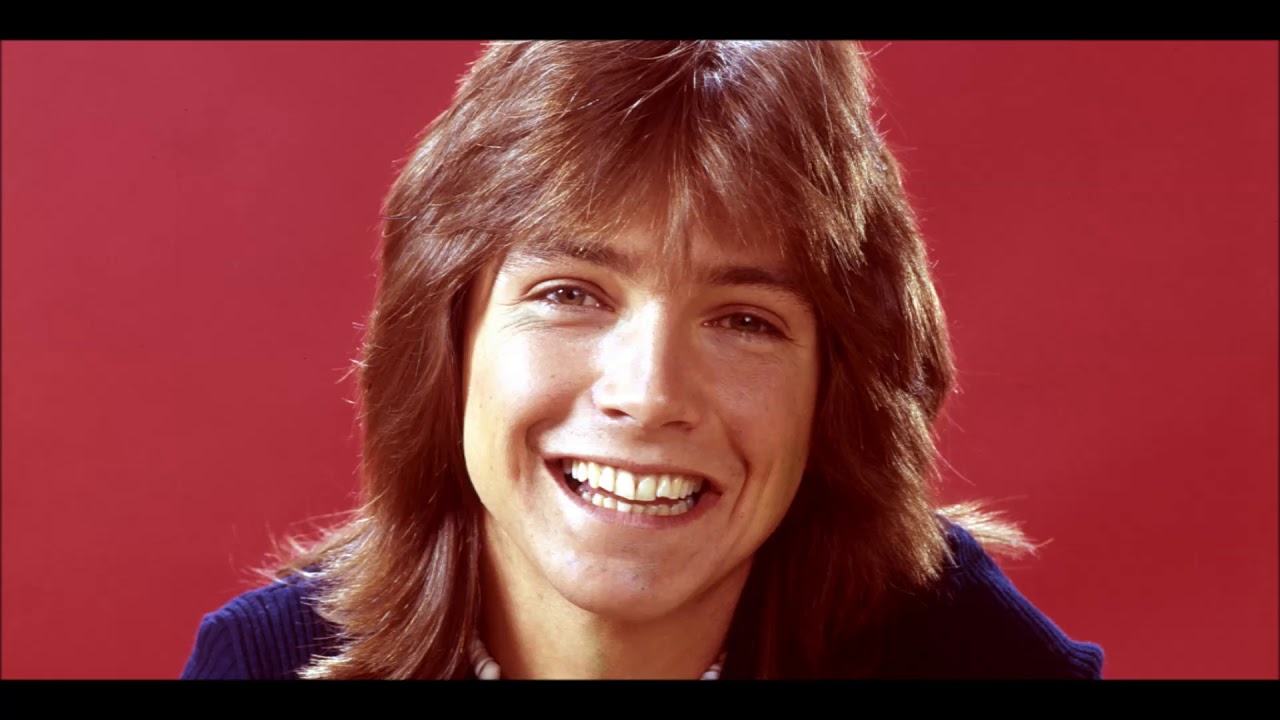
“Night and Day” in David Cassidy’s hands isn’t just a classic love song—it’s a final, softly lit room where memory, family, and gratitude sit together, unhurried, until the last note.
The essential facts belong at the front, because they frame everything you’re about to feel. “Night and Day” is David Cassidy’s late-career recording of the Cole Porter standard, released on May 24, 2018 as the opening track of his posthumous EP Songs My Father Taught Me (label: Mixkitchen Musica). While the song itself wasn’t issued as a stand-alone pop single with a conventional chart run, the EP made a meaningful appearance in the jazz world: it reached No. 13 on Billboard’s Jazz Albums chart, and is also listed as No. 13 (US Jazz) and No. 7 (US Traditional Jazz) in discography chart summaries. In other words, “Night and Day” didn’t re-enter the world as a scream for attention—it arrived as a quiet statement that still found listeners.
And what a song to choose for that statement. “Night and Day” was written by Cole Porter for the 1932 Broadway musical Gay Divorce, and it was introduced on stage by Fred Astaire when the show opened in late 1932. It’s one of those Great American Songbook pieces that feels less like a composition and more like a climate—desire rendered as weather: constant, surrounding, inescapable. The lyric doesn’t merely say “I miss you.” It says the beloved has colonized time itself—sun, moon, distance, nearness—until life becomes one long repetition of longing.
So why does David Cassidy—forever associated with bright pop and television gloss in the public imagination—sound so right singing it? Because by 2017–2018, this was no longer about image. It was about roots. The EP’s very premise—Songs My Father Taught Me—came from Cassidy’s desire to record the music his father, actor-singer Jack Cassidy, had loved and shared with him. Producer Craig J. Snider described the project plainly as an EP of songs Cassidy’s dad taught him. When you hear “Night and Day” in this context, it stops being only a romantic torch song and becomes something broader: a family heirloom, taken down from the shelf one last time, polished with care, and offered outward as thanks.
That backstory matters because it changes how the words land. In Porter’s original world, obsession is glamorous—urbane, sophisticated, deliciously dramatic. In Cassidy’s late recording, the obsession reads more like devotion: the kind that outlives youth, trend, and even the need to prove anything. The performance becomes less about theatrical heat and more about staying present inside a feeling. There’s a tenderness in that—an adult tenderness, the sort that doesn’t demand you be impressed, only that you listen.
The circumstances of the release deepen the poignancy. The EP was completed and released posthumously, tied to the documentary David Cassidy: The Last Session, which captured him in the studio working on these final recordings. The official site framed it as part of his enduring bond with the people who followed his music, spotlighting the “last session” as a closing chapter in which gratitude sat at the center. That’s why the tracklist begins with “Night and Day”—a song about constancy—before moving on to other standards. It’s as if he wanted the first door you walk through to be the one marked always.
And perhaps that is the song’s final meaning in Cassidy’s story: a reminder that fame is loud, but the true soundtrack of a life is often quieter—tunes learned early, carried privately, and returned to when the world finally goes silent. When David Cassidy sings “Night and Day,” you can hear the distance between the boy who learned it and the man who recorded it—yet the bridge between them holds. Not because time was kind, but because music is faithful that way. It remembers what we meant, even when we struggle to say it.
If you’d like, I can write the next entry in a different lyrical style again—more intimate and letter-like, or more cinematic and scene-driven—while keeping the facts just as tight.