
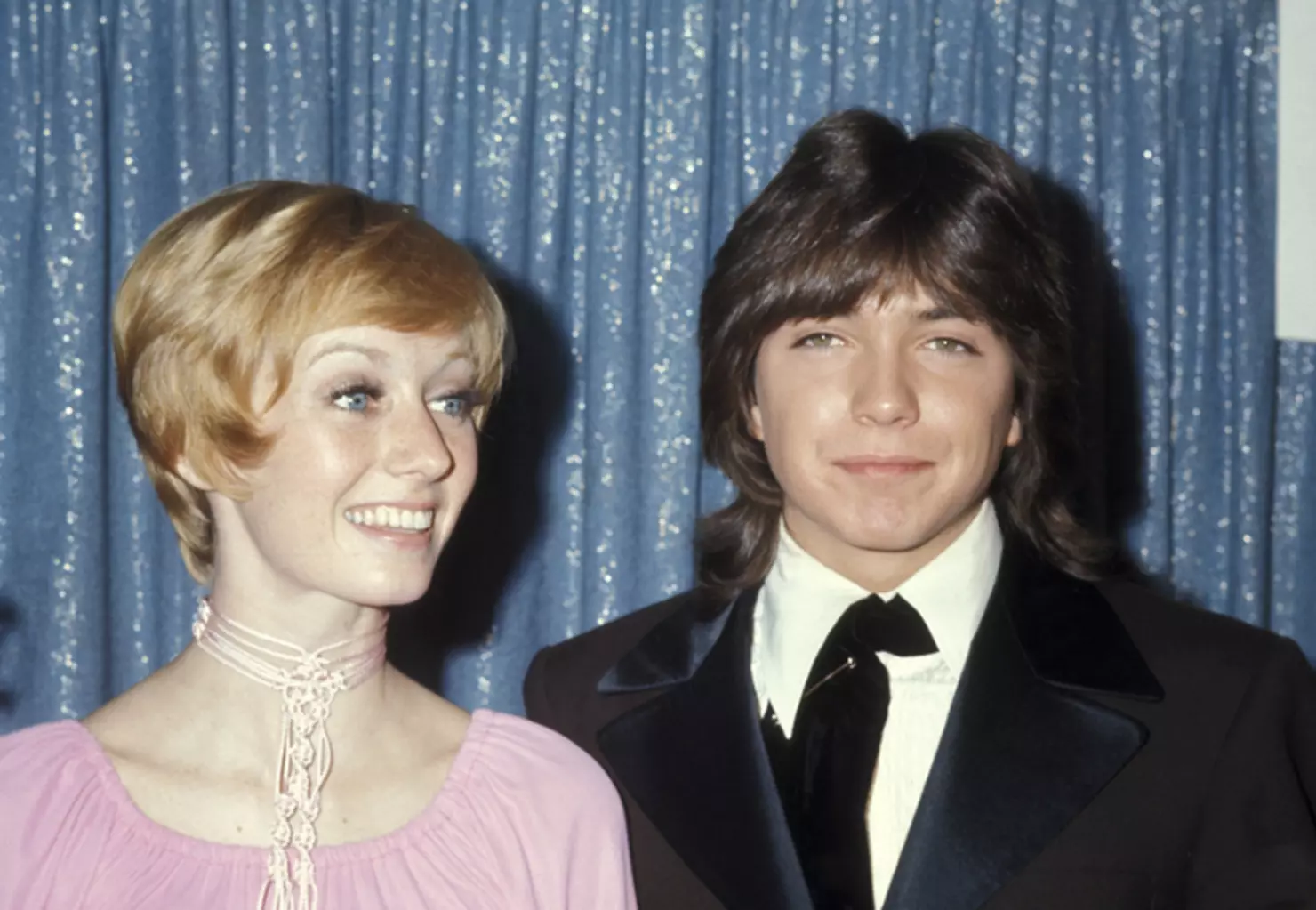
“Romance” is the sound of grown-up longing—love stripped of fantasy, spoken softly by someone who already knows how easily dreams can bruise.
When David Cassidy released “Romance” in 1985, it marked a striking moment of artistic self-awareness. This was not the voice of youthful promise or chart-chasing innocence. This was a man singing after experience—after fame, after disappointment, after learning that love does not arrive wrapped in certainty. “Romance” doesn’t sparkle. It glows quietly, like a lamp left on for someone who may or may not come home.
Let’s establish the essential facts with care. “Romance” is the title track from David Cassidy’s album Romance, released by RCA Records in 1985. The song was issued as a single, and while it did not make a significant impact on the US Billboard Hot 100, it found a far warmer reception in the United Kingdom, where it became a Top 20 hit, peaking at No. 11 on the UK Singles Chart. This matters. By the mid-1980s, Cassidy’s strongest audience had shifted overseas, and “Romance” confirmed that his voice—older, gentler, more reflective—still connected deeply where listeners were willing to listen beyond nostalgia.
The timing of this release is crucial to understanding its meaning. By 1985, David Cassidy had already lived several musical lives. The frenzy of the early 1970s was long behind him. The expectations placed on him—by fans, by the industry, by his own history—had softened into something more realistic. “Romance” emerges from that space. It is not trying to recapture youth. It is trying to define adulthood.
Musically, the song embraces the polished, atmospheric sound of the mid-1980s—synth textures, smooth backing vocals, a measured tempo—but it never loses emotional intimacy. The production is clean, almost elegant, yet deliberately restrained. Nothing rushes. Nothing overwhelms the vocal. This is important, because “Romance” depends on nuance. It is a song that lives in pauses, in breath, in the spaces between words.
Lyrically, “Romance” is not about passion in its explosive form. It is about desire tempered by caution. The narrator isn’t demanding love or promising forever. Instead, he acknowledges vulnerability—his own and the other person’s. There is an awareness here that love, once broken, does not simply reset. It carries memory. And yet, despite that knowledge, the song chooses openness. That tension—between fear and hope—is the emotional engine of the track.
Cassidy’s vocal performance is the key to why the song works. His voice, no longer boyish, carries a softness that feels earned. There is fragility, but also control. He doesn’t oversell emotion. He trusts the lyric. This trust is what separates “Romance” from adult-contemporary sentimentality. The song doesn’t beg the listener to feel. It invites them.
In many ways, “Romance” functions as a quiet self-portrait. Cassidy is no longer playing a role. He is presenting a version of himself that accepts imperfection. Love here is not an escape; it is a risk worth taking again, despite knowing better. That perspective gives the song its depth—and its credibility.
The UK chart success of “Romance” is telling. British audiences, long known for embracing artists beyond their commercial peak, recognized the sincerity in Cassidy’s evolution. The song was not embraced as a comeback anthem, but as a continuation—a chapter that made sense for where he was, emotionally and artistically.
With the passage of time, “Romance” has grown more resonant. Heard now, it feels less tied to its era’s production and more connected to its emotional truth. It speaks to anyone who has loved before, been hurt, and still finds themselves willing—cautiously, honestly—to try again.
This is not a song about fantasy love.
It is a song about possible love.
And in that quiet distinction lies its strength.
For David Cassidy, “Romance” stands as one of his most mature recordings—a reminder that artistry does not end when youth fades. Sometimes, it only begins when illusions fall away.