
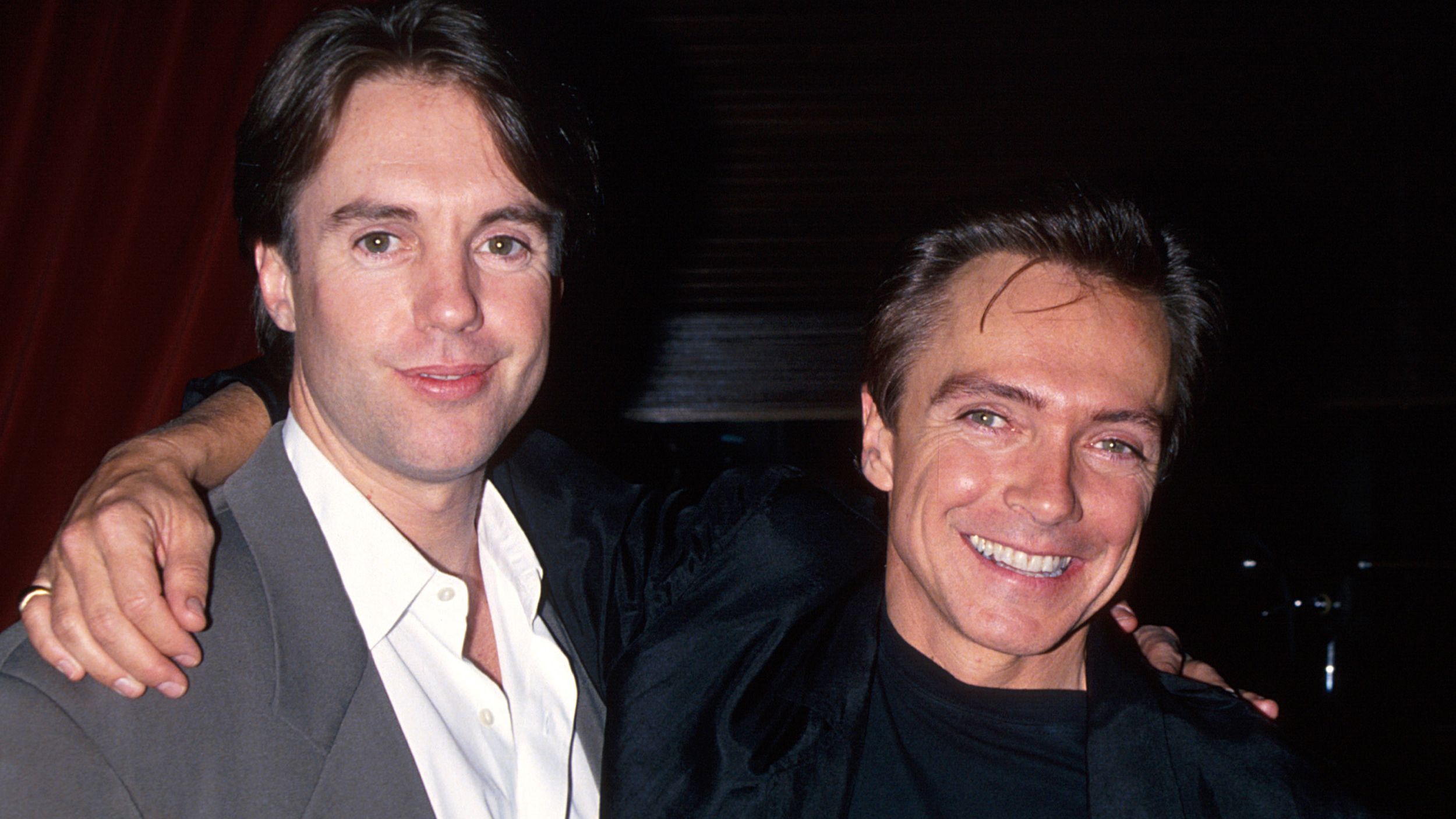
David Cassidy on The John Larroquette Show is the sound of innocence colliding with reality—when a former teen idol steps into the harsh light of adulthood and refuses to look away.
When David Cassidy appeared on The John Larroquette Show in 1993, it was not nostalgia casting. It was not a wink to the past, nor a gentle reminder of screaming crowds and glossy magazine covers. Instead, it was something far braver—and far more unsettling. Cassidy stepped into a role that felt uncomfortably close to lived experience, and in doing so, delivered one of the most quietly devastating performances of his later career.
The facts matter here. David Cassidy guest-starred in a multi-episode arc during the first season (1993–1994) of The John Larroquette Show, playing Oscar Finnegan, a once-successful singer whose life has been hollowed out by alcoholism, denial, and the slow erosion of dignity. The show itself was a radical departure from the laugh-track comfort of American sitcoms. Set in a grim St. Louis bus station and centered on addiction, failure, and moral exhaustion, The John Larroquette Show asked viewers to sit with discomfort rather than escape it. Cassidy’s presence fit that world with startling precision.
What made the casting so powerful was the history he carried with him. By the early 1990s, Cassidy was no longer shielded by illusion. His public struggles with alcohol were known. His fame had peaked decades earlier. And here he was, portraying a man who had lived fast, been loved loudly, and fallen hard—singing in bars, bargaining with the past, and lying to himself with practiced ease. The performance didn’t feel like acting. It felt like recognition.
Musically, the role was understated, but devastating. When Cassidy sang on the show, he did not perform to impress. He sang the way people sing when they have nothing left to prove and nowhere left to hide. His voice—aged, softened, scarred—carried a truth no studio polish could recreate. Gone was the bright optimism of early-1970s pop. In its place was something rawer: a voice shaped by survival rather than promise.
Emotionally, Cassidy’s arc on The John Larroquette Show revolved around self-deception. His character clung to memories of success the way some people cling to old photographs—proof that life once made sense. The tragedy wasn’t that the character had failed. It was that he couldn’t stop measuring the present against a past that no longer existed. That theme—you can’t live where you used to be—echoes painfully through Cassidy’s own artistic history.
What made the performance so affecting was its restraint. Cassidy didn’t beg for sympathy. He didn’t dramatize addiction. He let it sit there—ugly, repetitive, exhausting. Scenes often ended without resolution, mirroring the reality of recovery and relapse. In that sense, the role aligned perfectly with the show’s philosophy: that some stories don’t end neatly, and some wounds don’t close on cue.
For viewers who remembered Cassidy only as a symbol of youth and adoration, this performance could be jarring. And that was precisely its value. It dismantled the myth gently but firmly. Cassidy showed that he understood something fundamental: that growing older in public means learning how to live without applause. His work on The John Larroquette Show was not about reclaiming fame. It was about telling the truth.
In retrospect, this role stands as one of the most honest chapters of David Cassidy’s acting life. It proved that he was not afraid to confront the shadows that followed him—and not afraid to let them be seen. There is dignity in that choice. There is courage in refusing to soften the edges.
This was not a comeback.
It was a reckoning.
And in that quiet, uncompromising space, David Cassidy revealed a depth that no chart position or headline could ever fully measure.